
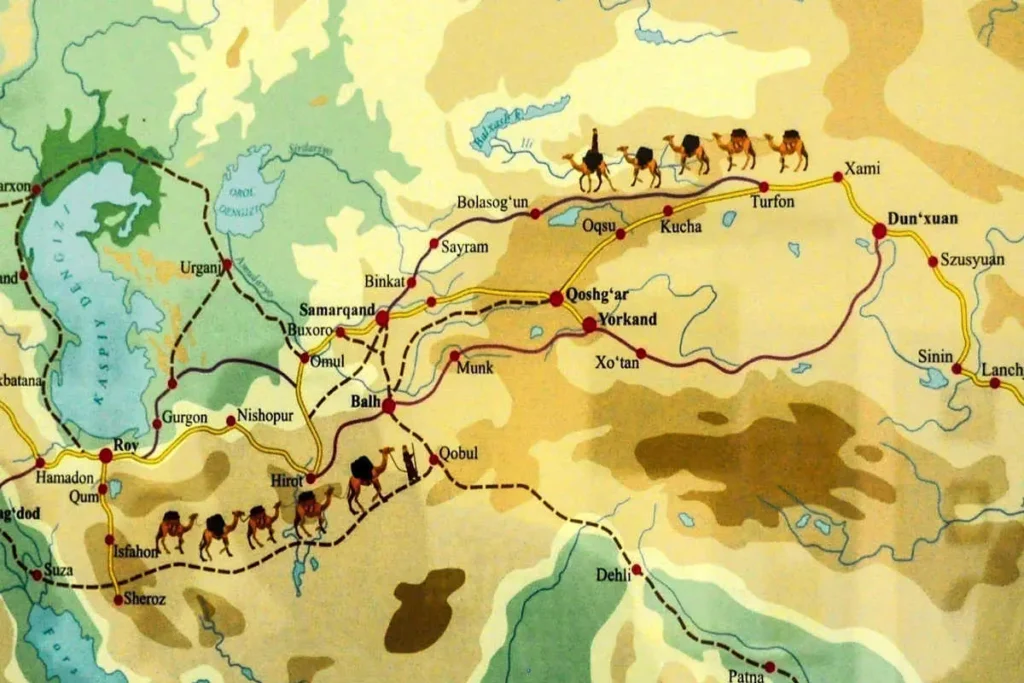
The Silk Road, an ancient network of trade routes, connected the East and West for centuries. This historic route facilitated the exchange of goods, cultures, ideas, and religions, shaping civilizations across continents. Today, the Silk Road spans multiple modern nations, stretching from China to Europe, covering parts of Asia, the Middle East, and North Africa. But which countries are considered part of this legendary route? Below, we explore the 36 countries that played a crucial role in Silk Road history.
1. The Core Countries of the Silk Road
Several nations were at the heart of the Silk Road, serving as primary hubs for trade and cultural exchange. These include:
China – The starting point of the Silk Road, with key cities like Xi’an, Dunhuang, and Kashgar.
India – A major center for textiles, spices, and Buddhism, influencing Silk Road trade.
Iran – Known for its Persian Empire, rich culture, and strategic location.
Turkey – A bridge between Asia and Europe, with cities like Istanbul playing a vital role.
Italy – Venice was a key endpoint of the maritime Silk Road, linked to Marco Polo’s travels.
Greece – An ancient maritime and overland trade center connecting East and West.
2. Central Asian Countries
Central Asia was a vital crossroads of the Silk Road, home to bustling markets and caravanserais. These countries include:
Kazakhstan – Famous for its steppes and nomadic trade routes.
Kyrgyzstan – Hosted important Silk Road cities like Osh and Balasagun.
Uzbekistan – Samarkand, Bukhara, and Khiva were key trading hubs.
Turkmenistan – Home to the ancient city of Merv, a major Silk Road stop.
Tajikistan – Passed by traders traveling through the Pamir Mountains.
3. Middle Eastern Countries
The Middle East was a key connector between Asia, Europe, and Africa, with powerful empires dominating the trade routes.
Saudi Arabia – Important for its Red Sea maritime routes.
Iraq – Hosted the legendary city of Baghdad, a major Silk Road hub.
Syria – Aleppo and Palmyra were key trading centers.
Jordan – Petra, the rock-cut city, was a major trade stop.
Lebanon – A crucial maritime trade route connecting the Mediterranean.
Israel – Played a role in trade through ports like Jaffa and Acre.
4. South and Southeast Asian Countries
These regions contributed to the Silk Road through spices, textiles, and maritime trade networks.
Pakistan – Ancient Gandhara and Indus Valley trade links.
Bangladesh – Contributed muslin and silk exports.
Sri Lanka – A key maritime Silk Road hub for trade with China and Arabia.
Myanmar – Played a role in linking India with China.
Thailand – Part of the overland and maritime trade routes.
Vietnam – Important in maritime Silk Road trade.
5. European and North African Countries
The Silk Road extended into Europe and North Africa, connecting to major trading cities.
Russia – Southern regions connected to Central Asian Silk Road routes.
Ukraine – Linked to the Black Sea trade routes.
Georgia – A critical passage between Asia and Europe.
Armenia – A key Silk Road link between Persia and Europe.
Azerbaijan – Hosted trade cities like Baku along the Caspian Sea.
Egypt – Cairo and Alexandria were major hubs on the maritime Silk Road.
Tunisia – Connected to Mediterranean trade routes.
Spain – End point for some trade networks, with Muslim-ruled Al-Andalus benefiting from Silk Road exchanges.
The Silk Road was more than just a trade route—it was a bridge that connected civilizations, cultures, and economies. Today, the 36 countries along this historic path offer a rich tapestry of history, architecture, and traditions for travelers and historians alike. Whether exploring the bustling bazaars of Samarkand, the ancient ruins of Petra, or the vibrant streets of Istanbul, the Silk Road’s legacy continues to thrive.
Want a More Personalized Best China Tour?
Talk to us about booking a private or custom tour for your unique China experience.

China's Iconic Destinations, Together
Join a small-group guided tour through China's most iconic landscapes and cities. From the Great Wall to Guilin's karst peaks and Zhangjiajie's glass-bridge peaks, every itinerary is carefully curated with fixed pricing, expert local guides, and full logistics support.
- Fixed, transparent pricing — no hidden fees
- Small groups for an intimate experience
- Multilingual, certified guides
- Visa invitation letter included

Private Vehicles & Expert Guides, On Demand
Book private vehicles and certified multilingual tour guides across China with real-time pricing and bundled savings. Whether you need an airport transfer, a day tour of Beijing's hutongs, or a multi-day charter through Sichuan — GuideCar handles it all with verified drivers and expert guides.
- Real-time pricing — no negotiation required
- Bundle vehicle + guide for extra savings
- Airport transfers, day tours, multi-day charters
- Guides in English, Spanish, French, and more
Additional Specialized Services
Completing your China journey from paperwork to on-ground AI support
Invitation Letter
Apply online for an official China visa invitation letter. Our service handles formatting, verification, and delivery — accepted by Chinese consulates worldwide. Track your order in real time and receive your document digitally within days.
- Official document formatting
- Accepted at Chinese consulates globally
- Real-time order tracking
- Digital delivery
Custom Tours
No templates, no compromises. Tell us your interests, travel dates, group size, and budget — and we'll design a completely bespoke China itinerary from scratch. Culture, adventure, food, photography, tea ceremonies, ancient villages — anything is possible.
- 100% bespoke itineraries
- Any group size, any theme
- Flexible dates & duration
- All-inclusive or component booking
