
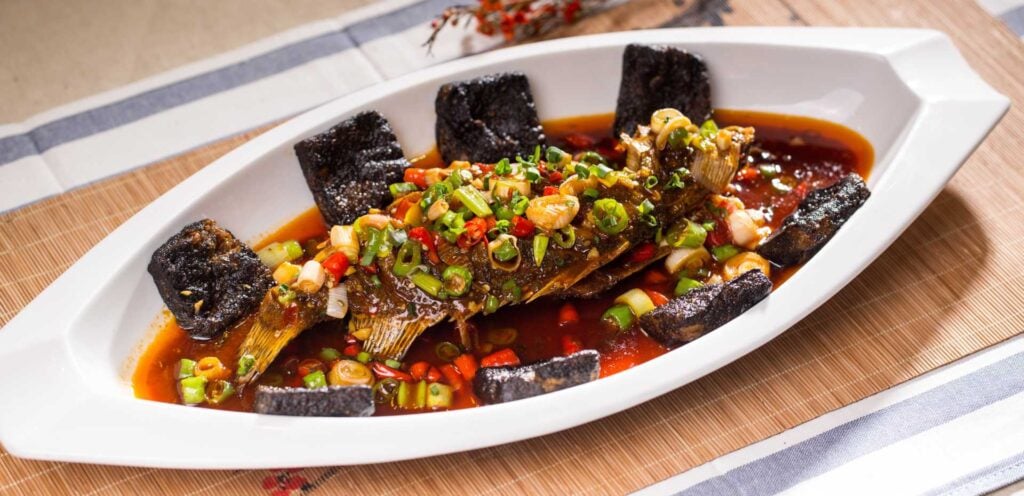
Why Do Chinese People Eat “Smelly” Food?
What Stinky Tofu, Fermented Fish, and Strong Flavors Reveal About Taste in China
For many foreign travelers, the encounter is sudden.
A sharp smell in a night market.
Something fried, bubbling, unmistakably pungent.
Locals lining up. Laughing. Ordering seconds.
The reaction is almost instinctive:
How can something that smells like this be food?
But in China, foods like stinky tofu, fermented fish, and preserved vegetables are not culinary accidents. They are the result of a completely different relationship with smell, fermentation, and taste.
The Core Misunderstanding: Smell Is Not the Enemy
In many Western food cultures, smell functions as a warning system.
Strong odor = spoilage = danger.
In Chinese food culture, smell is not automatically negative.
It is information.
A strong smell signals:
Fermentation
Transformation
Concentration of flavor
In other words, smell does not mean “bad” — it often means “something is happening.”
Fermentation as a Survival Skill, Not a Trend
Long before fermentation became fashionable in modern gastronomy, it was a necessity in China.
For centuries:
Refrigeration did not exist
Fresh protein was seasonal
Preservation determined survival
Fermentation allowed food to:
Last longer
Become safer
Develop deeper flavors
What foreign travelers smell today is not rot — it is controlled change.
“臭” Does Not Mean Rotten — It Means Fermented
One of the biggest linguistic traps is the Chinese word “臭” (chòu).
In English, “smelly” implies decay.
In Chinese, “臭” in food often means intentionally fermented.
Stinky tofu is not spoiled tofu.
Fermented fish is not rotten fish.
They are products that have been:
Monitored
Timed
Passed down through regional knowledge
This distinction is critical — and often lost in translation.
Why Strong Flavors Matter in Chinese Cuisine
Chinese cuisine is not built around subtlety alone.
It values:
Contrast
Balance
Intensity
Strong-smelling foods are often paired with:
Chili
Garlic
Vinegar
Crisp textures
The goal is not to hide the smell, but to integrate it into a complete sensory experience.
For Chinese diners, “flat” food is worse than “strong” food.
Social Trust: Why Locals Feel Safe Eating It
Foreign visitors often trust their nose.
Chinese diners trust collective experience.
If a food has been eaten for generations — by grandparents, parents, and children — it carries social proof.
That trust matters more than immediate sensory reaction.
This explains why travelers see long lines at stinky tofu stalls:
smell alone is not the evaluation system.
Regional Identity and Pride
Many “smelly” foods are deeply regional.
Stinky tofu is associated with certain cities.
Fermented fish belongs to specific provinces.
Preserved vegetables define local identity.
Eating these foods is not just about taste — it is about belonging.
For locals, rejecting these foods can feel like rejecting home.
Why Foreign Travelers React So Strongly
The shock is not about smell alone.
It is about expectation mismatch.
Foreign travelers often expect:
Clean = neutral smell
Good food = pleasant aroma
Chinese food culture allows:
Delicious food to smell challenging
Comfort food to smell aggressive
Once this expectation shifts, curiosity often replaces resistance.
What This Means for Travelers in China
Understanding this changes how travelers experience Chinese food.
It helps you:
Avoid judging food too quickly
Read street food scenes more accurately
Appreciate why locals love what they love
You do not have to like stinky food — but understanding it opens a cultural door.
A Final Thought: Taste Is Learned, Not Universal
What smells “wrong” to you may smell like memory to someone else.
Chinese “smelly” foods are reminders that taste is not fixed.
It is trained by history, environment, and repetition.
For travelers willing to suspend instinct and observe context, these foods become less strange — and more meaningful.
About the Author
Senior Travel Consultant at HelloChinaTrip
This article is written by a Senior Travel Consultant at HelloChinaTrip, a China-based inbound travel company specializing in culturally informed travel experiences for international visitors.
With years of experience guiding foreign travelers through local markets and regional cuisines, the author focuses on explaining why food tastes the way it does — not just what to eat.
Want a More Personalized Best China Tour?
Talk to us about booking a private or custom tour for your unique China experience.

China's Iconic Destinations, Together
Join a small-group guided tour through China's most iconic landscapes and cities. From the Great Wall to Guilin's karst peaks and Zhangjiajie's glass-bridge peaks, every itinerary is carefully curated with fixed pricing, expert local guides, and full logistics support.
- Fixed, transparent pricing — no hidden fees
- Small groups for an intimate experience
- Multilingual, certified guides
- Visa invitation letter included

Private Vehicles & Expert Guides, On Demand
Book private vehicles and certified multilingual tour guides across China with real-time pricing and bundled savings. Whether you need an airport transfer, a day tour of Beijing's hutongs, or a multi-day charter through Sichuan — GuideCar handles it all with verified drivers and expert guides.
- Real-time pricing — no negotiation required
- Bundle vehicle + guide for extra savings
- Airport transfers, day tours, multi-day charters
- Guides in English, Spanish, French, and more
Additional Specialized Services
Completing your China journey from paperwork to on-ground AI support
Invitation Letter
Apply online for an official China visa invitation letter. Our service handles formatting, verification, and delivery — accepted by Chinese consulates worldwide. Track your order in real time and receive your document digitally within days.
- Official document formatting
- Accepted at Chinese consulates globally
- Real-time order tracking
- Digital delivery
Medical Tourism
Access China's top Grade 3 Class A hospitals and leading specialists through a single platform. We support the full medical journey: hospital selection, appointment booking, medical translation, transport, accommodation coordination, and post-care follow-up.
- Grade 3A hospitals & top specialists
- Appointment booking & medical translation
- Transport & accommodation support
- Post-treatment follow-up
Custom Tours
No templates, no compromises. Tell us your interests, travel dates, group size, and budget — and we'll design a completely bespoke China itinerary from scratch. Culture, adventure, food, photography, tea ceremonies, ancient villages — anything is possible.
- 100% bespoke itineraries
- Any group size, any theme
- Flexible dates & duration
- All-inclusive or component booking
AI Concierge
Chat with HiChina.Travel — our AI-powered travel concierge — to get instant answers about China travel, visa requirements, destinations, culture, and safety. Available 24/7, it helps you plan faster and arrive better prepared.
- Instant answers, 24/7
- Visa & entry requirement guidance
- Destination & itinerary suggestions
- Powered by real HelloChinaTrip data
