
What happens if I get sick in China?
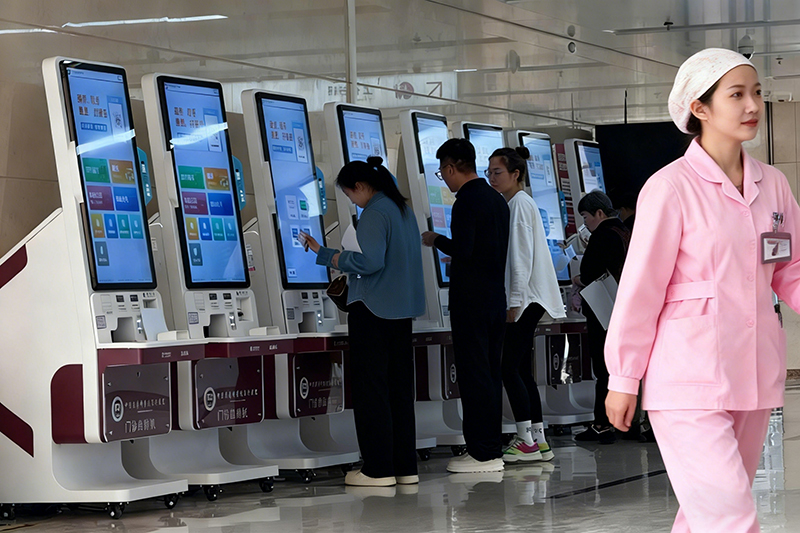
Whether you are a long-term expat or a short-term traveler, the Chinese medical system can feel like a labyrinth. This guide provides an authoritative, step-by-step breakdown of exactly what to do, where to go, and how to communicate when you are unwell.
1. Choosing Your Medical Tier
China does not have a “Family Doctor” gatekeeper system. You go straight to hospitals, which are categorized into three main types:
A. Public Hospitals (Grade 3A/三甲)
Best for: Serious specialists, emergency trauma, and cost-efficiency.
The Experience: High-tech but high-pressure. Expect massive crowds and fast-paced consultations.
Cost: Low ($2–$10 for registration).
B. Public Hospital International/VIP Departments (Tèxū Bù)
Best for: High-level expertise without the chaos.
The Experience: Located on a separate floor of top public hospitals. You get English-speaking staff and shorter lines.
Cost: Medium ($50–$150 for registration).
C. Private International Hospitals (e.g., United Family, Jiahui, Raffles)
Best for: Familiarity, Western-trained doctors, and insurance direct-billing.
The Experience: Luxury service, full English support, and private rooms.
Cost: High ($200–$400 for registration).
2. The Universal Hospital Workflow (Step-by-Step)
In a public or VIP wing, you must follow this specific “Cycle of Payment.” Failure to pay between steps will stop your treatment.
Registration (Guà hào): Present your original passport at the window or kiosk. You will receive a Medical Card.
Triage: Go to the specific department. Swipe your card at the nurse’s desk to enter the digital queue.
The First Consultation: The doctor evaluates you and orders tests (blood, CT, etc.) electronically.
The Payment Loop (Crucial): Your tests are “locked” until paid. You must go to a kiosk or app, pay the balance, and only then go to the Lab or Radiology.
Results: Most blood results are available in 30–60 mins via self-service print machines.
The Second Consultation: Return to the doctor with your results for a diagnosis and prescription.
Pharmacy: Pay for the medicine first, then queue at the pharmacy window to collect it.
3. Digital Lifelines & Apps
By 2026, China’s medical system is digital-first.
Alipay/WeChat Pay: Essential. Even if you have insurance, you often need these for small immediate fees.
Online Pharmacies (Meituan/Ele.me): Search for “Medicine” (看病买药). You can get OTC drugs delivered to your door in 20 minutes. For prescription drugs, the app provides a 60-second “AI + Doctor” chat to issue an electronic prescription.
Translation: Use Baidu Translate or DeepL. For specific medical terms, Pleco is the expat standard.
4. Emergency Situations
Ambulance: Dial 120. (Note: Drivers rarely speak English).
Didi (Ride-hail): In most cities, taking a Didi to the Emergency Department (Jízhěn) is faster than waiting for an ambulance.
Payments: In a life-threatening emergency, hospitals are required to stabilize you first, but they will ask for a deposit (Yājīn) as soon as possible.
5. Insurance & The “Fāpiào”
If you expect to be reimbursed by an international insurer, you must collect these three things before leaving the hospital:
The Fāpiào (发票): An official tax receipt with a red, oval-shaped hospital stamp. A thermal paper receipt is not enough.
The Medical Record (Bìnglì): The doctor’s written or printed diagnosis.
Itemized Breakdown: A list showing exactly what each Yuan was spent on.
6. The “Symptom Cheat Sheet” (English-Chinese)
If you are at a public hospital without a translator, show these phrases to the nurse or doctor:
| English | Chinese (Characters) | Pinyin |
| I need an English speaker. | 我需要一位会说英语的人。 | Wǒ xūyào yīwèi huì shuō yīngyǔ de rén. |
| I have a fever. | 我发烧了。 | Wǒ fāshāo le. |
| I have a stomach ache. | 我肚子疼。 | Wǒ dùzi téng. |
| I am allergic to [Antibiotics]. | 我对[抗生素]过敏。 | Wǒ duì [kàngshēngsù] guòmǐn. |
| I need an official invoice (Fapiao). | 我需要发票。 | Wǒ xūyào fāpiào. |
| Where is the Pharmacy? | 药房在哪里? | Yàofáng zài nǎlǐ? |
| Is this a prescription drug? | 这是处方药吗? | Zhè shì chǔfāngyào ma? |
7. Essential Pro-Tips
Bring Tissues: Many public hospitals do not provide toilet paper in the restrooms.
Avoid Mondays: Monday mornings are the busiest times for all Chinese hospitals. If it’s not an emergency, go on a Wednesday or Thursday afternoon.
Hot Water: You will be told to drink it. It’s the universal Chinese medical advice. Don’t take it as the doctor being dismissive; it’s a deeply ingrained cultural health practice.
Keep Your Records: Chinese hospitals do not always keep a central digital file accessible by other hospitals. You are the keeper of your medical history. Keep a folder of all your scans and reports.
Want a More Personalized Best China Tour?
Talk to us about booking a private or custom tour for your unique China experience.
Additional Specialized Services
Completing your China journey from paperwork to on-ground AI support
Invitation Letter
Apply online for an official China visa invitation letter. Our service handles formatting, verification, and delivery — accepted by Chinese consulates worldwide. Track your order in real time and receive your document digitally within days.
- Official document formatting
- Accepted at Chinese consulates globally
- Real-time order tracking
- Digital delivery
Medical Tourism
Access China's top Grade 3 Class A hospitals and leading specialists through a single platform. We support the full medical journey: hospital selection, appointment booking, medical translation, transport, accommodation coordination, and post-care follow-up.
- Grade 3A hospitals & top specialists
- Appointment booking & medical translation
- Transport & accommodation support
- Post-treatment follow-up
Custom Tours
No templates, no compromises. Tell us your interests, travel dates, group size, and budget — and we'll design a completely bespoke China itinerary from scratch. Culture, adventure, food, photography, tea ceremonies, ancient villages — anything is possible.
- 100% bespoke itineraries
- Any group size, any theme
- Flexible dates & duration
- All-inclusive or component booking
AI Concierge
Chat with HiChina.Travel — our AI-powered travel concierge — to get instant answers about China travel, visa requirements, destinations, culture, and safety. Available 24/7, it helps you plan faster and arrive better prepared.
- Instant answers, 24/7
- Visa & entry requirement guidance
- Destination & itinerary suggestions
- Powered by real HelloChinaTrip data