
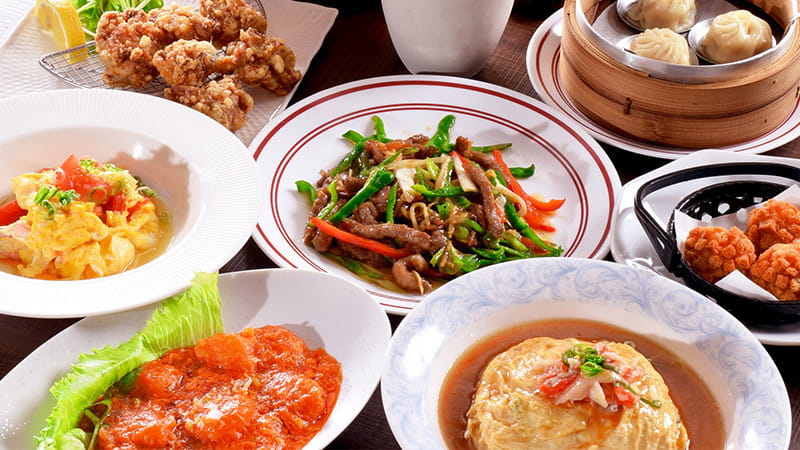
How Are You Actually Supposed to Eat Chinese Food?
A Practical Guide to Understanding the Logic Behind Chinese Dining
For many foreign travelers, Chinese food is exciting — and confusing.
Dishes arrive all at once.
No one seems to have “their own” plate.
People stand up, toast, talk loudly, reach across the table.
It feels chaotic.
But it isn’t.
Chinese dining follows a clear internal logic — it’s just not the same logic most foreigners are used to.
The First Rule: Chinese Food Is Shared, Not Owned
In most Western dining systems:
One person → one dish
One plate → one portion
Chinese food works differently.
At a Chinese table:
Dishes belong to the table
Not to individuals
This changes everything.
You are not “ordering for yourself”.
You are contributing to a collective meal.
That’s why:
Portions are large
Dishes are diverse
Balance matters more than preference
Why Dishes Arrive Together (and Not in Courses)
Foreign diners often wait for a “starter”.
It never comes.
Chinese meals are designed to be experienced as a whole, not sequentially.
This allows:
Hot and cold contrast
Light and heavy balance
Continuous tasting
You eat based on appetite, not schedule.
Rice Is Not the Main Dish — It Is the Anchor
One of the most common mistakes foreigners make is treating rice like pasta or bread.
In Chinese dining:
Rice stabilizes the meal
It absorbs flavor
It prevents overload
You eat dishes with rice, not instead of rice.
Skipping rice often makes the meal feel overwhelming — locals instinctively know this.
Why There’s No “Best Dish” on the Table
Asking “which dish should I try first?” feels logical — but misses the point.
Chinese cuisine values combination over hierarchy.
A meal is judged by:
Variety
Harmony
Flow
Not by a single star item.
This is why locals often say:
“都可以” (“Any is fine”)
They mean it.
The Role of Chopsticks: Precision, Not Possession
Chopsticks are not forks.
They are not for stabbing or securing food.
They are for:
Picking
Sampling
Sharing
Using chopsticks lightly signals awareness of the group — not weakness.
Noise, Movement, and Conversation Are Part of the Meal
Silence at a Chinese table often means something is wrong.
Talking, laughing, standing up, toasting — these are not distractions.
They are signals that the meal is alive.
Eating quietly and quickly can feel distant or even cold in group settings.
Why “Finishing Everything” Is Not Required
In many cultures, finishing your plate shows respect.
In Chinese dining, leaving some food often shows generosity.
An empty table may suggest:
Not enough food
Poor hosting
This doesn’t apply everywhere, but it explains why leftovers are common — and accepted.
What This Means for Foreign Travelers
To eat Chinese food “correctly”, you don’t need perfect etiquette.
You need the right mindset.
Don’t rush
Don’t isolate yourself
Don’t treat food as private property
Think of the meal as a shared rhythm, not a performance.
A Final Thought: Chinese Food Is Social Before It Is Culinary
Chinese food is not just about flavor.
It is about:
Relationship
Timing
Awareness of others
Once you stop trying to “optimize” your own plate, Chinese dining starts to make sense.
And often — it becomes much more enjoyable.
About the Author
Senior Travel Consultant at HelloChinaTrip
This article is written by a Senior Travel Consultant at HelloChinaTrip, a China-based inbound travel company specializing in culturally informed travel experiences for international visitors.
With years of experience guiding foreign travelers through local markets and regional cuisines, the author focuses on explaining why food tastes the way it does — not just what to eat.
Want a More Personalized Best China Tour?
Talk to us about booking a private or custom tour for your unique China experience.

China's Iconic Destinations, Together
Join a small-group guided tour through China's most iconic landscapes and cities. From the Great Wall to Guilin's karst peaks and Zhangjiajie's glass-bridge peaks, every itinerary is carefully curated with fixed pricing, expert local guides, and full logistics support.
- Fixed, transparent pricing — no hidden fees
- Small groups for an intimate experience
- Multilingual, certified guides
- Visa invitation letter included

Private Vehicles & Expert Guides, On Demand
Book private vehicles and certified multilingual tour guides across China with real-time pricing and bundled savings. Whether you need an airport transfer, a day tour of Beijing's hutongs, or a multi-day charter through Sichuan — GuideCar handles it all with verified drivers and expert guides.
- Real-time pricing — no negotiation required
- Bundle vehicle + guide for extra savings
- Airport transfers, day tours, multi-day charters
- Guides in English, Spanish, French, and more
Additional Specialized Services
Completing your China journey from paperwork to on-ground AI support
Invitation Letter
Apply online for an official China visa invitation letter. Our service handles formatting, verification, and delivery — accepted by Chinese consulates worldwide. Track your order in real time and receive your document digitally within days.
- Official document formatting
- Accepted at Chinese consulates globally
- Real-time order tracking
- Digital delivery
Medical Tourism
Access China's top Grade 3 Class A hospitals and leading specialists through a single platform. We support the full medical journey: hospital selection, appointment booking, medical translation, transport, accommodation coordination, and post-care follow-up.
- Grade 3A hospitals & top specialists
- Appointment booking & medical translation
- Transport & accommodation support
- Post-treatment follow-up
Custom Tours
No templates, no compromises. Tell us your interests, travel dates, group size, and budget — and we'll design a completely bespoke China itinerary from scratch. Culture, adventure, food, photography, tea ceremonies, ancient villages — anything is possible.
- 100% bespoke itineraries
- Any group size, any theme
- Flexible dates & duration
- All-inclusive or component booking
AI Concierge
Chat with HiChina.Travel — our AI-powered travel concierge — to get instant answers about China travel, visa requirements, destinations, culture, and safety. Available 24/7, it helps you plan faster and arrive better prepared.
- Instant answers, 24/7
- Visa & entry requirement guidance
- Destination & itinerary suggestions
- Powered by real HelloChinaTrip data
