
Understanding Ming and Qing Dynasty Chinese Furniture: A Journey Through History

Qing Dynasty Chinese Furniture

China’s antique furniture from the Ming (1368-1644) and Qing (1644-1912) Dynasties remains some of the most prized and sought-after collectibles in the world. While both periods are renowned for their intricate craftsmanship, they present distinct styles that reflect the economic, cultural, and political shifts during their respective times. This article dives into the differences between Ming and Qing Dynasty furniture, focusing on the evolution of hall or chamber furniture, and how materials, design, and craftsmanship transformed over centuries.

15 Best Places to Visit in China (2025 & 2026)
The Best Times to Visit China: A Month-by-Month Guide for Travelers
Chinese Food Culture:A rich tradition of diversity and balance in cuisine.
Discover China with Professional Tour Guides from HelloChinaTrip
Top Souvenirs to Buy in China
How to Use Your Phone in China: SIM Cards, International Roaming, and Free Wi-Fi Options

What is Chinese Hall Furniture?

Hall furniture, often referred to as “chamber furniture” in imperial China, was used in the most important room of the house: the hall (ting) or chamber (tang). These rooms served as the center for social gatherings, banquets, and ceremonies, much like modern-day living rooms or drawing rooms in the West. It was here that families would showcase their finest pieces of furniture to impress guests, and these rooms would often overlook a meticulously designed garden.

Characteristics of Hall Furniture in Imperial China

Chinese hall furniture followed specific principles, regardless of wealth. The layout often consisted of:

  • Four tea tables, each with two chairs
  • Two walls of intricately carved wainscoting
  • Two plain walls adorned with decorative panels, which could be changed based on seasons or special occasions
  • Other furniture pieces, such as serving tables, folding screens, traditional Chinese-style solid bench beds (arhat beds), and clothes racks, were arranged along the walls.

These items not only served a functional purpose but were often exquisitely crafted to reflect the wealth and status of the household.

Popular Woods Used in Chinese Furniture

The choice of materials in ancient Chinese furniture was significant, with some woods being considered more valuable than others. The primary materials used for hall furniture included:

  • Mahogany (Hongmu): A reddish-brown hardwood, commonly used for making furniture.
  • Huanghuali: Known as “yellow flowering pear,” this wood, from the rosewood family, is fragrant and features natural patterns that resemble ghostly faces. It is highly valued for its beauty.
  • Zitan: A dense and durable wood from the rosewood family, known for its rich color ranging from blackish purple to red. Zitan was perfect for intricate carving and was prized during both the Ming and Qing periods.
  • Camphor Wood: Used primarily for wardrobes and storage chests, camphor wood has a strong fragrance that repels insects, making it ideal for protecting clothing.

Ming Dynasty Furniture: Simplicity and Craftsmanship

The Ming Dynasty is often referred to as the “golden era” of Chinese furniture, known for its elegant simplicity and refined design. Ming furniture is characterized by clean lines, minimalistic decoration, and a focus on functionality. The pieces were often made from a single piece of high-quality wood, and traditional Chinese joinery methods like mortise and tenon joints (which require no nails or screws) were used. This allowed for the easy disassembly and reassembly of furniture, a useful feature for traveling or moving.

Key Characteristics of Ming Furniture:

  • Simplicity in design: Minimal carvings, with the natural beauty of the wood as the main focus.
  • Durability: Strong, functional designs that were meant to last.
  • Mastery in joinery: Mortise and tenon, dovetailing, and other advanced techniques for assembling pieces without glue.

Qing Dynasty Furniture: Grandeur and Ornate Design

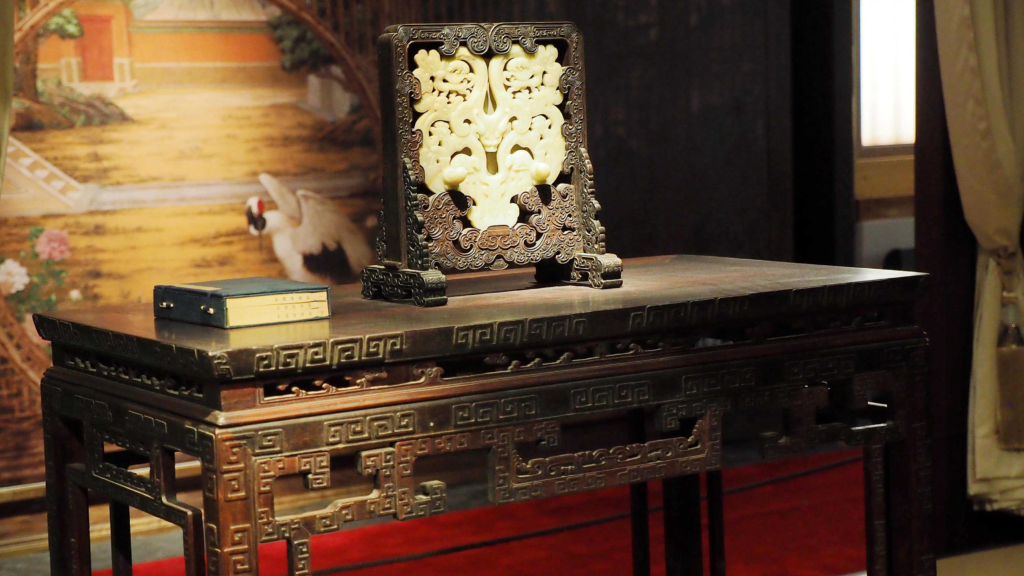
During the Qing Dynasty, furniture design became more opulent, with intricate carvings and embellishments. Furniture pieces were often larger and more complex, with multiple pieces of wood joined together. The furniture’s designs were characterized by elaborate motifs, intricate openwork, and lavish lacquer finishes. This period also saw the introduction of ivory, mother of pearl, and jade inlays, further elevating the luxury of Qing furniture.

The overuse of precious woods like zitan and huanghuali by the middle of the Qing Dynasty led to a shortage of these materials, resulting in furniture being made from multiple pieces of wood. While visible surfaces would feature the best wood, less attractive timber would be used for the internal components.

Key Characteristics of Qing Furniture:

  • Larger size: Pieces from the Qing Dynasty were often more substantial in size.
  • Elaborate decorations: Intricate carvings, lacquer work, and inlays became common.
  • Use of multiple pieces of wood: Larger furniture made from various components, joined skillfully.

Economic, Cultural, and Political Factors Behind the Changes

The changes in furniture style between the Ming and Qing Dynasties were influenced by several factors:

  1. Economic Stability: During the reign of Emperor Kangxi in the Qing Dynasty, China’s political stability allowed the economy to thrive. This resulted in a growing middle class that demanded more luxurious goods, including furniture.

  2. Resource Scarcity: The overuse of precious hardwoods like zitan and huanghuali led to their scarcity in the later Qing period, influencing the shift towards larger, multi-piece furniture made from mixed woods.

  3. Western Influences: The influx of Western trade and ideas during the Qing Dynasty brought new artistic influences. This period saw the incorporation of Western elements, like larger sizing and certain decorative motifs, into traditional Chinese furniture.

Ming vs. Qing Furniture: A Comparison

  • Ming Furniture: Simpler in design, made from a single, high-quality piece of wood, focused on functionality and craftsmanship.
  • Qing Furniture: Larger, more ornate, with intricate carvings, lacquer work, and inlays, reflecting the wealth and power of the Qing court.

Where to See Antique Chinese Furniture

If you’re interested in seeing these masterpieces in person, there are several places across China where you can view and even purchase antique furniture:

  1. The Forbidden City, Beijing: Home to some of the finest examples of imperial Chinese furniture, showcasing both Ming and Qing styles.
  2. Shanghai Museum: Displays a significant collection of Ming and Qing furniture, illustrating the evolution of design.
  3. Wuzhen Water Town, Zhejiang: Known for its traditional residences that feature antique furniture.
  4. Xidi Village, Anhui: A UNESCO World Heritage site where you can experience staying in rooms furnished with antique furniture.

Ming and Qing Dynasty furniture offer a fascinating glimpse into China’s cultural evolution. While Ming furniture is prized for its elegance and simplicity, Qing furniture is celebrated for its grandeur and intricate details. Understanding these differences not only enriches your appreciation for Chinese craftsmanship but also deepens your connection to China’s rich history. Whether you’re visiting ancient palaces or shopping for antique pieces, these treasures remain a testament to China’s artistry and cultural heritage.

Want a More Personalized Best China Tour?

Talk to us about booking a private or custom tour for your unique China experience.
Most PopularGuilin karst mountains — China Group Tours by HelloChinaTrip
Group Tours

China's Iconic Destinations, Together

Join a small-group guided tour through China's most iconic landscapes and cities. From the Great Wall to Guilin's karst peaks and Zhangjiajie's glass-bridge peaks, every itinerary is carefully curated with fixed pricing, expert local guides, and full logistics support.

  • Fixed, transparent pricing — no hidden fees
  • Small groups for an intimate experience
  • Multilingual, certified guides
  • Visa invitation letter included
Learn More
Private vehicle and tour guide service in China — HelloChinaTrip GuideCar
GuideCar

Private Vehicles & Expert Guides, On Demand

Book private vehicles and certified multilingual tour guides across China with real-time pricing and bundled savings. Whether you need an airport transfer, a day tour of Beijing's hutongs, or a multi-day charter through Sichuan — GuideCar handles it all with verified drivers and expert guides.

  • Real-time pricing — no negotiation required
  • Bundle vehicle + guide for extra savings
  • Airport transfers, day tours, multi-day charters
  • Guides in English, Spanish, French, and more
Learn More
More Services

Additional Specialized Services

Completing your China journey from paperwork to on-ground AI support

Visa Documents, Simplified

Invitation Letter

Apply online for an official China visa invitation letter. Our service handles formatting, verification, and delivery — accepted by Chinese consulates worldwide. Track your order in real time and receive your document digitally within days.

  • Official document formatting
  • Accepted at Chinese consulates globally
  • Real-time order tracking
  • Digital delivery
Explore Invitation Letter
Your China, Your Way

Custom Tours

No templates, no compromises. Tell us your interests, travel dates, group size, and budget — and we'll design a completely bespoke China itinerary from scratch. Culture, adventure, food, photography, tea ceremonies, ancient villages — anything is possible.

  • 100% bespoke itineraries
  • Any group size, any theme
  • Flexible dates & duration
  • All-inclusive or component booking
Explore Custom Tours

Video Testimonials

Antique Qing Dynasty Chairs

Ming Furniture – The Dr S Y Yip Collection

Customized China Tours Tailored Just for You