
Diebu County, Gannan Tibetan Prefecture, Gansu
Zhagana
扎尕那 · The Stone Fortress of Shangri-La
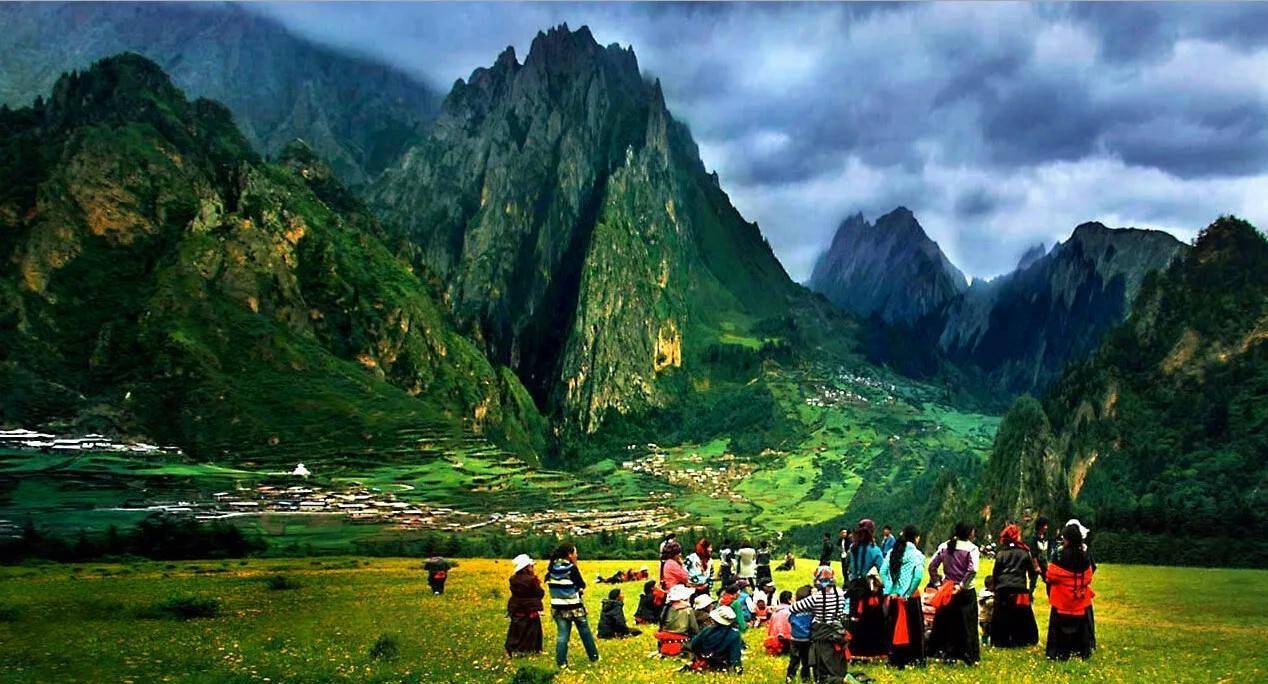
Giant stone peaks surround a hidden Tibetan valley — a place Joseph Rock called the birthplace of Adam and Eve. No crowds, no ticket gates. Just mountains, meadows, and silence.
“I have never seen such a beautiful place… This is the birthplace of Adam and Eve.”— Joseph Rock, National Geographic explorer, 1928
A Fortress Built by the Earth Itself
Zhagana means “stone box” in Tibetan. And that’s exactly what it is: a natural fortress of towering limestone peaks that enclose a valley of Tibetan villages, terraced fields, and alpine meadows. No architect designed this. The mountains themselves carved it over millions of years. Four villages cluster inside the stone walls — their wooden houses, prayer flags, and white stupas dwarfed by the peaks rising 1,500 meters above them.
Stone Peaks
Massive limestone spires rise from the valley floor like natural skyscrapers. Their walls are nearly vertical, their summits often shrouded in mist. Geologists call it a “stone forest” — the locals just call it home.
Tibetan Culture
Zhagana’s residents are Tibetan Buddhists. Prayer wheels spin at village entrances. Butter lamps flicker in home shrines. Morning and evening, the sound of chanting drifts across the valley — a rhythm unchanged for centuries.
Untouched Trails
Unlike most Chinese scenic areas, Zhagana’s trails remain wild. Stone paths connect villages to high pastures. No cable cars. No souvenir kiosks. Just switchbacks climbing through forest to viewpoints that feel like secrets.
The Explorer Who Put Zhagana on the Map
In 1928, Joseph Rock — an Austrian-American botanist and National Geographic correspondent — arrived in Zhagana after months of expedition through remote Gansu and Sichuan. He was searching for plants. He found something else entirely.
The stone fortress stunned him. In his writings, he compared it to the Garden of Eden, calling it the most beautiful landscape he had encountered in all his years of Asian exploration. His photographs in National Geographic introduced the world to this hidden corner of the Tibetan plateau.
Nearly a century later, Zhagana remains remarkably unchanged. The same stone walls. The same wooden houses. The same sense that you’ve stepped into a world that modern tourism forgot.
Hiking Options
From easy village strolls to full-day ridge climbs
Village Loop
Walk between the four villages on stone paths. Visit Dongcha village for the best view of the stone fortress. Stop at local homes for butter tea. Minimal elevation gain — suitable for all fitness levels.
Meadow Trail
Climb from the valley to high alpine meadows where yaks graze. Panoramic views of the stone peaks. Visit a small temple perched on a ridge. Return via a different path through pine forest.
Ridge Traverse
A full-day hike to the ridge line separating Zhagana from the Diebu valley. Requires good fitness — you’ll gain 1,200m of elevation. Reward: 360° views of stone peaks, alpine lakes, and endless mountains.
3-Day Experience
Arrival & Orientation
Drive from Lanzhou (5 hours) or Langzhou (3 hours). Settle into a Tibetan guesthouse. Evening walk through the village as the sun sets behind the stone peaks. Dinner of yak butter tea and tsampa.
Full-Day Hike
Choose your trail based on fitness and interest. Your guide leads the way, explaining local flora, Tibetan customs, and the geology of the stone fortress. Picnic lunch at a viewpoint. Evening: stargazing at 3,000m.
Departure or Extension
Morning: visit a local family’s home, see traditional butter sculptures. Option to continue to Langmusi (sacred Tibetan town) or return to Lanzhou for departure. We arrange all transfers.
From $380 per person · Private guide · Tibetan guesthouse · All meals & transfers
Getting There
- From Lanzhou: 5 hours by car through Gansu mountains
- From Langzhou (Gannan airport): 3 hours by car
- Nearest airport: Gannan Xiahe Airport (GXH)
- We arrange private car from any arrival point
- Road condition: Paved, scenic drive through Tibetan plateau
Best Time to Visit
- June–September: Green meadows, wildflowers, warm days
- September–October: Autumn colors, clear skies, fewer tourists
- Winter: Snow on peaks, cold nights, empty trails
- June–July: Yak calves born, festivals in nearby villages
- Altitude: 2,800–3,500m — moderate altitude
Walk Where Rock Walked
Discover the Shangri-La Joseph Rock found in 1928
Plan My Zhagana TripVisitor Questions
What is Zhagana?
Zhagana (扎尕那) is a natural stone fortress in Diebu County, Gannan Tibetan Autonomous Prefecture, Gansu Province. Giant limestone peaks surround a valley of four Tibetan villages. The name means “stone box” in Tibetan — an accurate description of the geography. It was designated a Globally Important Agricultural Heritage System by the UN FAO in 2017 for its unique agro-pastoral landscape.
Why is it called “Shangri-La”?
Joseph Rock, the National Geographic explorer who visited in 1928, called it “the birthplace of Adam and Eve” — his way of saying it felt like an earthly paradise. Later writers connected his descriptions to the fictional Shangri-La from James Hilton’s novel Lost Horizon. Unlike other “Shangri-La” destinations in China, Zhagana genuinely retains the untouched, mystical quality that inspired the original concept.
Is Zhagana difficult to reach?
It requires effort but is entirely accessible. The nearest airport is Gannan Xiahe (3 hours by car). From Lanzhou, it’s a 5-hour drive through spectacular mountain scenery. The roads are paved and well-maintained. The challenge is distance, not difficulty — this is part of what keeps Zhagana uncrowded. We handle all logistics; you just show up.
What altitude is Zhagana?
The valley floor sits at approximately 2,800m. Trails climb to 3,500m and higher. This is moderate altitude — most visitors from sea level will feel some shortness of breath on climbs but won’t experience severe altitude sickness. We recommend arriving a day early in Lanzhou (1,500m) if possible to begin acclimatization.
Can I combine Zhagana with other destinations?
Yes. Common routes include: Zhagana + Langmusi (sacred Tibetan town, 2 hours away), Zhagana + Labrang Monastery in Xiahe, or a full Gannan loop including Sangke Grassland, Ganjia Secret Land, and Kangle. A 5–7 day Gannan itinerary can cover all major highlights. We design routes based on your time and interests.