
Built 1056 AD · Shanxi Province
Yingxian
Wooden Pagoda
Sakyamuni Pagoda of Fogong Temple · 应县木塔 · 佛宫寺释迦塔
The tallest and oldest wooden pagoda in the world. Built without a single nail. No earthquake has toppled it. No war has destroyed it. Standing for 970 years, it remains China’s greatest wooden architectural achievement.
A Building That Should Not Exist
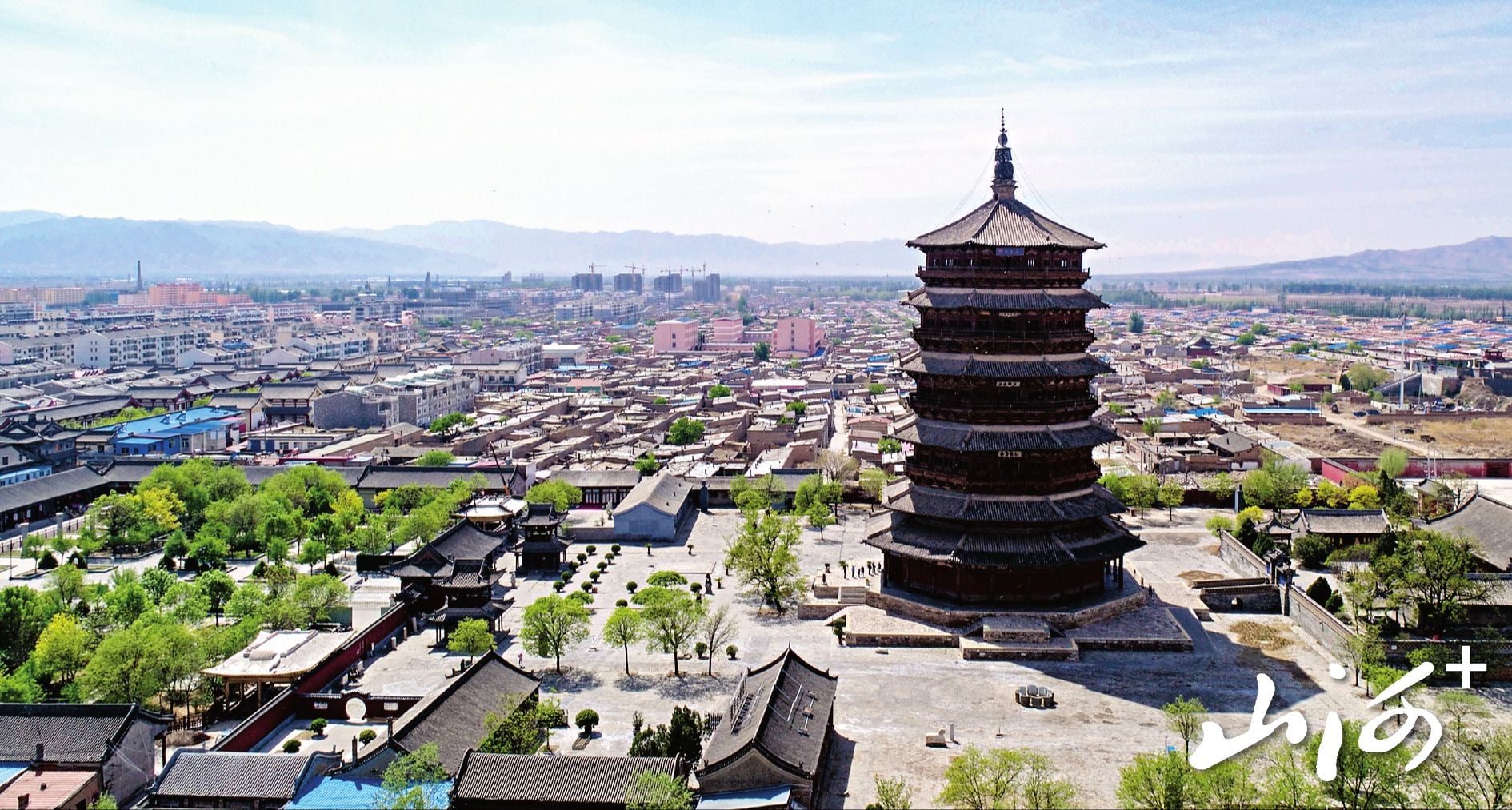
In 1056, during the Liao Dynasty, Chinese craftsmen built a wooden pagoda that reached 67 meters into the sky. They used no steel bolts. No iron nails. Only mortise-and-tenon joints — wooden pegs fitted into carved sockets — to hold the entire structure together. The building has survived nine major earthquakes, countless wars, and 970 years of weather. Engineers still cannot fully explain how. Walk around it today and you’ll see craftsmen’s marks still visible on the wood. Come with a private guide who can explain what you’re looking at — because without context, it’s just a tall wooden building. With context, it’s a miracle.
The Engineering That Defies Time
The pagoda uses a system of interlocking wooden brackets called dougong (斗拱) — a seismic engineering technique that allows the building to flex during earthquakes rather than resist. When the ground shakes, the wooden joints absorb and redistribute the shock. Engineers estimate the structure can withstand a magnitude 10 earthquake. It has survived at least nine major quakes since 1056, including one in 1303 that destroyed much of the surrounding region. The pagoda tilted slightly during one quake but corrected itself over time. It is, by any measure, the most earthquake-resistant wooden building on earth.
The Structure Above Ground
Five visible floors. Three hidden. Each level tells a story.
Eight Exterior Corners
The pagoda has eight corners at the base — a number associated with infinity and completeness in Chinese tradition. The symmetry creates a perfect octagon visible from above, and a sense of perfect balance from all angles.
Dou Gong Brackets
The cantilevered wooden bracket systems (斗拱) beneath each eave are not decorative — they’re load-bearing. Each set of brackets redistributes the weight of the upper floors through a complex interlocking system that has held for nearly a millennium.
Three Hidden Floors
Beneath the five visible stories are three additional hidden floors — structural layers that add stability. These hidden floors make the pagoda’s true height greater than it appears and contribute significantly to its seismic resilience.
Wooden Architecture Through the Ages
Yingxian Wooden Pagoda
Tallest and oldest wooden pagoda in the world. 67m. Built in Liao Dynasty without nails. Standing for 970 years. No major structural repairs ever needed.
Sakyamuni Pagoda (Layers)
Additional stories and modifications were added during the Jin Dynasty (1195). The pagoda’s appearance today reflects centuries of Layered additions — a living architectural record.
Earlier Wooden Structures
Most ancient Chinese wooden buildings were destroyed by fire, war, or earthquakes. The Yingxian Pagoda survived them all. It is a rare survivor of a building tradition that once filled China’s cities.
Half-Day or Full-Day Tour
Yingxian Pagoda Focus
Morning: depart Datong or Pingyao by private car. Arrive at Fogong Temple. Private guide explains the architecture, history, and conservation efforts. Walk the temple grounds. Return by afternoon.
Pagoda + Hanging Temple
Combine with the nearby Hanging Temple (Xuankong Temple). Both are within 1 hour of each other. Morning at the Wooden Pagoda, afternoon at the Hanging Temple. Ideal pairing — one ground-level wonder, one cliff-hanging marvel.
Shanxi Heritage Loop
Add Yungang Grottoes (Datong), Pingyao Ancient City, and the Shuanglin Temple (Three Gorges). A 3–4 day Shanxi cultural loop that covers the province’s most extraordinary architectural heritage.
From $240 per person · Private guide · Fogong Temple entrance · Hotel pickup
Getting There
- From Datong: 1 hour by car (80 km)
- From Pingyao: 2.5 hours by car
- From Beijing: 3.5 hours by high-speed train to Datong, then 1 hour
- Nearest station: Yingxian (short taxi from pagoda)
- We arrange private car from any Shanxi starting point
Visitor Information
- Temple ticket: ¥50 (includes pagoda)
- Open daily: 08:00 – 18:00 (summer) / 08:30 – 17:00 (winter)
- Climbing inside: Currently restricted to ground level for conservation
- Photography: Allowed outside; restricted inside
- Best months: April – October
- Allow 1–2 hours on site
Stand Before a 970-Year-Old Miracle
A wooden building that has outlasted empires
Plan My VisitVisitor Questions
Why was it built without nails?
Chinese wooden architecture reached its peak during the Tang and Liao dynasties — periods of remarkable engineering sophistication. The dougong (bracket) system was not a primitive substitute for nails; it was a superior technology for earthquake resistance. The interlocking joints allow the structure to flex during seismic events rather than cracking or collapsing. The technique was used in the finest Chinese buildings — the Forbidden City’s main halls, for example, also use no structural nails. The Yingxian Pagoda represents the ultimate expression of this tradition.
How has it survived so many earthquakes?
The pagoda has survived at least nine significant earthquakes since 1056, including the devastating 1303 Hongdong earthquake (magnitude 8) that destroyed much of Shanxi. The secret is flexibility. Steel-and-concrete buildings resist earthquakes — they crack and break. Wooden buildings with dougong joints flex with the seismic waves, absorbing and distributing the energy. Additionally, the pagoda’s octagonal base and hidden internal floors add structural stability that engineers are still studying.
Can I go inside?
Currently, climbing inside the pagoda is restricted to protect the structure and its murals. Visitors can walk around the exterior and view from ground level. Your guide will explain what lies inside — Buddhist statues, murals, and wooden beams bearing inscriptions from the original builders. The conservation restrictions are why the pagoda still stands; overuse by tourists would accelerate deterioration.
What can I combine with a visit?
The Hanging Temple (Xuankong Temple) is the natural pairing — only 1 hour away by car. Both are in Shanxi’s most extraordinary concentration of heritage sites. Other combinations: Yungang Grottoes (Datong), Pingyao Ancient City, the Shuanglin Temple. A Shanxi heritage tour can cover four or five world-class sites in 3–5 days.
Is it worth visiting if I can’t climb inside?
Absolutely. The exterior alone is remarkable — a perfect octagonal tower rising 67 meters, each story slightly smaller than the one below. The craftsmanship of the wooden eaves, the bracket systems, the decorative tiles — all visible from the ground. Add a knowledgeable guide who can explain the engineering, history, and conservation story, and you have one of China’s most intellectually satisfying heritage visits. You won’t regret the detour.