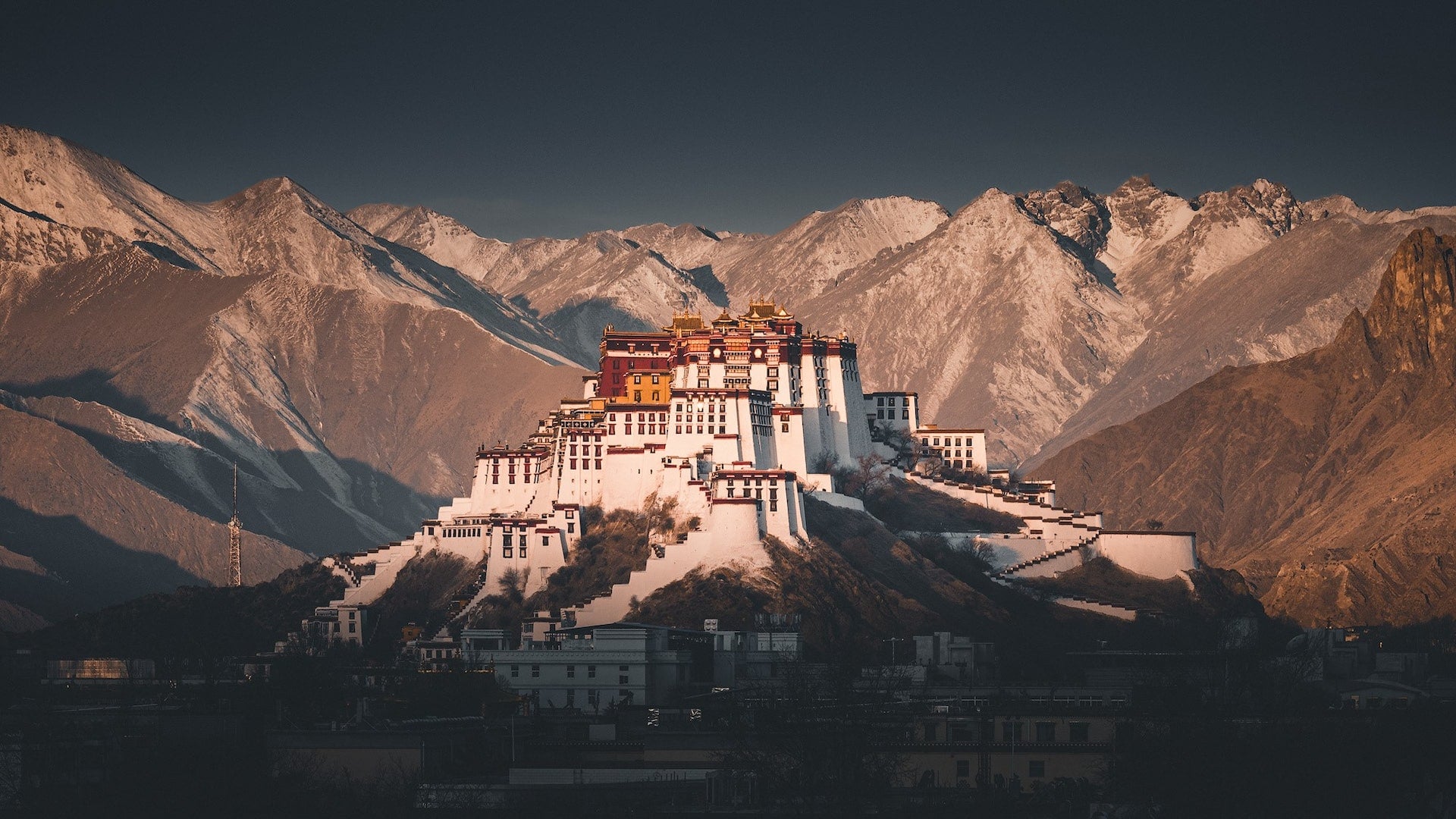
The Potala Palace was first constructed in the 7th century AD under the direction of Songtsen Gampo, the 33rd King of the Tibetan Empire (Tubo). According to historical records, the original palace complex was grand in scale, featuring three concentric outer walls and a thousand interior chambers. Following the 9th century, however, the palace suffered severe damage—caused by warfare, fires, and lightning strikes—and was eventually left in a state of neglect. In the 17th century, with the support of the Qing central government, the 5th Dalai Lama rebuilt the Potala Palace, establishing it as the political and religious center of Tibet. Through subsequent expansions, the complex grew significantly; by the 1930s, it had evolved into a massive palace-fortress complex covering an area of approximately 400,000 square meters, with a built-up area of about 130,000 square meters. Its main building rises to a height of 115.703 meters, and the entire complex comprises 1,267 rooms serving diverse functions—including palaces, reliquary stupa halls, prayer halls, administrative offices, a school for monastic officials, and living quarters for monks.