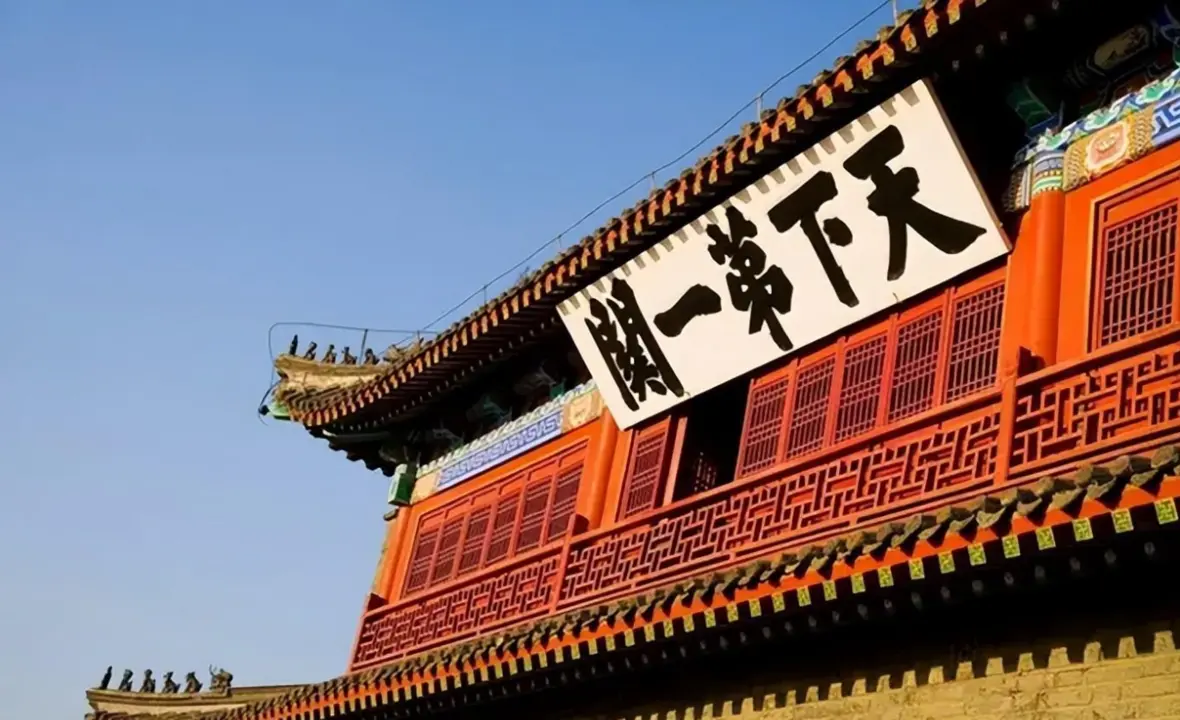
Shanhaiguan, located 15 kilometers northeast of Qinhuangdao City in Hebei Province, is one of the northeastern passes of the Great Wall of the Ming Dynasty. Until 1990, it was considered the eastern terminus of the Ming Great Wall. It is renowned as one of the "Three Great Wonders" of the Great Wall—along with Zhenbeitai in the central section and Jiayuguan in the west—and is famously hailed as the "First Pass Under Heaven" and the "Throat of the Frontier, Guardian of the Capital." Situated thousands of miles away from Jiayuguan, it stands as a celebrated landmark.
The fortress and pass were established in 1381 (the 14th year of the Hongwu reign of the Ming Dynasty). It was named "Shanhaiguan" (literally "Mountain-Sea Pass") because of its location—nestled against the mountains and bordering the sea. The fortress, which connects to the Great Wall, has a perimeter of approximately 4 kilometers. Its walls stand 14 meters high and 7 meters thick, featuring four main gates and an array of defensive structures. Notable features include the "First Pass Under Heaven" arrow tower, the Jingbian, Muying, and Linlü towers, a *wengcheng* (barbican/enclosed courtyard), and a 1,350-meter-long stretch of the Ming-era Great Wall built across the plains.
On March 4, 1961, the Great Wall at Shanhaiguan was designated by the State Council as one of the first batch of Major Historical and Cultural Sites Protected at the National Level.
In December 1987, the Great Wall was inscribed as a World Cultural Heritage site.