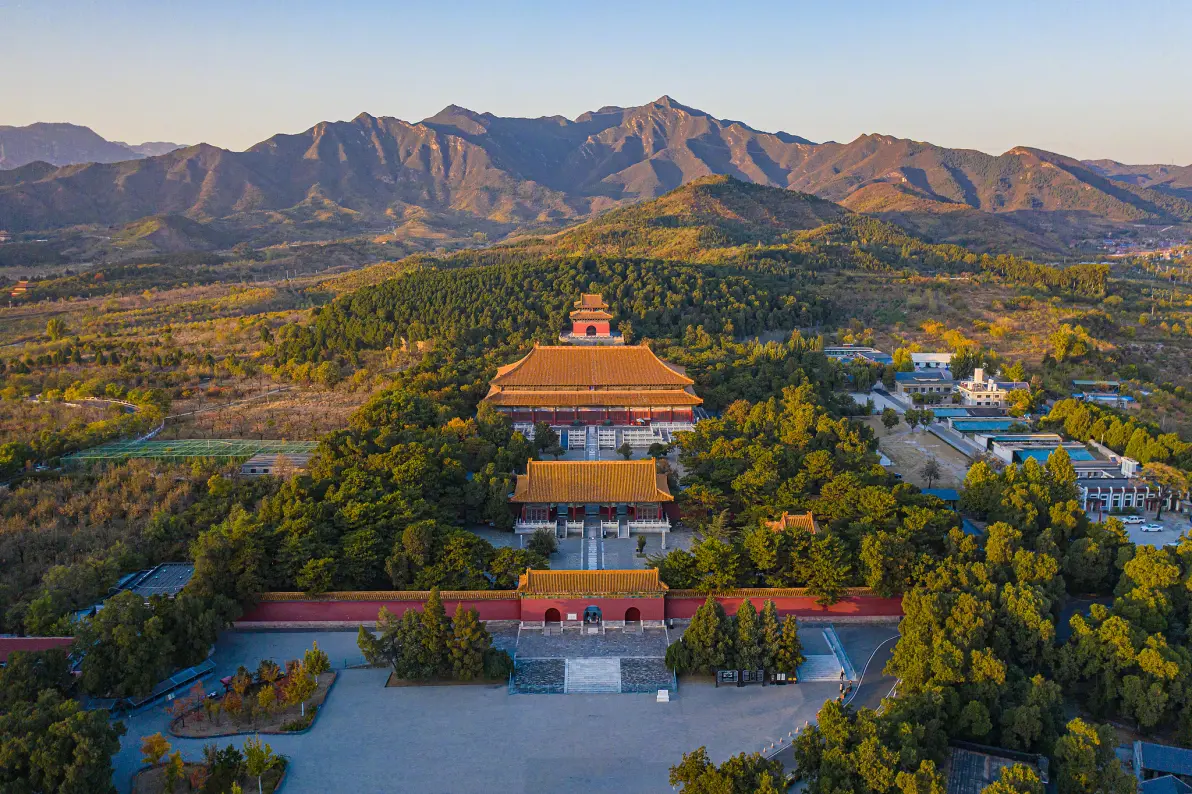
The Ming Tombs, located at the foot of Tianshou Mountain in the northern part of Changping District, Beijing, serve as the final resting place for 13 emperors of the Ming Dynasty. After Emperor Yongle established Beijing as the capital, he initiated the search for an imperial burial site in the area—a decision driven by both political and strategic considerations. This move, deeply rooted in strategic intent, played a crucial role in consolidating the regime and thoroughly eliminating the remnants of the Mongol-led Yuan Dynasty. Construction of the Ming Tombs began in the seventh year of the Yongle reign (1409) and continued for over 230 years, lasting until the early years of the Shunzhi reign of the Qing Dynasty. Thirteen magnificent imperial mausoleums were built, belonging to the following emperors: Chengzu (Changling), Renzong (Xianling), Xuanzong (Jingling), Yingzong (Yuling), Xianzong (Maoling), Xiaozong (Tailing), Wuzong (Kangling), Shizong (Yongling), Muzong (Zhaoling), Shenzong (Dingling), Guangzong (Qingling), Xizong (Deling), and Sizong (Siling). In total, the complex houses the remains of 13 emperors, 23 empresses, one imperial noble consort, and dozens of other consorts who were buried alongside the emperors. In addition to the imperial mausoleums, the site includes seven burial grounds for Ming Dynasty consorts, one tomb for a eunuch, and various auxiliary structures—such as the Office of Imperial Sacrificial Rites and the Directorate of Imperial Palaces—forming a comprehensive, grand, and imposing architectural complex. It stands as the best-preserved imperial burial site in the world, containing the largest number of buried emperors.