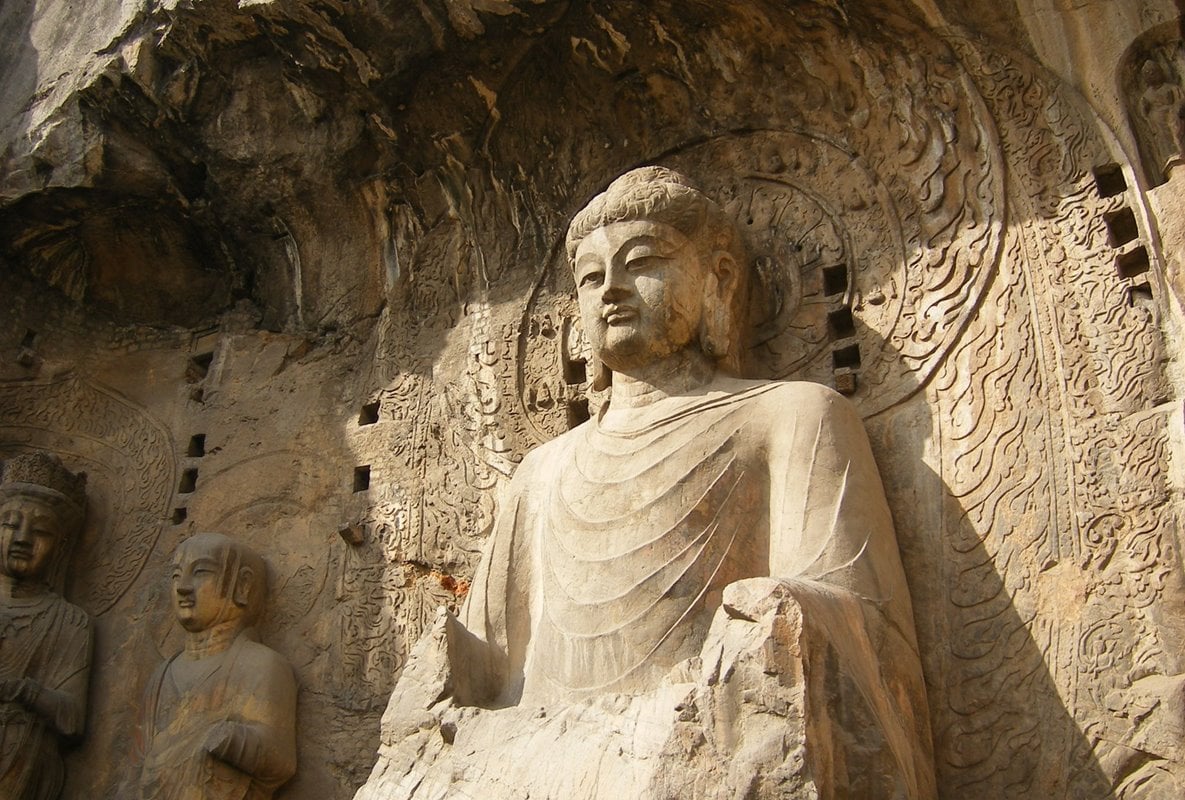
Located along the banks of the Yi River in the southern suburbs of Luoyang, Henan Province, the Longmen Grottoes represent the pinnacle and a major milestone of Chinese rock-cut art. They are recognized by UNESCO as a World Heritage Site and, together with the Mogao Grottoes in Dunhuang, the Yungang Grottoes, and the Maijishan Grottoes, are known as the "Four Great Grottoes of China."
Construction of the grottoes began in 493 AD—coinciding with Emperor Xiaowen of the Northern Wei Dynasty’s relocation of the capital to Luoyang—and continued on a grand scale for over 400 years, spanning the Eastern Wei, Western Wei, Northern Qi, Sui, Tang, Five Dynasties, and Song dynasties. Today, the site comprises 2,345 caves and niches, housing more than 100,000 statues and over 2,800 inscribed steles. The sculptural art found here encompasses both the slender, refined aesthetic characteristic of the Northern Wei period and the full, rounded forms typical of the Tang Dynasty, collectively showcasing the supreme achievements of ancient imperial cave-temple art.