












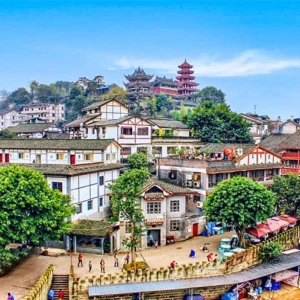




9 Days Guizhou Guilin Tour: Karst Kingdom & Ethnic Villages
Must-see & Must-do:
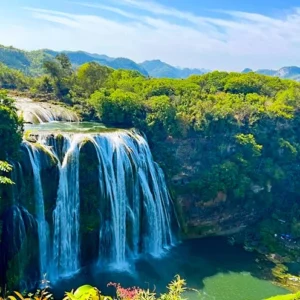
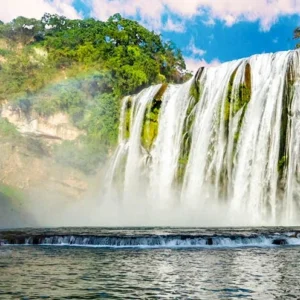
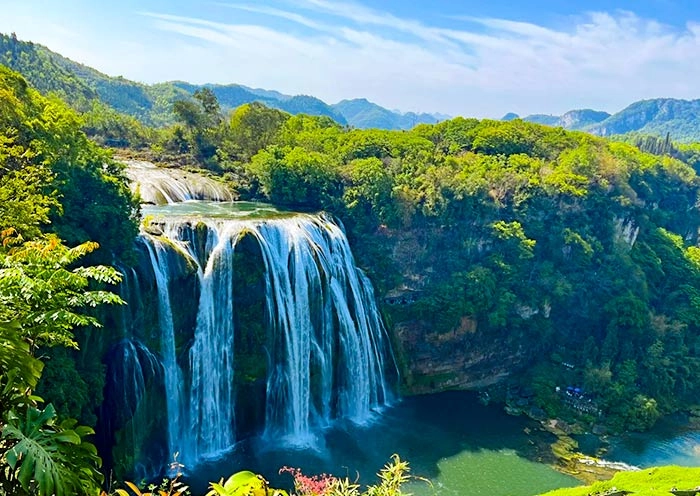
Highlight 1: Stand in awe before China’s most iconic waterfall, where the 77.8-meter cascade plunges into the Rhinoceros Pool with a roar heard miles away. Walk through the misty Water-Curtain Cave behind the falls for a 360° sensory experience.
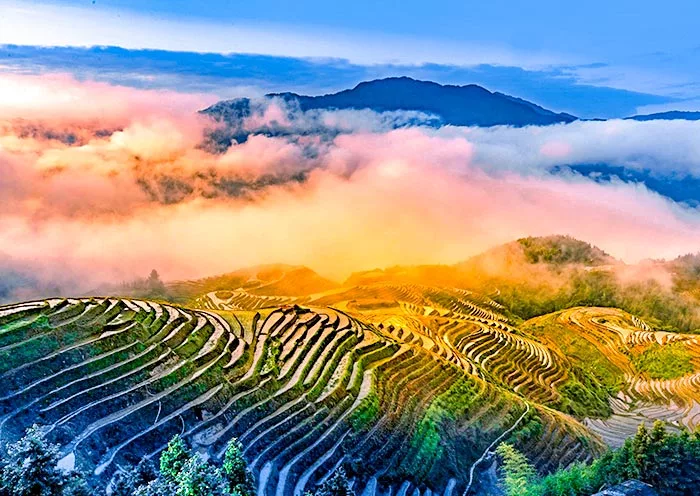
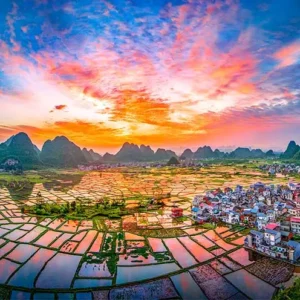
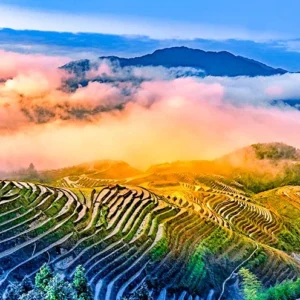
Highlight 2: Hike to Longji Rice Terrace, reputed as one of the most beautiful rice terraces in the world and capture the superlative view of the layer upon layer terraces and enjoy local ethnic culture.

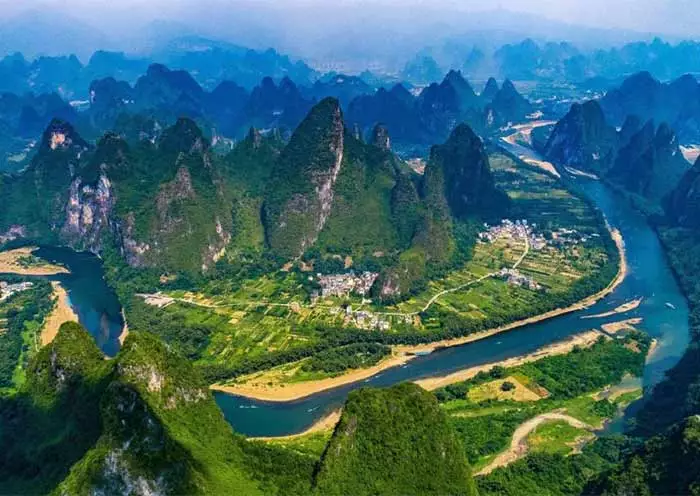
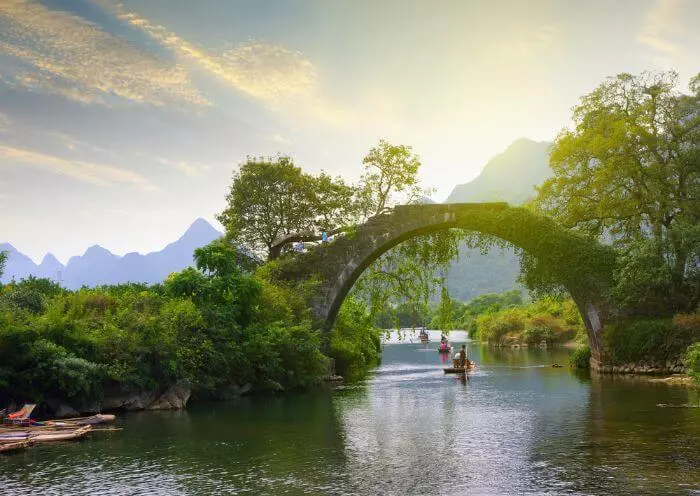
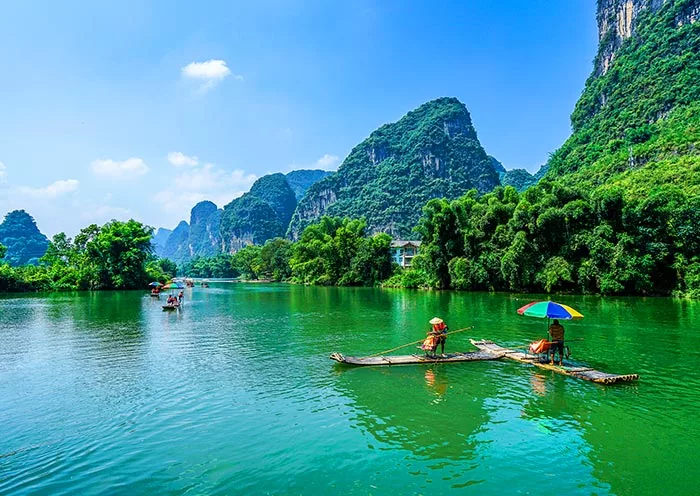
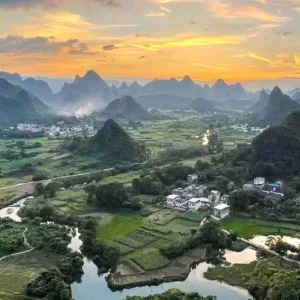
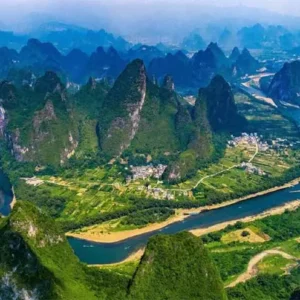
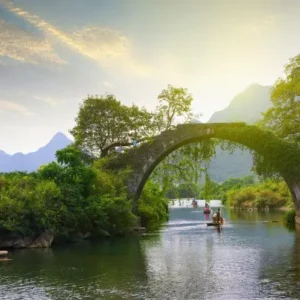
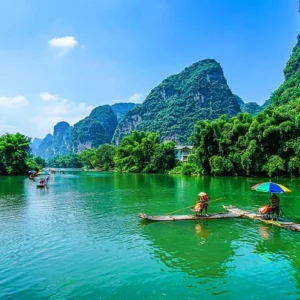
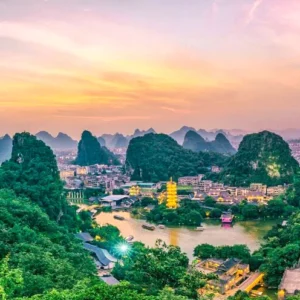
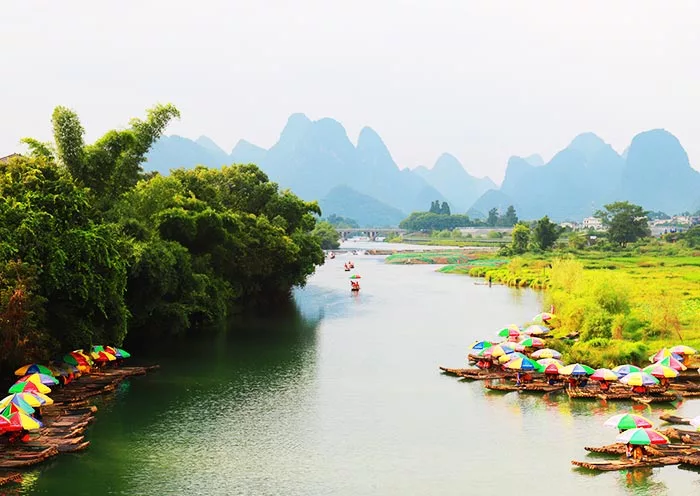
Highlight 3: Immerse yourself in the idyllic beauty of the Yangshuo countryside and explore the stunning scenery at your own pace. Whether you prefer biking, bamboo rafting, hiking, or simply relaxing in the tranquil countryside, there’s something for everyone to enjoy.
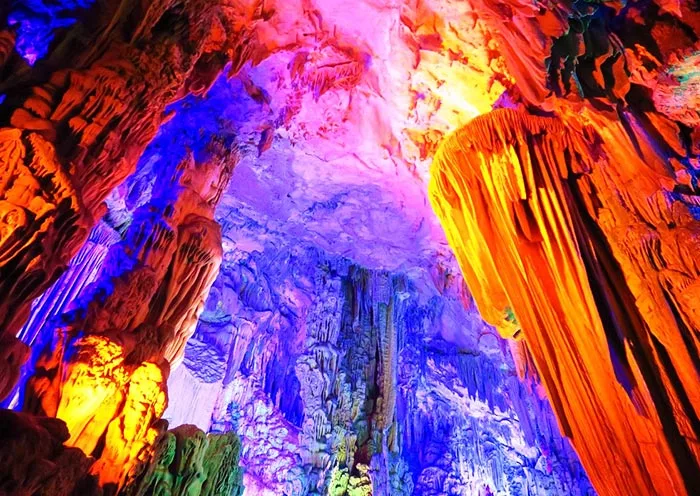
Highlight 4: Explore the underground palace of Reed Flute Cave and witness the magical beauty of nature that lies within. Be awed by the stunning array of uniquely shaped and exquisitely transparent stalactites, stalagmites, columns, and curtains…
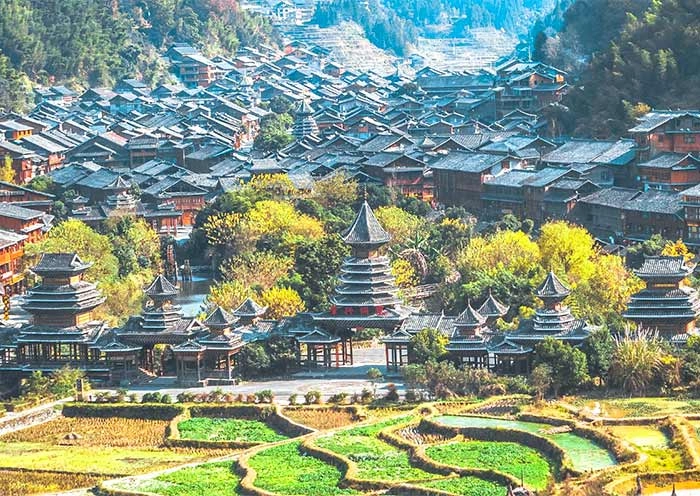
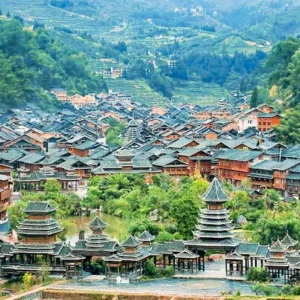
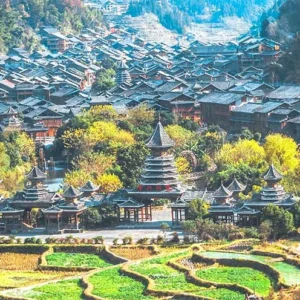
Highlight 5: In-depth exploration of Zhaoxing Dong Village, China’s largest Dong village. During the day, carefully admire the magnificent drum tower complex, and at night, immerse yourself in the enchanting illuminated nightscape.

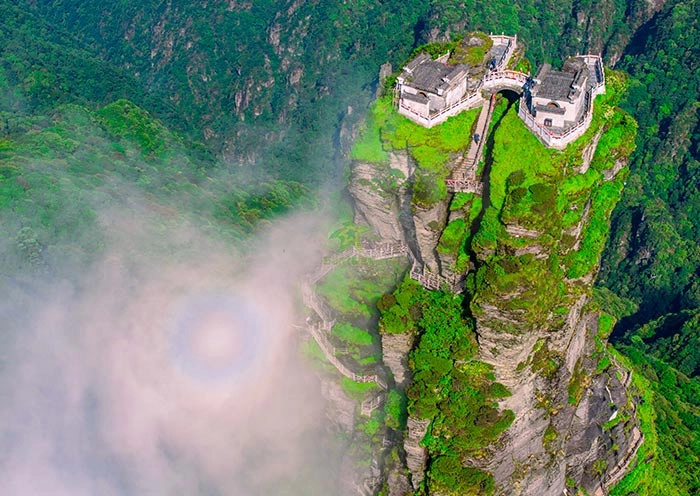
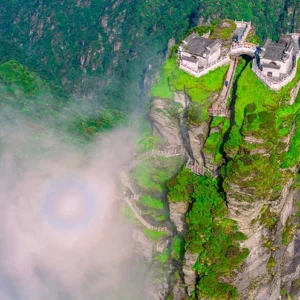
Highlight 6: Discover Fanjingshan, a UNESCO World Natural Heritage and China’s No. 5 Buddhist Mountain. Enjoy must-see highlights like Mushroom Stone, thrilling mountain hikes, and breathtaking views at Red Clouds Golden Summit.

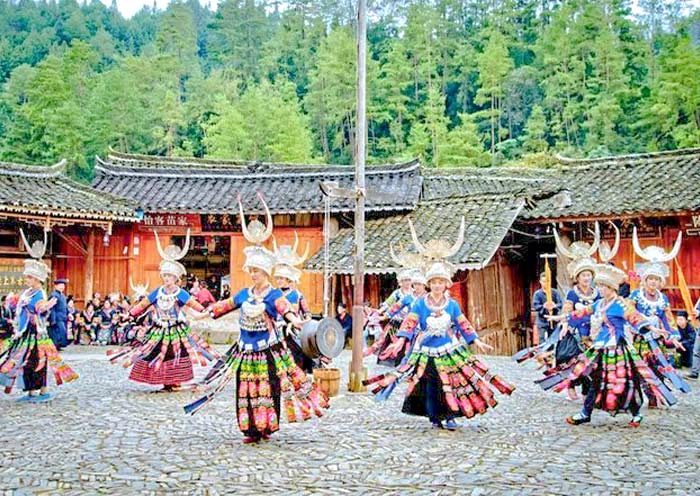
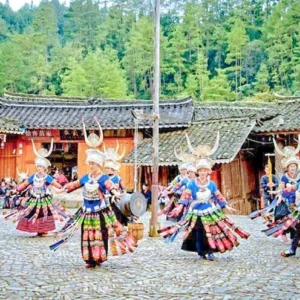
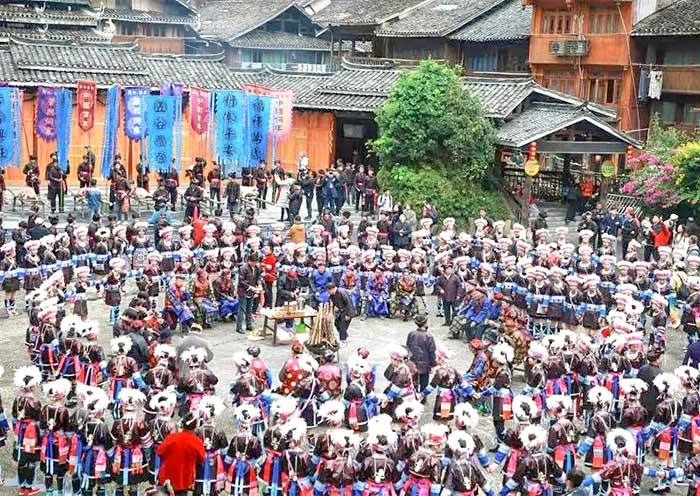
Highlight 7: Escape crowds at Langde Miao Village, the “Hometown of Chinese Folk Song and Dance.” Immerse in authentic Miao culture with the “Twelve Cups of Block-Way Rice Wine” ceremony, vibrant Lusheng dances, and traditional long-skirt costumes amid historic stilted houses.
Itinerary Quick Look:
Welcome to Guiyang, the capital of Guizhou! Your guide and driver await you at the airport/train station for a smooth transfer to your downtown hotel. Breathe in the fresh air!
Guiyang Arrival Ideas:
Guiyang Longdongbao International Airport (KWE) is the primary airport serving the city, offering direct flights to major cities across China, including Beijing, Xi’an, Shanghai, Guangzhou, Chengdu, Shenzhen, Wuhan, and Xiamen, as well as international destinations such as Bangkok, Kuala Lumpur, and Singapore.
Guiyang is a significant railway hub in Southwest China, serving numerous bullet trains that connect Guiyang to major cities such as Guangzhou, Kunming, Chengdu, Chongqing, and other cities within Guizhou.
Free Time Idea:
- Qianling Park (黔灵公园): Escape into nature at Guiyang’s largest urban park. Hike up Qianling Mountain, visit Hongfu Temple, and meet the playful monkeys along the trails.
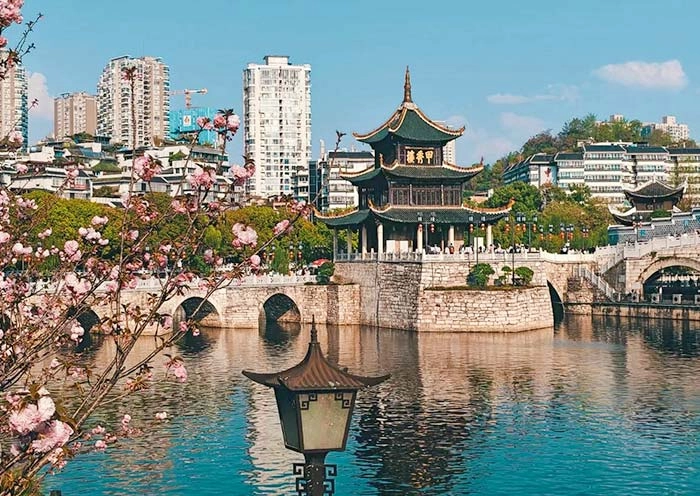
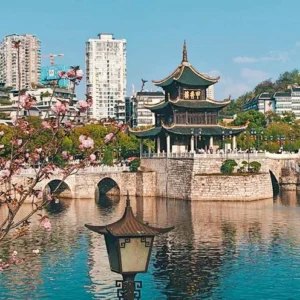
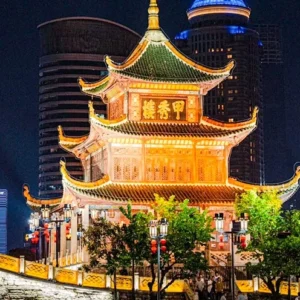
- Jiaxiu Pavilion (甲秀楼): This iconic three-tiered pavilion stands gracefully in the Nanming River. It’s a symbol of Guiyang, especially beautiful lit up at night. Take a stroll around the area and soak in the historical ambiance.
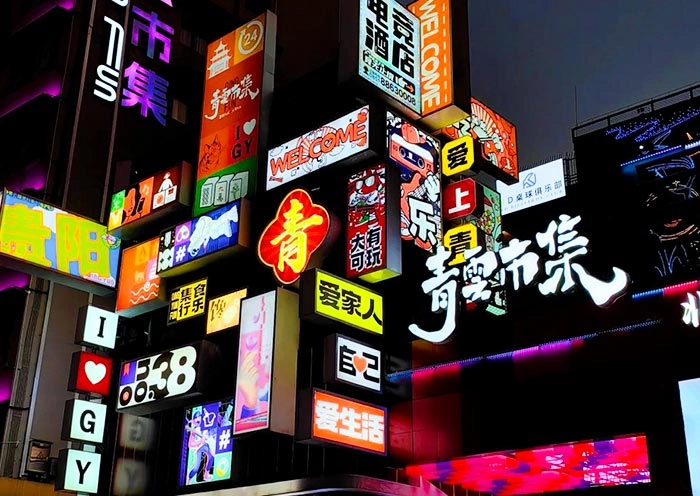
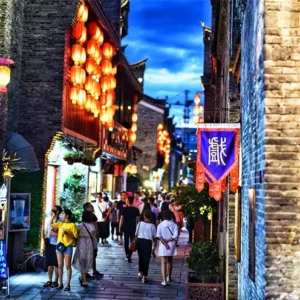
- Qingyun Market (青云市集): Just 1 km from Jiaxiu Pavilion, Qingyun Market is a lively night market once known as Guiyang’s “midnight canteen.” Stroll through its vibrant stalls, sample local snacks, and soak up the bustling nightlife atmosphere.
After breakfast, drive 2.5 hours to reach Anshun for the Huangguoshu Waterfall Tour, the location of the largest waterfall in China and Asia. You will hear the roaring water a kilometer away and admire the waterfall’s dynamic views!
Back in the 17th century, Xu Xiake, a famous ancient Chinese geographer and pre-internet celebrity, traveled to this resort. His blog boosted the reputation of this waterfall nationwide! Follow the popular path he took:
Head to Doupotang Scenic Area (陡坡塘), known for its 105-meter width. It is one of the filming locations for the TV series version of Journey to the West, one of China’s Four Great Classical Novels. During the wet season, the water flow is rapid and makes a low roar, hence its nickname “Roaring Waterfall.” Many tourists enjoy imitating the scenes of Journey to the West pilgrims. Feel free to try it!
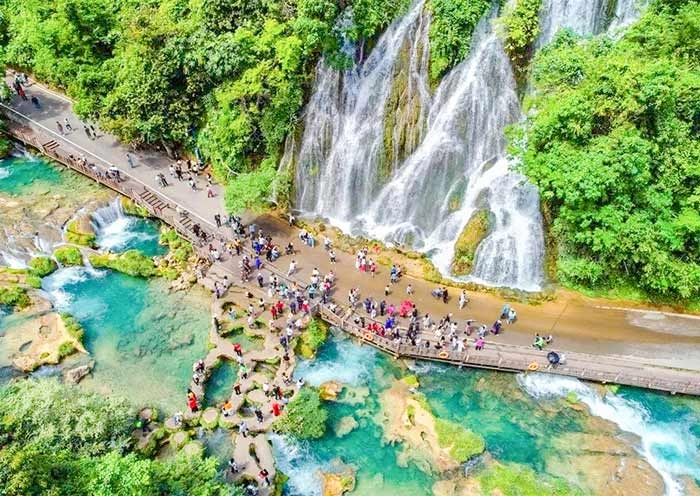
Next, take a sightseeing bus to Tianxingqiao Scenic Area (天星桥), to admire the most complete karst landscape in the scenic area – caves, waterfalls, and water stone forests interwoven. You can enjoy view from various angles, with no repetitive vlog or plog scenery. It is especially famous for Silver Chain Dropping Pool Waterfall (银链坠潭瀑布). Unlike ordinary waterfalls, where water falls linearly, multiple small waterfalls converge and cascade from a circular stone beach into the deep pool below.
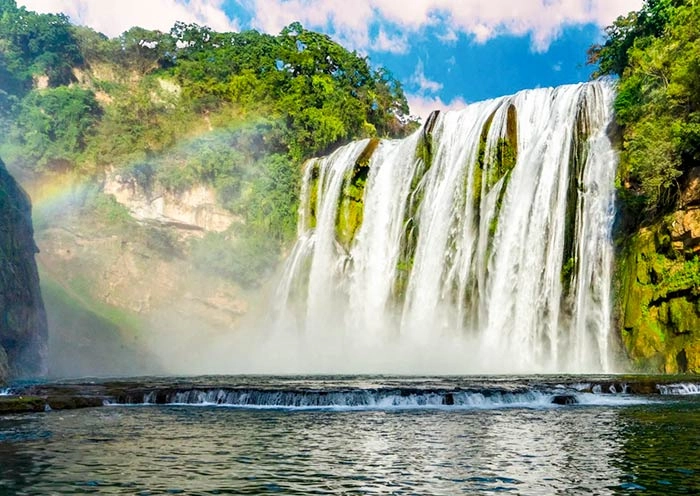
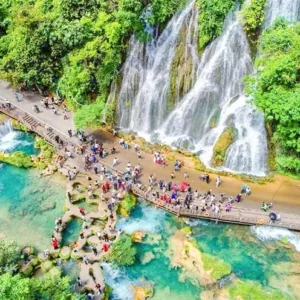
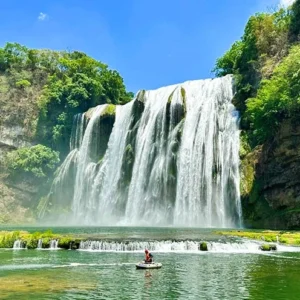
Afterward, take a sightseeing bus to Huangguoshu Waterfall (黄果树瀑布). As the main waterfall with a huge drop, 77.8 meters high and 101 meters wide, it consists of 18 waterfalls with different styles. At first glance, it can be folded into four layers. During the summer flood season, the water volume per hour is enough to fill 1296 swimming pools, falling into the 17-meter-deep pool. The roaring sound of water hit rocks day and night. You will build a deep connection with nature, find scenery changes from high up, straight on, and from the side.
Behind the waterfall is the 134-meter-long narrow Water Curtain Cave (水帘洞), a great place to touch the flowing water and see how it falls. You will walk to it and return by escalator.
After the visit, drive back to Guiyang for accommodation.
After breakfast, your guide and driver will pick you up from your hotel and drive towards Kaili (approximately 2 to 2.5 hours, covering about 160 kilometers).
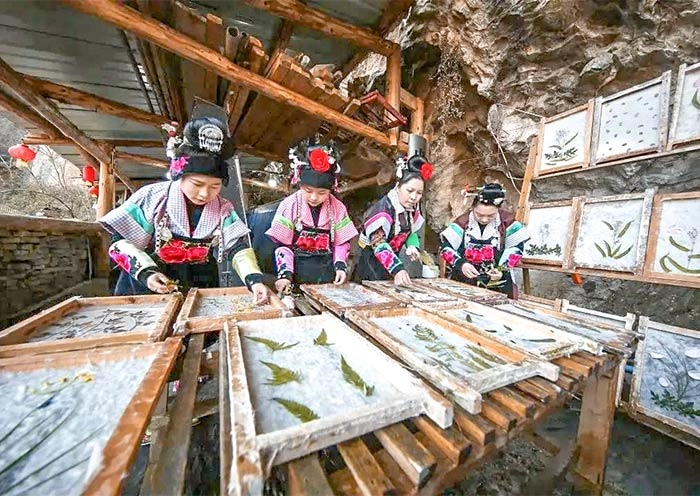
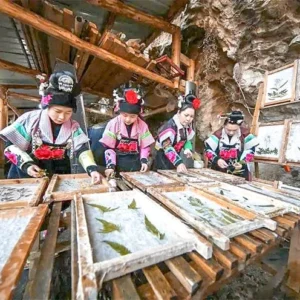
Your first stop is Shiqao Miao Village (石桥村), renowned as the “Hometown of Ancient Papermaking” in China. Here, the ancient papermaking methods are still preserved. The area surrounding the Miao village is rich in paper mulberry trees, and for generations, the villagers have used the bark to make paper. You will have the opportunity to witness the entire papermaking process, from soaking and pulping the bark to drying and crafting the durable, exquisite paper products. Beyond the workshops, take time to explore the tranquil village nestled alongside the water, embraced by scenic mountains. It is called “Shiqiao” (Stone Bridge) village because of a natural stone arch bridge that spans the riverbanks.
Optional activity: Consider creating your own special decorative paper by embedding real flower petals and leaves directly into the pulp, crafting a personal keepsake that you can take home.
In the afternoon, you will visit Matang Gejia Village (麻塘亻革家寨). The villagers of Matang believe themselves to be descendants of Hou Yi, the legendary archer. Their clothing is mainly decorated with batik and red embroidery. They fashion their headdresses into the shapes of bows and arrows, and their necklace pendants resemble various weapons, reminiscent of ancient generals. Legend has it that in ancient times, a general’s wife went to the battlefield in her husband’s armor and won a victory. To commemorate her, women wear general’s attire during festivals.
Beyond their attire, the Gejia people’s batik artistry is also very famous. The patterns are quite unique, often depicting powerful creatures like tigers and other animals, as well as flowers, birds, and insects, reflecting the Gejia people’s deep love for nature. In the village, you can observe the villagers making batik by hand using beeswax.
After the tour, transfer to your hotel in Kaili for check-in.
Note: If you’re interested in staying overnight in Xijiang Qianhu Miao Village to enjoy the stunning night views, please consult your travel advisor in advance.
In the morning, depart from Kaili and drive to Langde Miao Village(朗德苗上寨), known as the “Hometown of Chinese Folk Song and Dance.” It is nestled amidst lush mountains and terraced fields. Unlike more commercialized villages, Langde retains its untouched, authentic charm, where ancient customs and the rhythm of songs and dances unfold slowly.
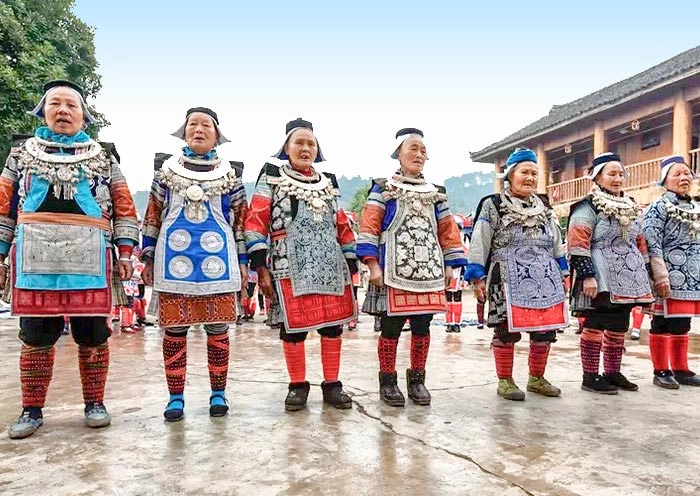
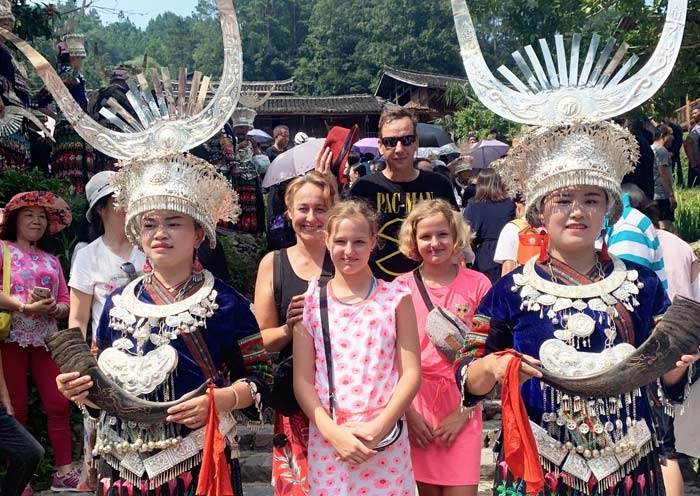
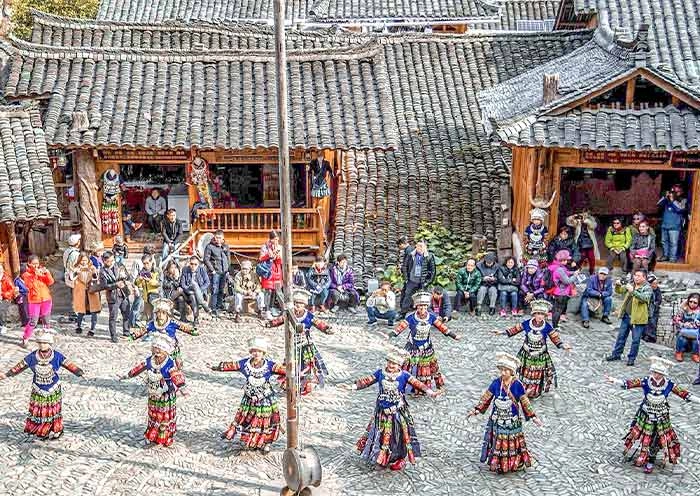
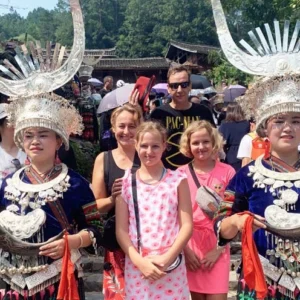
Upon arrival, you will be greeted with the “Twelve Cups of Block-Way Rice Wine” ceremony. Villagers dressed in magnificent silver headdresses and embroidered clothing will welcome guests and offer rice wine in ox horn cups. This is the highest etiquette of the Miao people for receiving distinguished guests, with each cup of wine representing blessings for a month. Afterward, you will walk along the stone-paved path to the Lusheng ground in the center of the village. Here, a wonderful Miao song and dance performance will take place, featuring toasting songs, Miao flying songs, and Lusheng dances in succession, leaving you mesmerized.
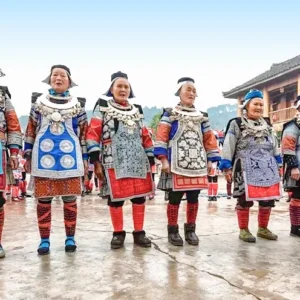
As an open-air museum of the Miao culture, the village exudes a rich ethnic flavor everywhere. Stroll among the stilted wooden houses (diaojiaolou) with a hundred years of history, traditionally built on stilts and scattered on the hillside in a well-arranged manner. The clothing here is also unique; the Miao residents are characterized by wearing long skirts, hence the name “Long Skirt Miao,” representing the most gorgeous branch of Miao costumes.
Next, you will drive from Langde to Rongjiang (approximately 1.5 hours) to visit Dali Dong Village (大利侗寨), an ancient Dong village with a long history, famous for its “five bridges and Siheyuan-style courtyards ” layout.
Inside the village, you’ll see five Dong-style wind-and-rain bridges, each over a century old and featuring distinct architectural styles. As you explore the traditional Dong dwellings, the most iconic is the Yang Family Courtyard, a unique wooden Siheyuan (courtyard house) that is the only Dong residence in the village built in the Han architectural style. The village lanes are paved entirely with bluestone slabs, laid during the reign of Emperor Qianlong in the Qing Dynasty, preserving an authentic historical ambiance.
At the heart of the village stands the iconic drum tower, an essential feature of every Dong village and a powerful symbol of clan unity and pride. Opposite the tower is the local opera stage, a venue for performances that sustain Dong culture. Since the Dong people do not have their own written language, the Dong Grand Song and Dong Opera bear the responsibility of cultural inheritance.
Surrounding Dali Dong Village, lush ancient trees thrive, including over 400 ancient Phoebe zhennan trees, embodying the Dong people’s traditional belief in the harmony between humanity and nature: “old people guarding the village, ancient trees protecting the settlement.“
After the tour, transfer to your hotel in Rongjiang for check-in.
After breakfast in Rongjiang, you will drive to Congjiang (approximately 2 hours, 90 kilometers) to begin today’s exploration.
Your first destination is the mysterious Biasha Miao Village (岜沙苗寨), known as “China’s Last Gunman Tribe.” Stepping through the village gate is like traveling back to an ancient era. The men wear dark blue cloth jackets and straight, wide-legged trousers, with firelocks and machetes hanging from their waists, displaying a heroic spirit. The men here start learning to shoot from a young age; for them, the firelock is both a tool for hunting and a weapon to protect their homes.
Biasha men are distinguished by their “Huge (户棍)” hairstyle, where the surrounding hair is shaved off with a sickle, leaving only a topknot in the center, symbolizing “harmony between heaven, earth, and humanity.” Boys’ hair is not cut from birth until their coming-of-age ceremony, when elders shave it off with a sickle. It is said that this tradition has been passed down since the time of the legendary tribal leader Chiyou.
Furthermore, the Biasha people have worshipped trees since ancient times, and their grandest sacrificial ritual is the worship of the tree god. In Biasha, when a new life is born, the family will plant a tree in the forest representing that little life; when life ends, people will use this tree that accompanied them throughout their lives to make a coffin for burial, allowing them to rest peacefully.
In Biasha Miao Village, you will have the opportunity to witness unique folk performances, such as the sickle haircutting ceremony. You will see the gleaming sickle shaved hair close to the scalp, strand by strand falling. It looks quite thrilling to onlookers, but the barber and the person getting the haircut appear relaxed and at ease, showcasing the bravery and resilience of the Biasha people.
Next, you will visit Zhanli Dong Village (占里侗寨), a legendary and tranquil village where every household has exactly one son and one daughter. Legend has it that there was a female herbalist in Zhanli who used a herb called “Huanhua Grass” (herbal fertility tea) to balance the gender of fetuses. However, Zhanli also has ancestral rules stating that this herb can only be taken by villagers. Don’t be disappointed; even if you can’t uncover the secret of herbs, you will surely appreciate the peaceful life by the flowing stream near Zhanli Bridge. Also, don’t forget to look for the village’s “male well” and “female well,” which are said to be key medicinal guides for taking “Huanhua Grass.”
Finally, drive about 1.5 hours to visit Zhaoxing Dong Village (肇兴侗寨) and experience the unique charm of this place, known as the “Number One Dong Village.” It is one of the largest and most well-preserved Dong villages in China.
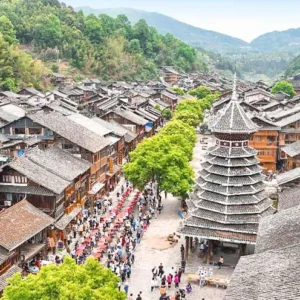
Zhaoxing Dong Village is world-renowned for its spectacular drum tower complex. The village is home to over 6,000 residents, all from the Lu family line, divided into five major clans. Each clan forms a “group” or “tuan” – Ren, Yi, Li, Zhi, and Xin – representing the Confucian virtues of benevolence, righteousness, propriety, wisdom, and integrity. Each “tuan” is centered around a drum tower and has its own drum tower, wind-and-rain bridge, and opera stage. The drum towers serve as gathering halls and are viewed as the spiritual and communal hearts of each group.
You can wander through the five “Tuan,” exploring each of the five uniquely styled drum towers, and appreciate the wisdom and exquisite architectural skills of the Dong people. Strolling across the wind and rain bridges, with the flowing water and gentle breeze, you will feel as if you are in a beautiful landscape painting. You can also walk up to the village gate viewpoint for a stunning panoramic view over the entire village.
Optional Experience:
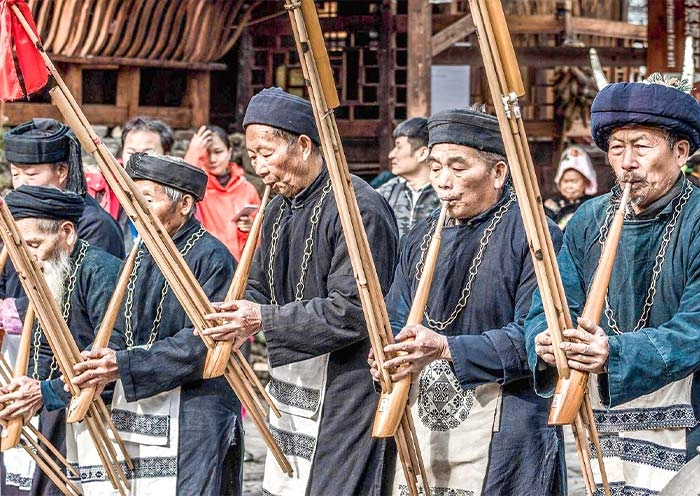
Watch a Dong Grand Song performance and listen to this heavenly music, which has been listed by UNESCO as a “Representative Intangible Cultural Heritage of Humanity.” These polyphonic songs, sung without instruments, are hauntingly beautiful and deeply moving.
Free Time Idea: Night View of Zhaoxing Dong Village
As night falls, Zhaoxing Dong Village glows with soft lights and quiet charm. Stroll through ancient alleys or climb to a viewpoint to admire the stilt houses and wind-and-rain bridges bathed in a gentle, dreamy glow.
After breakfast, head to Congjiang Railway Station to board the high-speed train to Guilin (approx. 1 hour). Upon arrival, meet your local guide and driver, and begin exploring Guilin’s iconic landmarks.
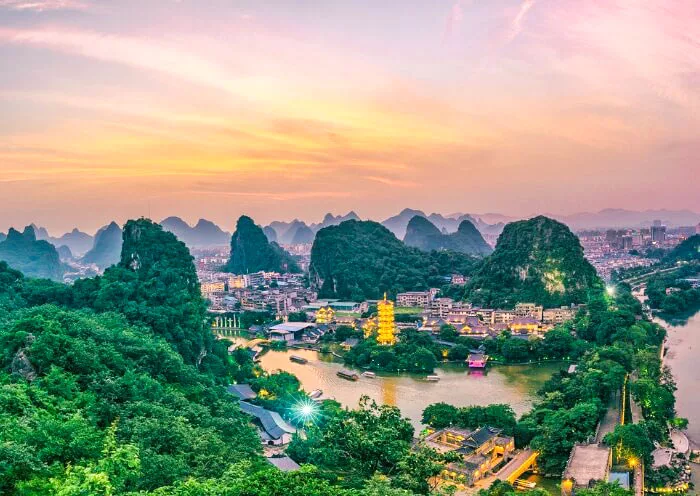
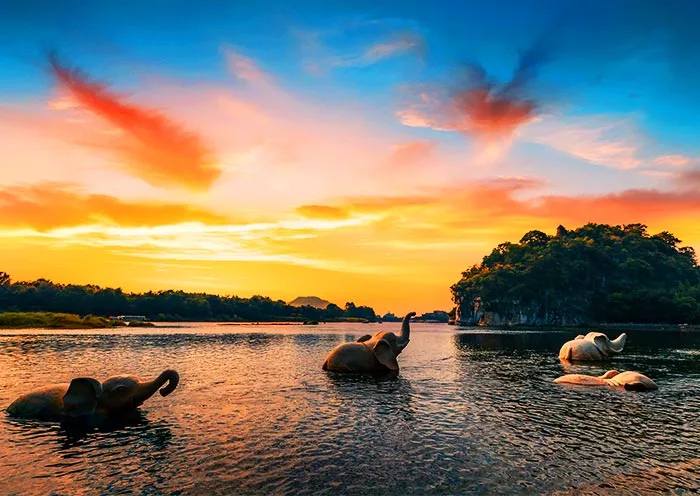
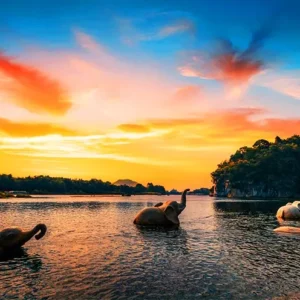
Firstly, visit the stunning Elephant Trunk Hill, which is widely regarded as the symbol of Guilin. This natural wonder sits at the confluence of the Li River and Peach Blossom River, resembling a giant elephant drinking water from the river. The hill is made of water-soluble limestone rocks that have been gradually eroded by acidic rainwater over millions of years, creating a unique and breathtaking landscape. Its beauty is so awe-inspiring that it has contributed to the popular saying “桂林山水甲天下”, which means that Guilin’s scenery is the best under heaven. Next, take a walk to Water-Moon Cave, a semicircular opening in the rock that represents the space between the elephant’s trunk and legs. This cave stands 12 meters high and features several classical Song and Tang dynasty poems inscribed on its walls in Chinese characters.
Afterwards, you will pay a visit to the Reed Flute Cave, also known as the Palace of Nature’s Art. Inside the cave, you’ll find a stunning array of uniquely shaped and exquisitely transparent stalactites, stalagmites, columns, curtains, and flowers that are truly a sight to behold. These formations create a variety of stunning landscapes, including Lion Peak at Dawn, the Primitive Forest, the Pinnacle of Dragon and Elephant, and the Mountain of Fruits and Flowers, leaving visitors in awe. When illuminated with colorful neon lights, it feels like walking through a magical underground palace that will leave you spellbound.
Don’t miss the Crystal Palace, where the water surface reflects off the rock walls, creating a dreamlike scene of dazzling display of light and color. Experience the Water Curtain Movie here, which allows you to observe geological changes such as the growth of stalactites and stalagmites, adding an extra layer of magic to this incredible natural wonder.
After the tour, drive 2 hours to Ping’an Village in the Longji Rice Terraces for your accommodation. Rest and prepare for tomorrow’s rice terrace hike.
After breakfast, enjoy hiking in the Longji Rice Terraces (Longsheng Rice Terrace) around Ping’an Village. The Longji Rice Terraces are one of the top ten most beautiful terraced fields in the world and the closest terraced fields to a major city. With a history of at least 2,300 years, Longji Rice Terraces are hailed as the “Birthplace of Terraced Fields Worldwide” and a “Globally Significant Agricultural Cultural Heritage”. It has not only been included in the list of National Wetland Parks but also represents an important heritage of ancient Chinese water management wisdom and agricultural civilization that has been passed down to this day by ancient Zhuang and Yao peoples. As you walk across the cobbled paths of the Ping’an Rice Terrace Fields, you can reach its famous viewing platforms, such as the Seven Stars Accompany the Moon (880m, Sunrise Viewing Spot) and Nine Dragons and Five Tigers (980m, Sunset Viewing spot). At the Nine Dragons and Five Tigers viewing platform (九龙五虎), you will see why it is named Longji Rice Terrace (Dragon Backbone Rice Terraces).
You can also walk into Ping’an Village along the stone-paved road, where you will find 170 households and over 700 people, all belonging to the Zhuang ethnic group with the surname “Liao”. Men wear short gowns made of hand-loomed cloth, while women wear white shirts, black pants, and brightly colored cloth on their heads. Here, you can have a close-up view of the Zhuang people’s distinctive stilted houses called “Diaojiaolou” (吊脚楼) in the mountain valley. You may encounter local Zhuang villagers, taste or make unique Zhuang People’s food like oil-tea, have the opportunity to learn more about Zhuang ethnic customs and culture, as if you are transported to ancient times.
Next, visit Huangluo Yao Village (population of over 400) which is famous as “the World’s Longest Hair Village”. You will marvel at the dramatically long and pitch-black hairs worn by its women of the Yao ethnic group. The village has over 70 Yao women with hairs over 1 meter (the longest hair of 2.72 meters) which has been listed by Guinness World Record as the “longest hair group”. By watching the performances of villagers (45min, optional), such as folk songs, drum dances, Red Yao wedding customs, sunning red clothes, and combing long hair, you will learn about the history, traditions and way of life of the Red Yao people, such as customs like spinning and weaving. You can even ask Red Yao women to share their secrets on how to take care of their long hair and how to make their Rice Water Shampoo.
Take your time to find the best viewpoints to capture the beauty of the incredible terrace fields that exist since ancient times. After the hike, go back to Guilin.
In the morning, depart from Kaili and drive to Langde Miao Village(朗德苗上寨), known as the “Hometown of Chinese Folk Song and Dance.” It is nestled amidst lush mountains and terraced fields. Unlike more commercialized villages, Langde retains its untouched, authentic charm, where ancient customs and the rhythm of songs and dances unfold slowly.
Upon arrival, you will be greeted with the “Twelve Cups of Block-Way Rice Wine” ceremony. Villagers dressed in magnificent silver headdresses and embroidered clothing will welcome guests and offer rice wine in ox horn cups. This is the highest etiquette of the Miao people for receiving distinguished guests, with each cup of wine representing blessings for a month. Afterward, you will walk along the stone-paved path to the Lusheng ground in the center of the village. Here, a wonderful Miao song and dance performance will take place, featuring toasting songs, Miao flying songs, and Lusheng dances in succession, leaving you mesmerized.
As an open-air museum of the Miao culture, the village exudes a rich ethnic flavor everywhere. Stroll among the stilted wooden houses (diaojiaolou) with a hundred years of history, traditionally built on stilts and scattered on the hillside in a well-arranged manner. The clothing here is also unique; the Miao residents are characterized by wearing long skirts, hence the name “Long Skirt Miao,” representing the most gorgeous branch of Miao costumes.
Next, you will drive from Langde to Guiyang for departure.
Thank you for choosing HelloChinaTrip for your Guizhou Tour. We are always here working for you and hope to see you again for your next trip to China/Asia. Safe journey!
After breakfast, you will have some leisure time to explore Yangshuo at your own pace. Take this opportunity to explore the town or simply relax and soak in the charming atmosphere. Later, your guide and driver will accompany you to the airport or train station in Guilin, from where you will take your flight or high-speed train to your next destination.
Thank you for choosing HelloChinaTrip for your Guizhou Tour. We are always here working for you and hope to see you again for your next trip to China/Asia. Safe journey!
What’s Included
- Guide Service: English-speaking guides provided throughout the trip.
- Attraction Tickets: Entrance tickets for all listed attractions are included, guaranteeing full visits. In case of unexpected circumstances, alternative arrangements will be discussed with the tourists.
- Transportation Arrangement: air-conditioned vehicles.
- Accommodation: Throughout the trip, stay in hotels/cities as listed in the itinerary.
- Meals: Breakfast is included at the hotel. For detailed meal information, please refer to the itinerary.
- Handling Fee:Our service from tour planning, handling, operational and finishing your trip.
What’s Excluded
- Visa;
- Optional activities and experiences recommended in the itinerary.
- Check-In and Check-Out Times: Check-in time for the hotels is generally after 14:00 (2:00 PM), allowing you to settle in and freshen up before starting your Harbin Tour. On the day of departure, please check out before 12:00 noon to ensure a smooth transition and allow time for the hotel staff to prepare for incoming guests.
- Personal Expenses: Other personal expenses such as laundry, telephone, internet, fax, etc., within the hotel.
- Tipping: Tips for drivers and guides (Tipping practices may vary depending on the region and nature of service; it is recommended to consult the guide's opinion in advance).
- Unexpected Circumstances: In case of uncontrollable and non-agency-related factors (such as natural disasters, war, strikes), flight delays or cancellations, delayed visa processing at embassies, insufficient number of participants, the travel agency reserves the right to cancel or modify the itinerary. Additional charges may apply for expenses beyond the agency's control (e.g., visa fees, accommodation, meals, transportation, adjustments in airfares).
Guizhou Trip Prep: 3-Minute Q&A
Getting There & Around
Guiyang, Guizhou’s provincial city, is your main hub for flights and trains. Attractions are spread out, so driving is often the best way to explore Guizhou’s remote natural sites and ethnic villages.
Best Time to Visit Guizhou
Spring (March-May) and Autumn (September-October) are ideal. Avoid Chinese New Year, May Day (May 1-5), and National Day Holiday (October 1-7) due to crowds.
Respect Ethnic Culture
They are welcoming, but it’s better to ask about village traditions before entering homes (e.g., don’t step on doorsteps, enter inner rooms only if invited). If offered “Lanmen Wine (拦门酒),” a small sip shows thanks if you can’t finish it; accepting the cup by hand usually means you’ll drink it all.
Other Packing Tips:
1. Weather & Sun: Guizhou’s weather is changeable, so carry a dual-purpose umbrella and more types of clothes. Always apply sunscreen due to strong UV radiation from the plateau terrain.
2. Guizhou cuisine is known for its spicy and sour flavors and strong aromas, like Sour Soup Fish. Your guide can help you find suitable restaurants if you’re not used to the local cuisine.
Similar Experiences
Related products
-
6 Days In-depth Guizhou Tour: Huangguoshu Waterfall & Secret Miao-Dong Villages
Guizhou Tours$1,200.00 – $6,000.00Rated 4.80 out of 5 -
6 Days Guizhou Classic Tour: Huangguoshu Waterfall, Xiaoqikong & Miao Villages
Guizhou Tours$1,200.00 – $6,000.00Rated 4.75 out of 5 -
6 Days Popular Guizhou Tour: Huangguoshu, Fanjingshan & Kaili Miao Villages
Guizhou Tours$1,200.00 – $6,000.00Rated 4.83 out of 5 -
3 Days Guizhou Huangguoshu Waterfall Tour with Karst Cave: Asia’s Largest Waterfall
Guizhou Tours$600.00 – $3,000.00Rated 4.75 out of 5
Chloe –
Je n’oublierai jamais la magnifique chute d’eau de Huangguoshu dans le Guizhou, suivie de la croisière tranquille sur la rivière Li à Guilin. Ce qui a rendu ce voyage exceptionnel, c’est sa flexibilité et son caractère privé : nous avons pu passer plus de temps dans les endroits que nous aimions. Vraiment un voyage sur mesure.
James Miller –
This was not just sightseeing—it was an immersive cultural journey. The custom tour let us experience Guizhou’s traditions and Guilin’s landscapes in depth. Everything from timing to activities was adjusted to our preferences. Highly recommend!
Amelia Moore –
The 9-day Guizhou and Guilin tour was a dream come true. The highlight for me was visiting the Miao villages—our private guide arranged personal interactions with locals, and it felt so authentic. The whole itinerary was perfectly customized to our pace.
Isabella Turner –
I loved the balance of adventure and relaxation. Hiking near karst peaks, enjoying local food in the villages, and then relaxing by the river in Yangshuo—it all felt specially tailored. The private tour aspect really made it a once-in-a-lifetime experience.
Daniel Brown –
The itinerary was designed with so much care. From exploring Guizhou’s ethnic villages to drifting along the Li River, every day offered something unique. Having a private guide made it stress-free and flexible—exactly how I like to travel.
Olivia Harris –
This tour gave me the perfect mix of culture and nature. Cycling through Yangshuo’s countryside was magical, and learning about the Dong minority traditions was unforgettable. Everything felt personal, not like a typical group tour.