







5 Days Best Inner Mongolia Tour – Grassland, Desert & Genghis Khan’s Legacy
Must-see & Must-do:
Highlight 1: Take our Best Inner Mongolia Tour through Genghis Khan’s empire. Explore Hohhot’s history, Baotou’s grasslands, Ordos’s deserts, and immerse yourself in nomadic culture, thrilling adventures, and Mongolian traditions!
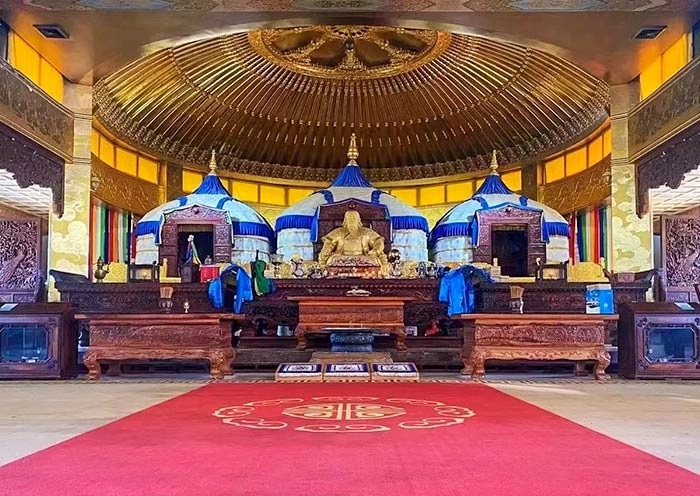
Highlight 2: Discover Hohhot, the capital city of Inner Mongolia. Get more about Mongolian Culture & history by visiting the must-visit places like Dazhao Temple (Silver Buddha Temple), Inner Mongolia Museum (or Inner Mongolia Nature Museum).
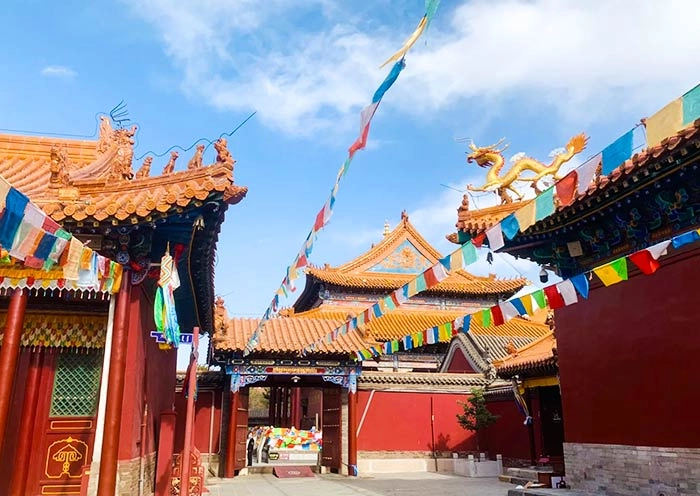
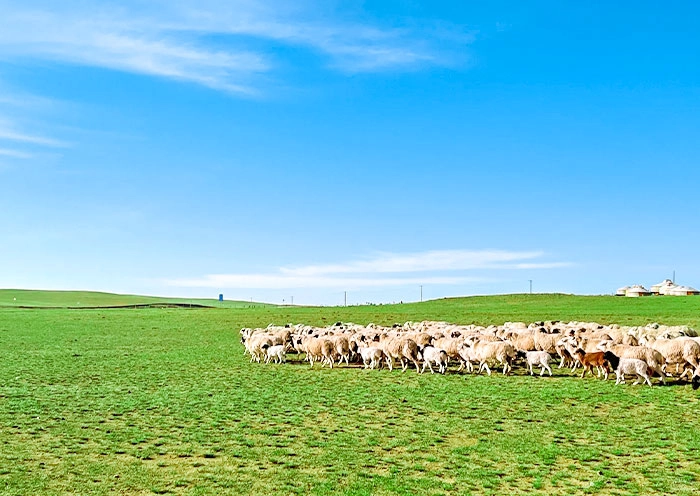
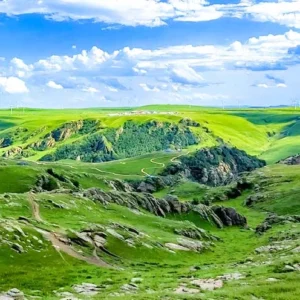
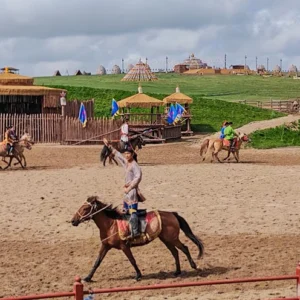
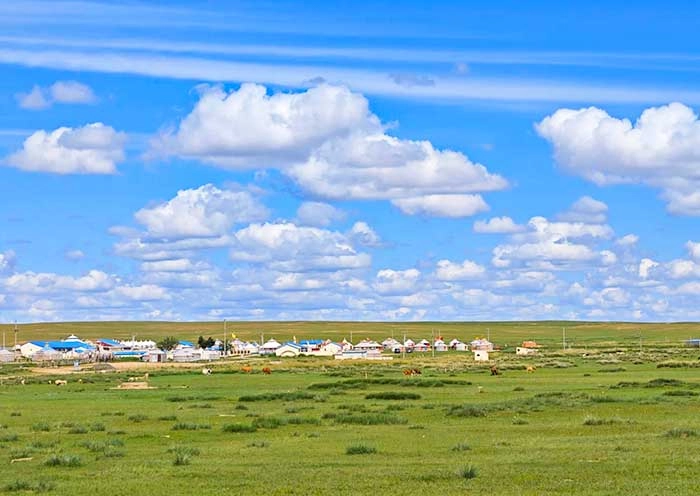
Highlight 3: Have fun on Baotou’s Xilamuren Grassland, one of Inner Mongolia’s most beautiful and vast grasslands. As the first grassland in Inner Mongolia to be developed into a tourism attraction, it offers the best nomad experience with amazing scenery.
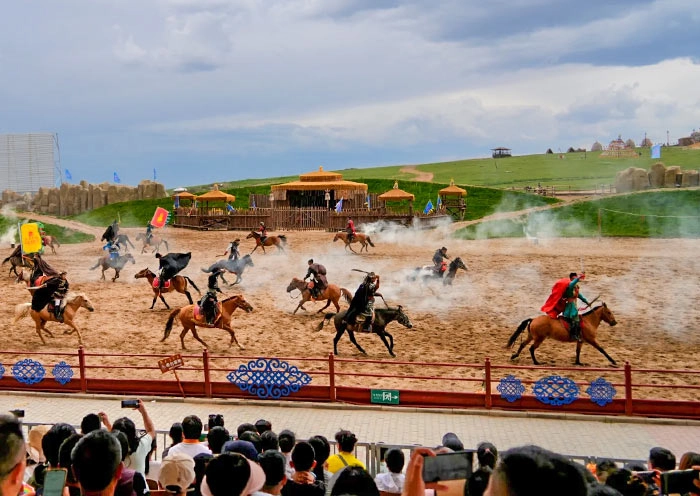
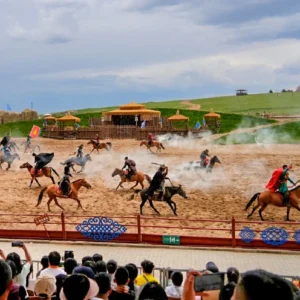
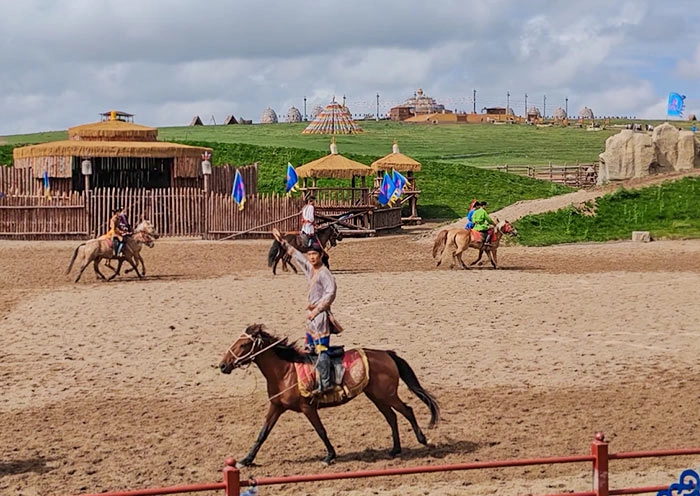
Highlight 4: You won’t miss Hongge’er Aobao, Xilamuren’s largest sacred site with 400+ years of history. Join locals in the “kora” ritual for blessings & panoramic grassland views. Witness a thrilling live equestrian show featuring the exciting “Three Games of Mongolian.”
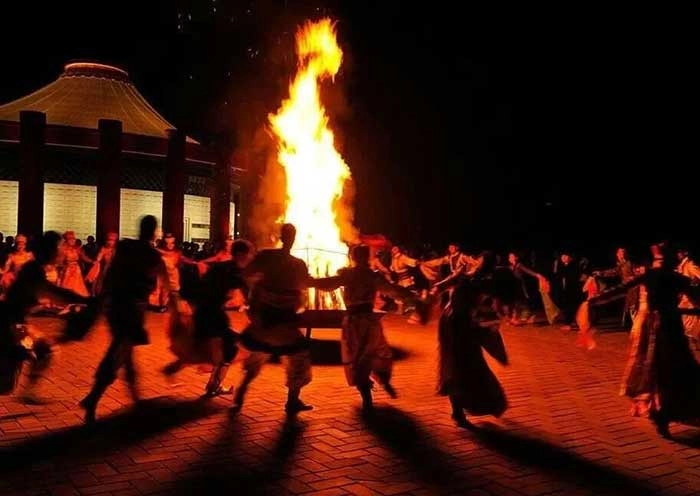
Highlight 5: Uncover Mongolian Nomadic Life through Grassland Activities in Xilamuren, communicate with local Herdsman, overnight at a Mongolian Traditional Yurt for a starry night, join a Bonfire Party with Mongolian singing and dancing…
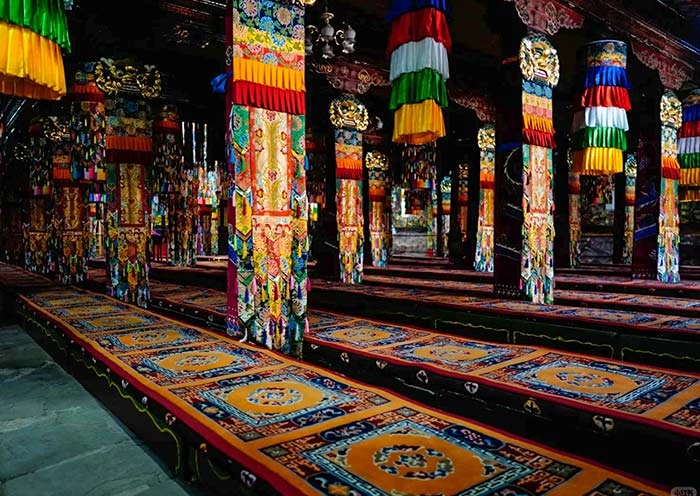
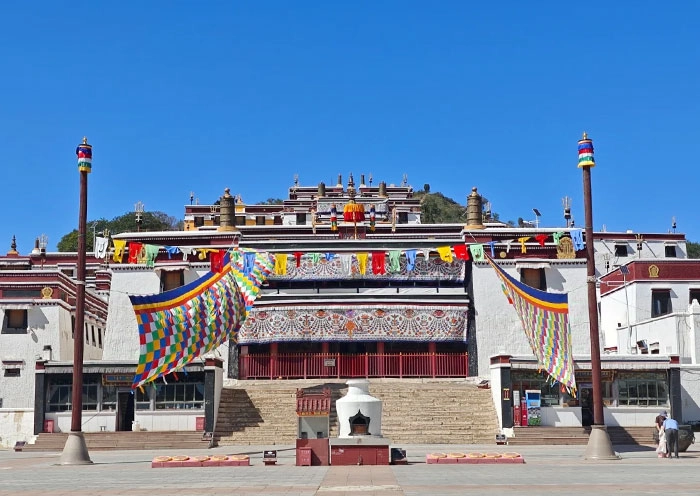
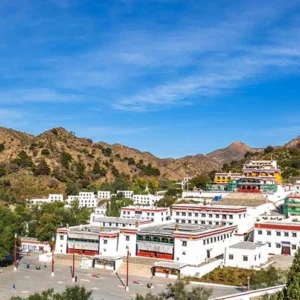
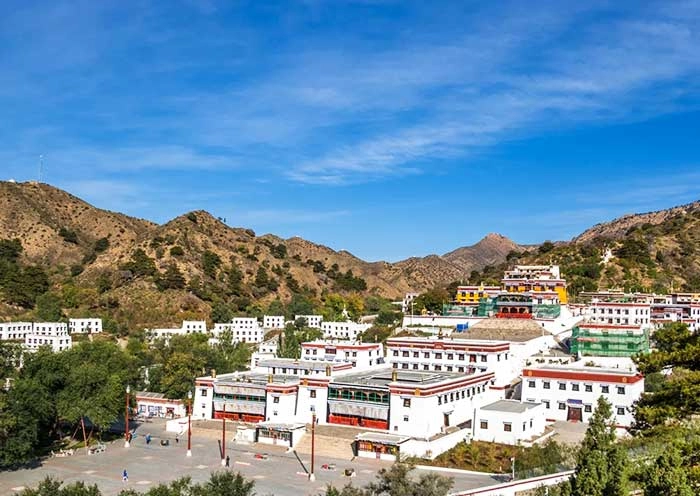
Highlight 6: Wudangzhao Monastery is a must-visit place when touring Baotou, the deer city. As Inner Mongolia’s largest Tibetan Buddhist temple, Wudangzhao (Little Potala Palace), blends Tashilhunpo-inspired architecture, sacred relics, and deer encounters.
Itinerary Quick Look:
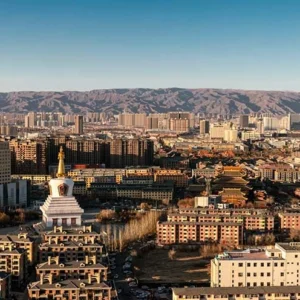
Welcome to Hohhot, the capital of Inner Mongolia! Upon your arrival at the airport or train station in Hohhot (before 12:00), your driver and guide will meet you at the exit and escort you to Hohhot City. This afternoon, enjoy your time by visiting Inner Mongolia Museum (or Inner Mongolia Natural Museum) and Dazhao Temple. [Note: The Inner Mongolia Museum is currently closed due to moving to new buildings (updated on 23rd April, 2025), it may reopen soon. So we will arrange the trip to the Inner Mongolia Natural Museum instead].
You will visit Inner Mongolia Museum (Closed on Mondays) for Grassland Culture. Founded in 1957, it is a national first-class museum with more than 150,000 collections, characterized by its fossils of ancient organisms (dinosaur fossils) and cultural relics of ancient Silk Road & northern ethnic groups (Mongolian, Khitan, Xiongnu). Inner Mongolia Museum is an “encyclopedia” to unveil the ecological change, culture, and historical development of the alpine grassland, deserts, forests, etc. You can trace the historical process of Inner Mongolia from prehistoric times, the Bronze Age, the Warring States to the Wei and Jin, the Liao and Jin, the Mongolian-Yuan to the Ming and Qing Dynasties, as well as modern times.
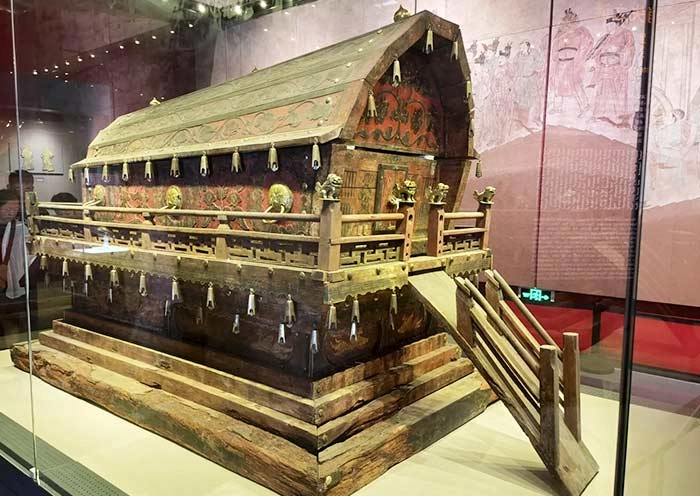
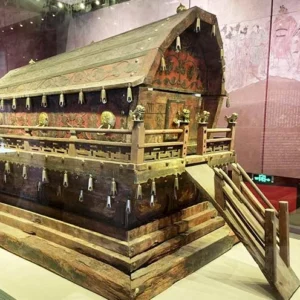
Take your time to find the Treasures of Inner Mongolia Museum, such as Golden Crown of the Xiongnu King (1,934 grams eagle crown of Warring States Period; 475–221 BC; 战国鹰形金冠饰), Painted Wooden Coffin (Liao Dynasty; over 1,000-year-old; 彩绘棺具), Incense Burner from Jun Kiln (小宋自造均瑶香炉; Yuan Dynasty), Nurosaurus Fossile (the biggest dinosaur in the Cretaceous Period in Asia), Northern Wei: Deer Head Gold Step Shaking Crown (北魏鹿首金步摇冠), Liao Dynasty Golden Mask (辽代黄金面具)…
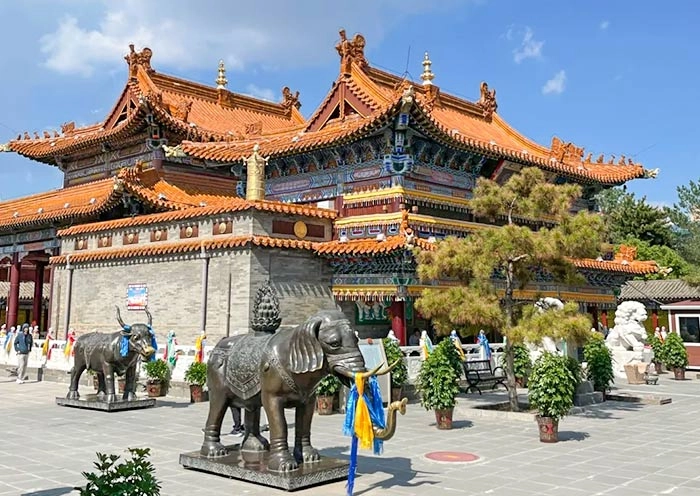
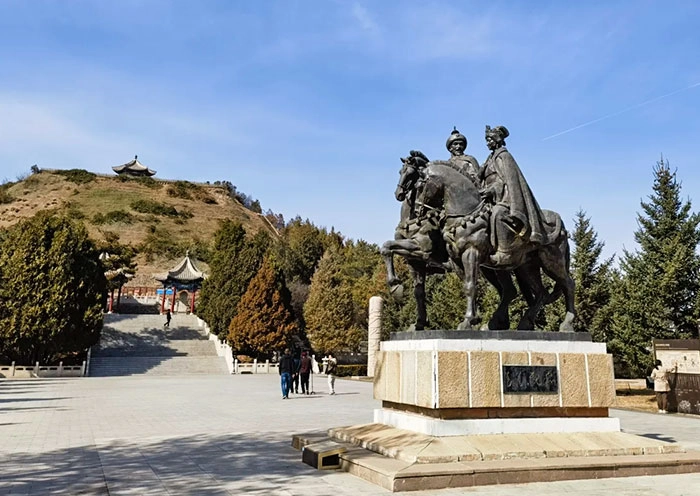
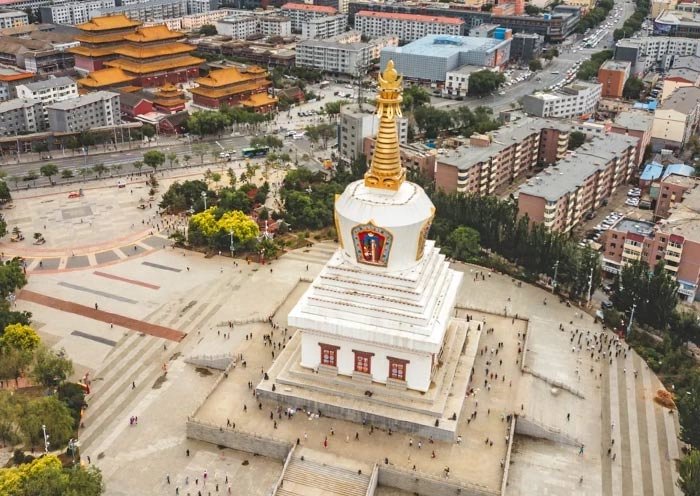
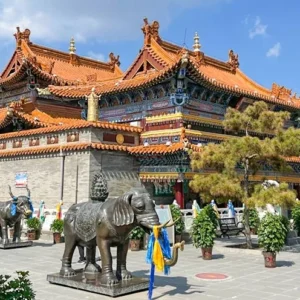
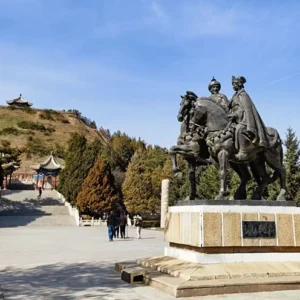
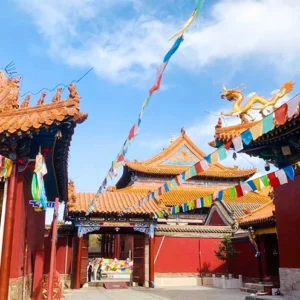
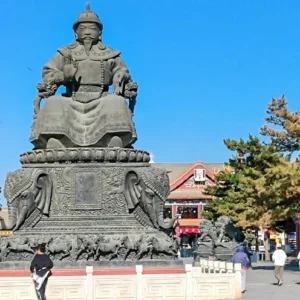
Then, pay a visit to Dazhao Temple (大召寺/大召无量寺). The Dazhao Temple, founded by Alatan Khan (阿拉坦汗/俺答汗; 1508-1582), the leader of the Mongolian Tumote tribe in the Ming Dynasty, was established in 1579. In the square in front of the Dazhao Temple, you will see the legendary builder of the temple, Alatan Khan (the reincarnations of Kublai Khan 忽必烈的转世). The temple is also known as the “Silver Buddha Temple” because it houses a statue of Sakyamuni made of 30,000 taels of pure silver (brought to light by the 3rd Dalai Lama, Sonam Gyatso, the reincarnations of Buton Rinchen Drub; 三世达赖喇嘛索南嘉措/八思巴的转世).
The Dazhao Temple is also known as the “Three Wonders” – the silver Buddha, dragon carvings, and mural, which are all historical relics from the Ming Dynasty. This temple is not only the earliest Tibetan Buddhist temple in Hohhot but also the largest Tibetan Buddhist holy site (Yellow Sect Gelug School) in Inner Mongolia. The temple is laid out in a north-south direction along the central axis, combining Han, Tibetan, and Mongolian architectural styles, attracting architecture enthusiasts and photographers for its Royal Architecture with Yellow glazed tiles (黄琉璃瓦), which can only be used in royal buildings.
In the Qing Dynasty, the Dazhao Temple was also the ancestral temple of Emperor Kangxi (康熙皇帝; 1654-1722). To this day, the tablets of Emperor Kangxi and his father, Shunzhi (顺治皇帝), are still enshrined in the temple. Inside the main hall, you can see the over 400-year-old silver-cast Buddha statue (made by Nepalese craftsmen), a golden coiled dragon about 10 meters high before the silver Buddha, as well as precious cultural relics such as the dragon and phoenix peacock umbrella, the pearl octagonal palace lantern, the wealth deity statue gifted by Kangxi Emperor to Dazhao, and precious Tangkas from the Ming and Qing dynasties.
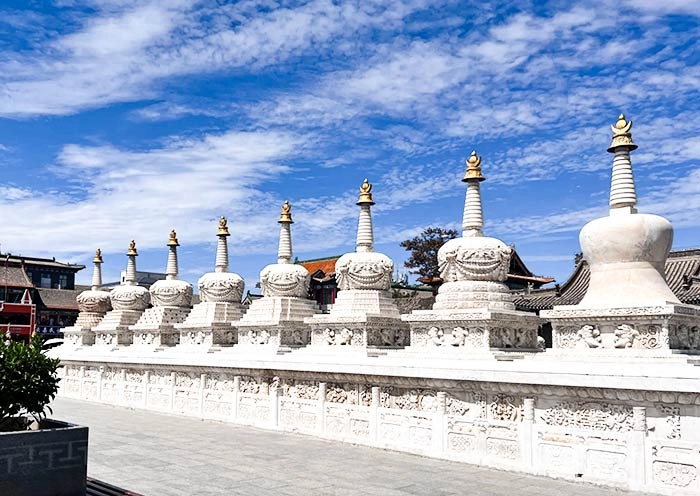
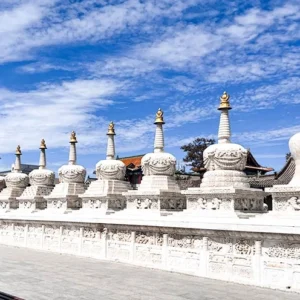
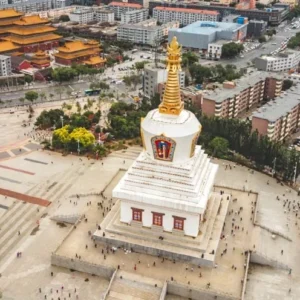
Don’t miss the Sakyamuni Eight Pagodas (释迦八塔) at the Dazhao Temple, representing the eight virtues of the Buddha. Additionally, on the fifteenth day of the first lunar month and the fifteenth day of the sixth lunar month each year (Buddha Thangka Unveiling Ceremony; 晒佛节/恰木舞蹈), the Dazhao Temple hangs giant Tangkas from the temple’s precious collection on the scripture drying poles. Try your luck to meet local evens in Dazhao Temple. At last, overnight in Hohhot.
Free Time Idea:
1.Visit More Temples in Hohhot: You can hike to more landmarks of Hohhot, such as Xilitu Zhao Temple (席力图召/小召寺; across the street from Dazhao Temple; Self-pay) & Five Pagodas Temple (五塔寺博物馆; about 1 km from Dazhao Temple; Closed on Mondays).
2.Explore Hohhot Food: You can take a stroll from Altan Khan Square (阿拉坦汗广场/大召广场; Dazhao Square for Altan Khan Statue) to Saishang Old Street (塞上老街) and Tongshun Alley (通顺大巷). These are popular streets (near Dazhao Temple) with Ming and Qing-style buildings for enjoying local food and shopping for local souvenirs.
Good to Know:
1.Inner Mongolia, China’s third-largest province after Xinjiang and Tibet, stretches over 2,400 km from east to west, making it the country’s widest region. Bordering Russia at Manzhouli and Mongolia at Erenhot, Inner Mongolia is inhabited by 24 million people. It’s an ideal Summer Destination to immerse yourself in the Mongolian culture in the Yuan Dynasty and uncover the captivating life and heritage of Genghis Khan.
2.Inner Mongolia sits at an average elevation of 1,000-1,500 meters, with strong UV rays. Pack sunglasses, a hat & sunscreen. Temperatures can fluctuate between morning & evening, so pack warm coats, long pants & sports shoes. Mongolian food tends to be salty, oily & mildly spiced. Beef, mutton & noodles are staple dishes to try.
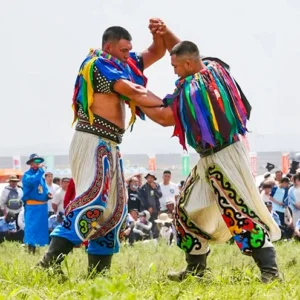
3.If your trip to Inner Mongolia happens to coincide with the Naadam Festival (内蒙古那达慕; usually in July or August), you’ll have the exciting opportunity to witness the famous Three Games of Mongolia Men (男儿三艺): horse racing, wrestling, and archery. Each grassland/city has its own time of Naadam Fair (usually lasts for 3-7 days). Feel free to contact us if you want to join this major event in Inner Mongolia.
Arrival Ideas:
1.How to get to Hohhot By Air: Hohhot Baita International Airport (呼和浩特白塔国际机场) is about 24 km away from Dazhao Temple (Note: Hohhot Shengle International Airport 呼和浩特盛乐国际机场 will soon replace it by the end of 2025; 31 km from Hohhot Train Station). Direct flights connect Hohhot with major cities in China, such as Beijing (1h 20 min), Shanghai (2h 50 min), Chengdu (2.5h), Guangzhou (3h 20min), etc. It’s essential to check flight schedules in advance, as not all routes operate year-round.
2.How to get to Hohhot By High Speed Train: Hohhot can be reached by train through Hohhot East Railway Station & Hohhot Railway Station. There are high-speed trains to Hohhot from Beijing (2h 50 min), Datong (1h 28 min), Taiyuan (3h 40 min), Shanghai (12h 11min), Xian (6h 35 min), etc. Contact us for ticket booking.
This morning, you will head to Xilamuren Grassland of Baotou for a Mongolian Nomadic Life Experience. It is about a 2-hour drive (83 km). You will watch the Large-scale Live-action Performance at Hongge’er Aobao Scenic Area. Then, you will stay overnight at a Mongolian Traditional Yurt with a Bonfire Party (Mongolian song & dance).
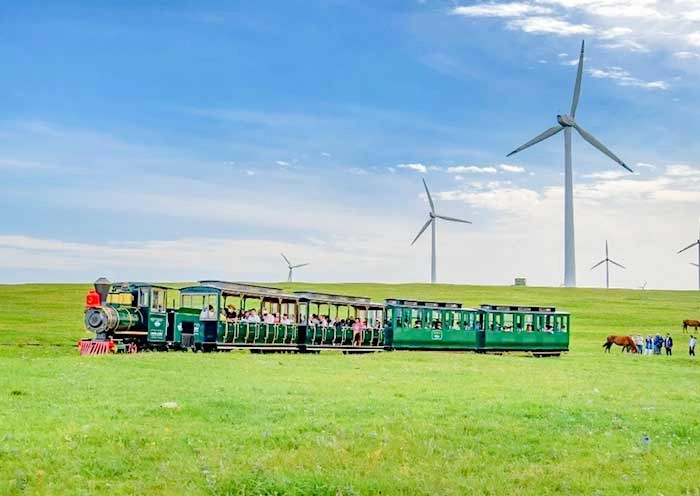
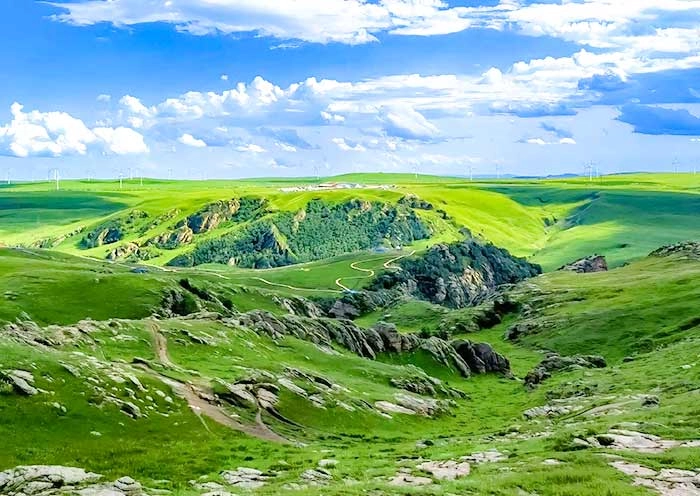
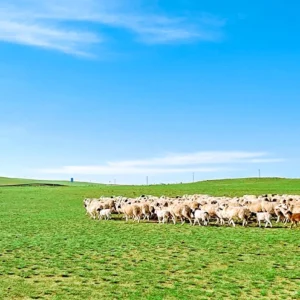
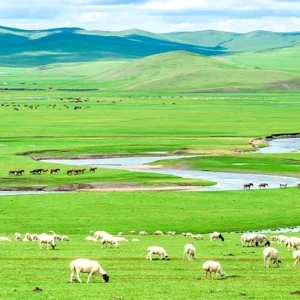
You will drive past Daqing Mountain (大青山), a part of the famous Yinshan Mountains (阴山山脉; the dividing line between agriculture and animal husbandry). It is a popular hiking destination for locals to escape city life. When you reach Xilamuren Grassland (希拉穆仁草原), you will feel the hospitality of local herdmen by enjoying a Mongolian Welcome Ceremony. As the closest grassland to Hohhot, Xilamuren Grassland is one of the most beautiful and vast grasslands in Inner Mongolia. As the first grassland in Inner Mongolia to be developed into a tourism attraction & a popular summer destination in China, it offers the most nomadic experience in the grassland.
Next, pay a visit to Hongge’er Aobao Scenic Area (红格尔敖包), the largest Aobao in Xilamuren Grassland. It has a history of over 400 years. Join the locals in performing the “kora,” a ritual walk around the Aobao, a sacred site where Mongolians worship, offer sacrifices, pray, and make wishes. Enjoy a panoramic view of the grassland from the Aobao before witnessing the Large-scale Live Equestrian Drama (草原大型实景马术剧), a spectacular outdoor show showcasing Mongolian culture, including the renowned Three Games of Mongolian (男儿三艺) – Horse Racing, Wrestling, and Archery.
Optional Grassland Activities: (Self-pay)
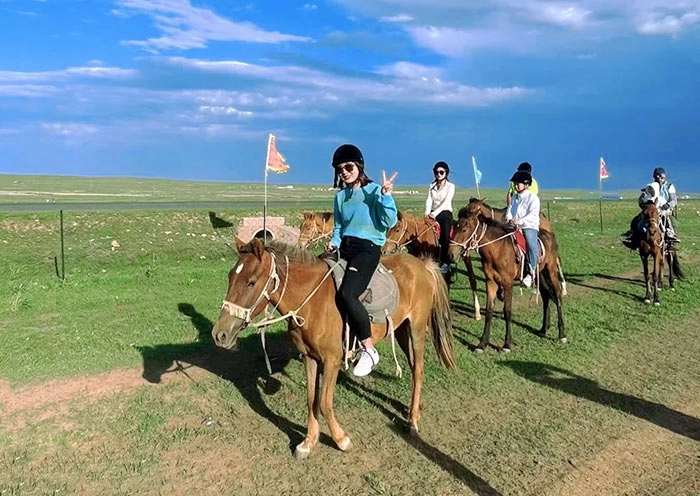
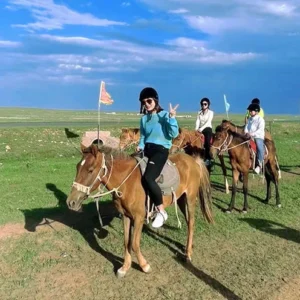
1.Horse Riding on Huitengxile Grassland if the weather permits.
2.Mongolian Family Visit for Nomadic Life Experience.
Note for Horseback Riding on Inner Mongolia Grasslands:
1.Guided Ride (Beginners): Most common and safest for first-timers. A herdsman leads your horse for a walk within a designated area.
2.Independent Ride (Experienced Riders): If you’re skilled, you might rent a horse from a local herder for free riding. However, this comes with no safety guidance and isn’t generally recommended.
3.The fee for Guided Ride and Independent Ride are different. Do double check the price and riding time before enjoy your horse riding.
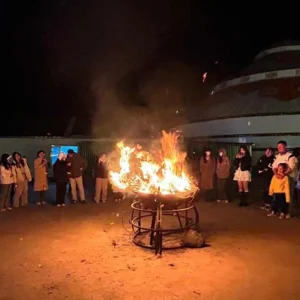
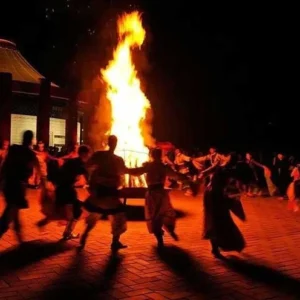
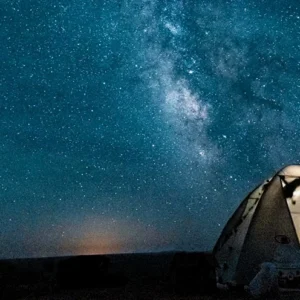
Cap off the day by participating in a lively Bonfire Party featuring Mongolian singing and dancing after dinner. Experience the enchanting starlit sky over the grassland as you spend the night in a traditional Mongolian yurt.
Dinner Optional: (Self-pay)
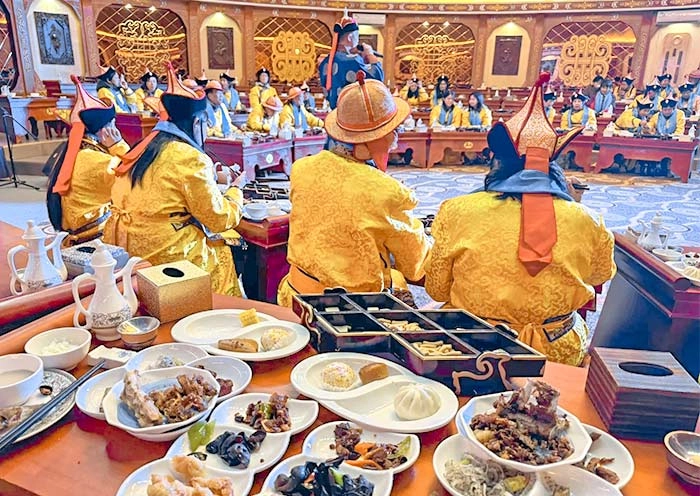
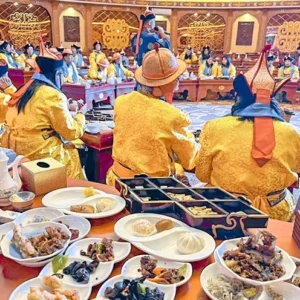
Mongolian Traditional Zhama Banquet Dinner (诈马宴): Try roasted whole sheep (烤全羊) and other famous Mongolian dishes while dressed in traditional Mongolian attire, enjoying Mongolian ethnic song and dance, and experiencing Mongolian silver bowl and hada ceremonial toasting rituals…
This morning, you can choose to get up early (around 4:00 am) to wait for an amazing sunrise at Xilamuren Grassland (Optional). Then, head to Wudangzhao Monastery of Baotou (180 km, 3h), which was once the residence of the most powerful Lama in Inner Mongolia.
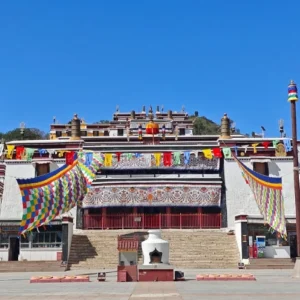
Wudangzhao Monastery (Wudangzhao Temple) is one of China’s Four Great Tibetan Buddhist Monasteries of the Gelugpa sect (Yellow Hat), alongside the Potala Palace in Tibet, Labrang Monastery in Gansu, and Kumbum Monastery in Qinghai. Known as the “Potala Palace on the Grassland,” it is the largest Tibetan Buddhist monastery in Inner Mongolia. Founded during the Kangxi reign of the Qing Dynasty (1662–1722) by the first Living Buddha, Lobsang Jigme Gyatso, it was modeled after Tibet’s Tashilhunpo Monastery and expanded over centuries into its current scale.
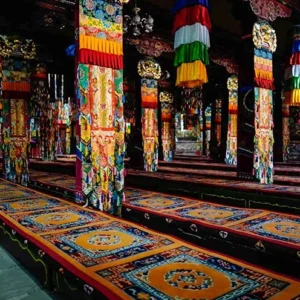
You will see the monastery’s classic Tibetan Buddhist architecture, with no central axis. Its grand halls are irregularly scattered across a 1.5-kilometer-long south-facing slope in a valley. The complex includes six main prayer halls (originally eight), three Living Buddha residences, and a reliquary hall housing stupas of past lamas. Spanning over 300 acres, it contains more than 2,500 rooms. You will marvel at the intricate murals, thangka paintings, and Buddha statues inside the halls, as well as prayer wheels, white stupas, and mani stone mounds along the paths. A deer park allows close encounters with friendly deer.
For panoramic views of Wudangzhao Monastery, hike the southern hill (if time permits). During the annual temple fair (25th day of the 7th lunar month to 1st day of the 8th lunar month), monks perform rituals such as Thangka Unveiling, scripture chanting, and sacred Cham dances. Welcome to this Buddhist sanctuary in the heart of the grasslands – a spiritual journey awaits.
At last, head to Baotou for overnight (about 70 km away). Baotou, or “Deer City鹿城,” gets its name from the Mongolian word “Baoketu,” meaning “place with deer.” As the largest city by urban population in Inner Mongolia, Baotou is located at the foot of the Yinshan Mountains and on the bank of the Yellow River. Due to its rich mineral resources, Baotou is also reputed as the ‘steel capital of the grassland草原钢城’ and the ‘capital of rare earth稀土之都’.
Free Time Ideas:
Northern Weapon City for Military Fans (Self-pay; 北方兵器城): A cannon-themed park to explore all kinds of retired weapons (touchable), such as armoured vehicles, artillery, fighter jets, and missiles, etc. It integrates patriotism, national defense education, military culture, and entertainment.
Have a good rest tonight at Baotou and be ready for your desert adventure at Kubuqi’s Resonant Sand Bay (Sounding Sand Bay).
Desert Travel Tips:
1.Sunscreen, sand protection, and hydration: It is advisable to bring sunscreen, sunglasses, hats, and protective clothing. High-top shoes are essential for sand protection. Protect your phone and camera from sand. The desert is dry, so carry more than 2 liters of water per person.
2.Desert Dress code: Wear light, long-sleeved clothing for UV protection in summer and down jackets in winter (there is a significant temperature difference between day and night).
3.Safety and environmental protection tips: Do not venture alone into uninhabited areas, follow project safety regulations, and be cautious on steep dunes. Do not litter; protect the desert ecosystem.
4.Seasonal limitations: In summer (July-August), you can enjoy the desert pool. In winter, there are fewer visitors, and the snow desert landscape is unique, but some activities may be closed.
Get up early today to reach Sounding Sand Bay early (Open at 8:30). It is about 50 km (1-1.5 hours drive) away from Baotou. Enjoy the desert activities you love in Kubuqi’s Resonant Sand Bay (Sounding Sand Bay). After lunch, head to visit Mausoleum of Genghis Khan (120 km 2h; Closed at 17:00), better reach Mausoleum of Genghis Khan before 15:00.
(✅Note: This tour only has half a day to enjoy the desert activities; if you prefer full-day fun in Sounding Sand Bay, it is better to add another half-day tour on Day 5 for a visit to the Mausoleum of Genghis Khan.)
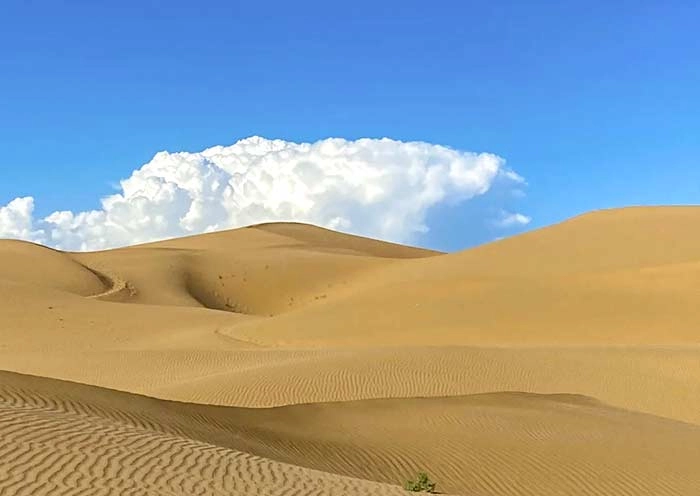
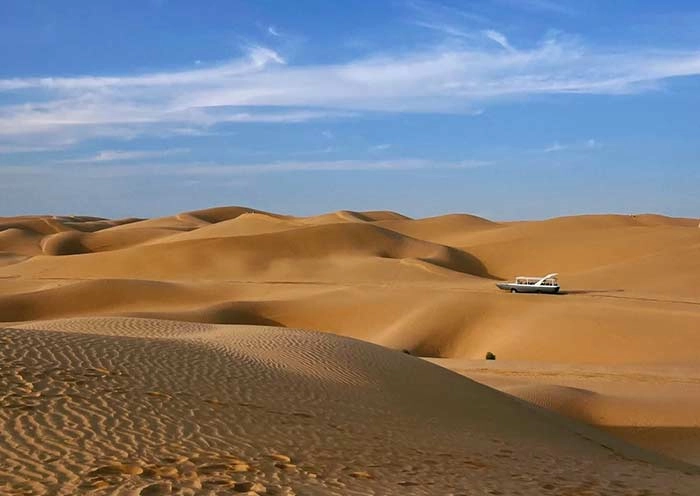
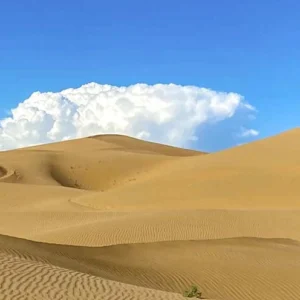
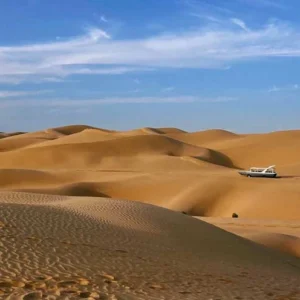
Kubuqi Desert (库布其沙漠) is the seventh-largest desert in China. It was once renowned as the “Sea of Death”. Now, with tree planting projects & the development of solar energy over the generations, the vegetation coverage has been significantly improved. It is promising to witness the Sea of Death become the Sea of Green. Now, the Kubuqi Desert is one of the top desert destinations in China.
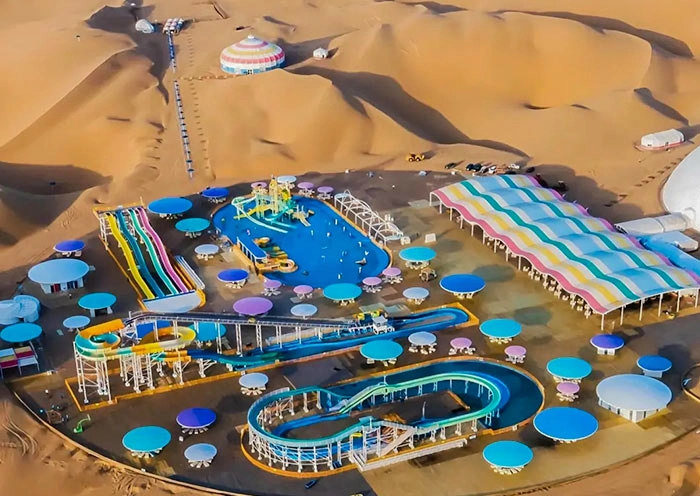
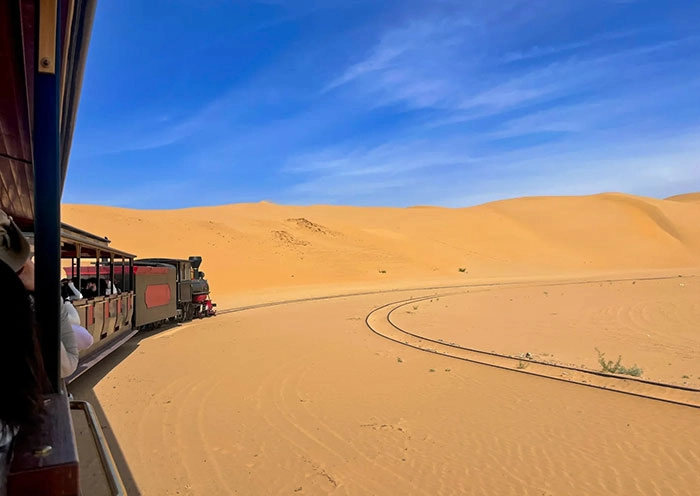
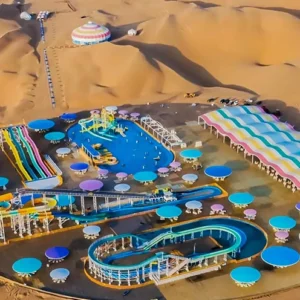
You can visit the most classic part of the Kubuqi Desert by having fun at Resonant Sand Bay (响沙湾), famous as the Disney of the Desert. It is one of China’s Four Singing Sand Dunes and named after the phenomenon of “sounding sands”. It combines desert landscapes, entertainment, and vacation experiences, making it an excellent destination for desert exploration and leisure. Sounding Sand Bay offers a variety of desert activities at both Xiansha Island (仙沙岛; with sand activities) and Yuesha Island (悦沙岛; with a water park; Kids-friendly). (Note: Do double check with us for the ticket/fees with desert activities in Xiansha Island OR Yuesha Island). Xiansha Island offers more activities than Yuesha Island.
Highlights of Resonant Sand Bay:
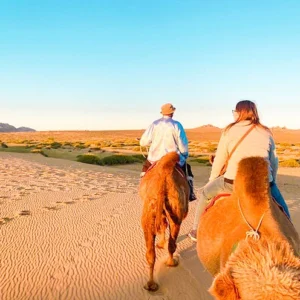
1.Xiansha Island: This playground in the desert is known as the “Disneyland in the desert. ” It features sand yachting, rail bikes, Polaris ATVs, high-altitude zip lines, camel rides, the Guolao Theater’s performance of “Legend of Guolao果老传奇,” the Summit of Singing Sands (flying tower), roller coasters, children’s play facilities, and more.
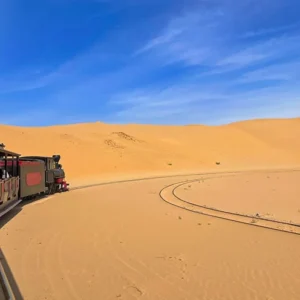
2.Yuesha Island: A water-based amusement park in the desert, focusing on cultural experiences, including sightseeing trains, the national intangible cultural heritage performance “Ordos Wedding,” Mongolian costume cultural exhibitions, authentic Mongolian throat singing performances, themed parades, water parks, sand sculpture parks, children’s play facilities, and more.
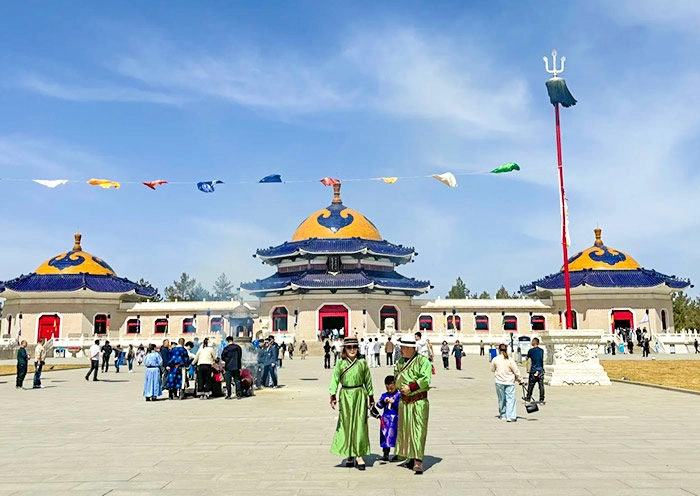
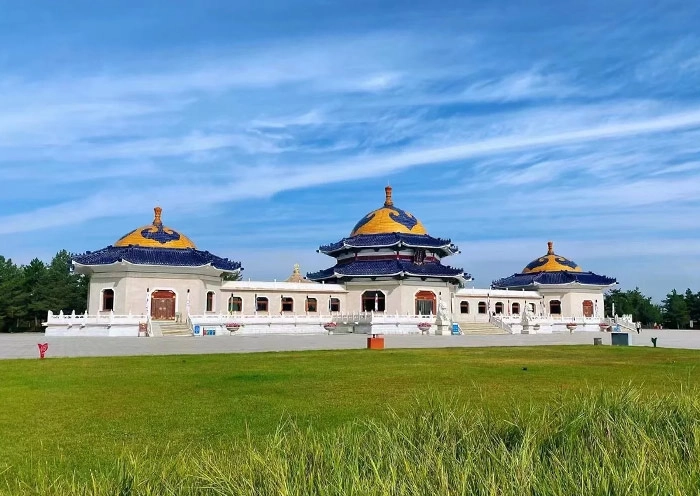
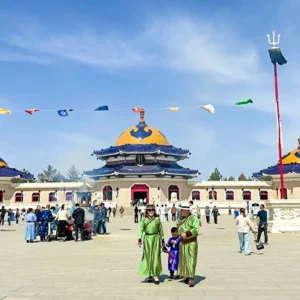
After the adventure in Resonant Sand Bay, time to head to Mausoleum of Genghis Khan, a sacred shrine of the founder of the Mongol Empire – Genghis Khan (1162- 1227).
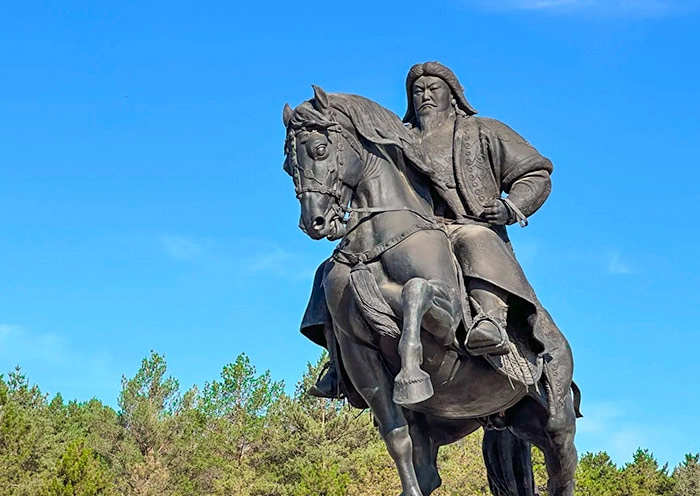
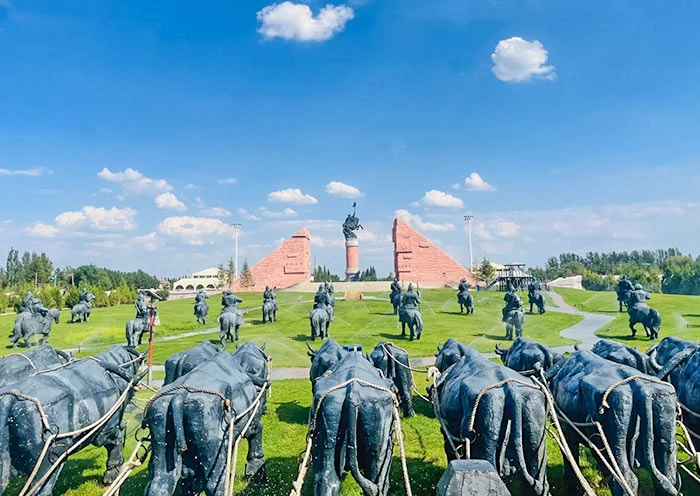
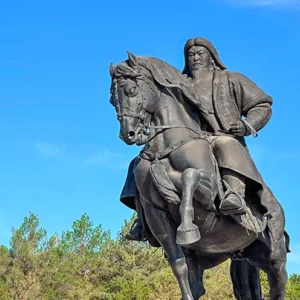
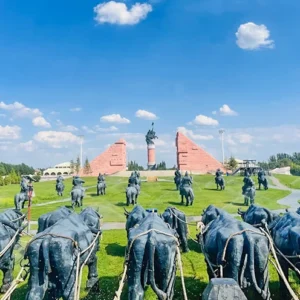
As Mongolia’s Greatest Leader, Genghis Khan consolidated tribes into a unified Mongolia, extended his empire across Central Asia and other countries as far west as Eastern Europe (from the Pacific Ocean to the Mediterranean Sea). Genghis Khan, the most famous warrior in the history of the world, built the biggest empire in history up to that time. He left a vast empire for his descendants, laying the foundation for the Yuan Dynasty (1279-1368) and the reunification of China.
Today, Genghis Khan is still worshipped by those who are interested in Mongolian history, culture, and traditions. Due to the Mongolian custom of “secret burial,” the exact location of Genghis Khan’s actual tomb remains a mystery. The mausoleum currently houses the camel hair that absorbed Genghis Khan’s last breath (灵魂的驼毛), symbolizing his soul, which has been cherished for centuries.
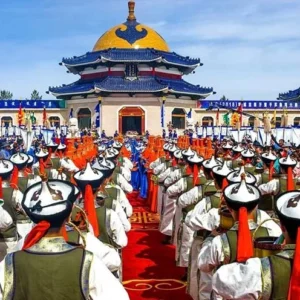
Since 1227 (the death of Genghis Khan), the Da’erhute tribe (达尔扈特人), the ancestors of whom were the guard troops of Genghis Khan, has taken good care of this mausoleum for more than 700 years. If you happen to visit here during its Spring Ceremony (成吉思汗春祭大典), you will witness Mongolian shamanistic rituals and ceremonies that are organized and held by the Da’erhute tribe, offering a deep spiritual connection to the legacy of Genghis Khan. You will see that this mausoleum is a sacred place for Mongolian people to honor and celebrate their national hero.
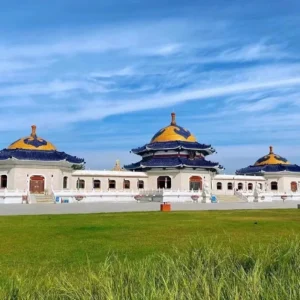
The mausoleum complex, built in a traditional Mongolian architectural style, is composed of two parts: the Tomb Complex and Donglian Scenic Area. It covers an area of around 13.6 acres with more than 2,500 halls, sutras, and monks’ houses. It houses a vast collection of relics and artworks about the life of the legendary Mongolian Emperor and the history of the Mongol Empire. Don’t miss the chance to see the sabers, swords, arrows, bows, and other weapons that were used by Genghis Khan.
Highlights of the Mausoleum of Genghis Khan:
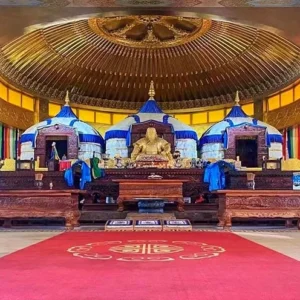
1.Spirit Hall: Houses a golden statue of Genghis Khan and symbolic relics.
2.Main Hall: Features murals and exhibits on the Mongol Empire’s history.
3.Eternal Flame: A sacred flame symbolizing the undying spirit of Genghis Khan.
4.Cultural Performances (Optional; Self-pay): Experience traditional Mongolian dances, music, and ceremonies.
5.Mongolian Rituals: Participate in or observe spiritual rituals performed by Dalhut Mongols (if your visit time meets their ceremony dates).
Note:
Spring Ceremony/Ritual at the Mausoleum of Genghis Khan成吉思汗春祭大典:
Called Tsagaansurek, or “milk sacrifice” in Mongolian, the spring ritual uses the milk of white horses as a sacrifice to peace and prosperity. Every year, ethnic Mongolians hold four rituals, one in each season, to Genghis Khan. The spring ritual is the grandest at the shrine and lasts for eight days. Genghis Khan memorial rituals were inscribed as China’s intangible cultural heritage in 2006. (Contact us to double check the dates of the Ceremony/Ritual.)
After that, overnint in Ordos. Located on the Ordos Plateau, within the bend of the Yellow River, Ordos is a city of happiness that warms the world. Prairies, deserts, or valleys, all their multiple landscapes are poetic. Ordos is one of the richest city in China (2024 GDP even surpass Beijing/Shanghai/Guangzhou), thanks to stores of coal, gas, and rare earth metals. Its cashmere output accounts for 13% of the world’s total, and the unique Albas white goat cashmere is of prime quality in the world; that is why Ordos is called Warm City.
Free Time Ideas:
1.Kangbashi District: The Richest ‘Ghost Town’ in China
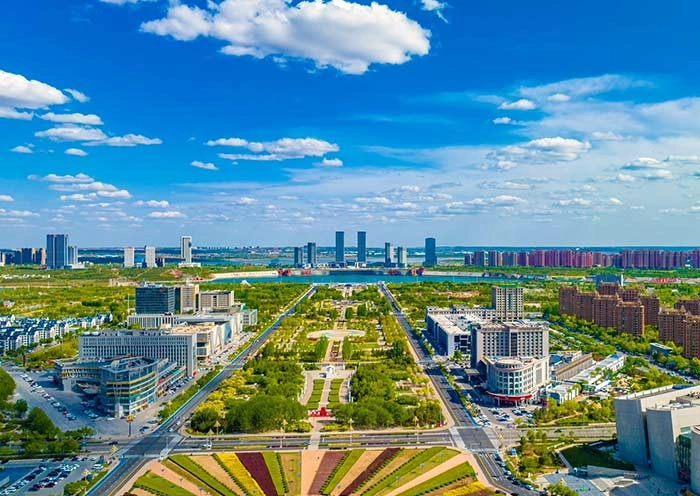
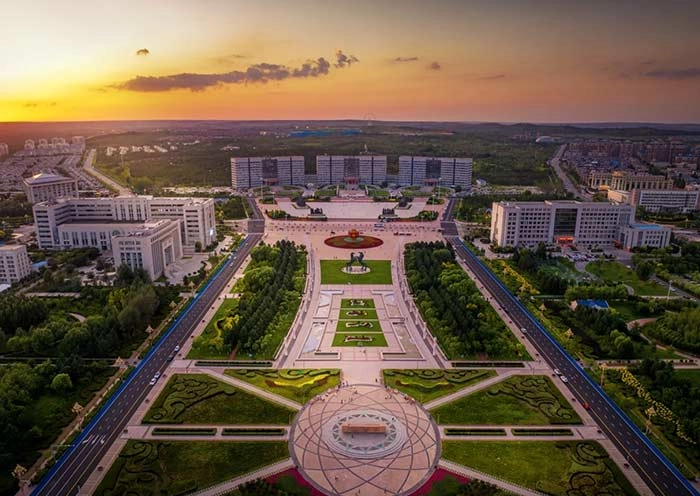
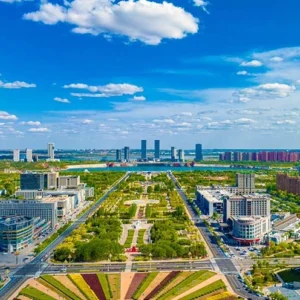
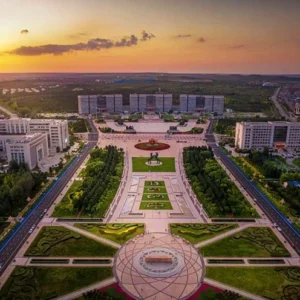
IN 2010, Time Magazine sardonically reported that Kangbashi, in Ordos, Inner Mongolia, is ‘a new Chinese city that, apart from people, has everything’. Now, Kangbashi has become a top tourist area with lots of museums, squares (including Genghis Khan Square), theme parks, a lake, and modern facilities (no-driver bus/taxi).
2.Ordos Musical Fountain of Kangbashi (Asia’s Tallest Fountain)
This Fountain is located in the Kangbashi District at the Wulanmulun Riverside Square (adjacent to the Wulanmulun Lake). It combines sound, light, water, and color elements into one. The main fountain can reach a height of 230 meters, earning it the title of “Asia’s Tallest Fountain.” The fountain performances are held every evening from 8:00 PM to 9:00 PM (may be temporarily suspended in adverse weather conditions).
Today you can depart from Ordos by train or flights. Or you can head back to Hohhot (280 km, 3.5h) for departure.
Free Time Ideas in Hohhot: (If Time Permits)
1.Uncover Dashengkui Museum Cluster (大盛魁博物馆集群; 1.1 km from Dazhao Temple): It comprises the Dashengkui Cultural Museum (Closed on Mondays), Yongsheng Ceramic Museum, Morin Khuur Museum (Horse-head Fiddle Museum)… Established by Jin/Shanxi merchants (晋商), Dashengkui was China’s first privately owned joint-stock enterprise along the Tea Road between China and Russia. Dashengkui, nicknamed “Half Guihua City 半个归化城”, brought prosperity to Guihua City (Hohhot).
At last, it is time to end your 5 Days Inner Mongolia Tour.
Thank you for choosing HelloChinaTrip for your China Tour, and we are always here working for you and hope to see you again for your next trip to Asia. Safe journey!
What’s Included
- Experienced drivers & air-conditioned vehicles
- Professional licensed English-speaking local guide
- Hotel accommodation with breakfasts
- Accident insurance
- Domestic flights (economy class) or high-speed trains (second class) listed in the itinerary
- Admission tickets, activities, meals listed in the itinerary
- Our service from tour planning, handling, operational and finishing your trip
What’s Excluded
- International airfares
- Entry visa fees
- Personal expenses
- Single room supplement
- Recommended optional activities
- Arrival/departure flights or train on the first and last day
- Tips or gratuities for guides and drivers
Important Trip Notes for Booking a Inner Mongolia Tour
How do I book a Inner Mongolia group tour?
It is very simple to book a private China tour. Select the tour you are interested, and click “Make an Enquiry for Free”. Tell us your demands and likes while submitting the form. During this process, you don’t need to pay immediately. After sending us your requirements, one of our professional travel experts will get back to you within 0.5 to 24 hours. When all the information have confirmed, then you make the deposit. Please feel free to contact the travel expert directly if you have any questions prior to booking.
Extend Your Inner Mongolia Tour
The above itinerary is the sample one that most travelers would go like that. The tour can be customized based on your likes, interests and budget. At the same time, if you want to extend this tour, just tell us your favored destinations and things to do. Our professional travel experts will redesign the trip totally for you and your group at the best price. Tell us your ideas now >>
Transportation
In a private tour, it means you will transfer to the tourist attractions in one city by private vehicle. The private car we selected is spacious, comfortable and air-conditioned. And the driver we use are very experienced. As for traveling between two destinations, we use domestic flights (economy seat) or high speed trains (second class seat, usually less than 6 hours). The local guides and drivers will pick you up at the airport/train stations, and escort you to the hotel.
Meals
Similar Experiences
Related products
-
7 Days Best Mongolia Tour: Popular Route in One Week
Inner Mongolia Tours$1,400.00 – $7,000.00Rated 4.71 out of 5 -
6 Days Naadam Festival Tour 2025: Attend the Grandest Festival in Inner Mongolia
Inner Mongolia Tours$1,200.00 – $6,000.00Rated 5.00 out of 5 -
6 Days Inner Mongolia Adventure Tour with Hiking & Camping
Inner Mongolia Tours$1,200.00 – $6,000.00Rated 4.67 out of 5 -
5 Days Hulunbuir Grassland Tour: Inner Mongolia Summer Vacation
Inner Mongolia Tours$1,000.00 – $5,000.00Rated 5.00 out of 5
Vincent Lewis –
This personalized 5-day journey was a perfect mix of relaxation and exploration! The itinerary included a private hot air balloon ride over Xilamuren Grassland, a guided sandboarding session in Kubuqi Desert, and a visit to a local herdsman’s family for an authentic cultural exchange. The guide’s expertise and willingness to customize activities made every moment memorable. Highly recommend for families and couples!
William Lee –
Our 5-day exclusive sojourn was a deep dive into Inner Mongolia’s wonders! Customized to feature a private nomadic family visit in Xilamuren, a traditional Mongolian archery lesson, and a private tour of Ordos’s Genghis Khan Square, the trip was both educational and thrilling. The flexibility to explore at our own pace made it unforgettable. A must-book for adventure seekers!
Zachary Hall –
This 5-day private tour was a masterclass in personalized travel! From the moment we landed in Hohhot, our itinerary was tailored to include a private sunrise horseback ride across Xilamuren Grassland, a bespoke visit to Wudangzhao Monastery with a Tibetan Buddhist monk, and an exclusive equestrian show at Hongge’er Aobao. The flexibility to adjust activities made this trip unforgettable. Perfect for travelers seeking authenticity and exclusivity!
Xavier Walker –
Our 5-day luxury expedition exceeded expectations! The private guide ensured a seamless journey through Inner Mongolia’s highlights, including a customized desert glamping experience in Kubuqi, a private tour of Genghis Khan’s Mausoleum with a historian, and a traditional Mongolian banquet under the stars. The attention to detail and personalized touches made this trip truly special. Highly recommend for discerning travelers!