








5 Days Badain Jaran Desert Tour from Zhangye – Gansu to Inner Mongalia
Must-see & Must-do:
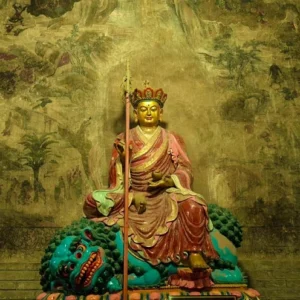
Highlight 1: Explore Zhangye City, the legendary birthplace of “Journey to the West” (Wukong), by visiting Dafo Temple, one of the 4 Remaining Royal Temples in China, and the only surviving temple in China that dates back to Western Xia Dynasty, housing the Largest Indoor Reclining Buddha in Asia.
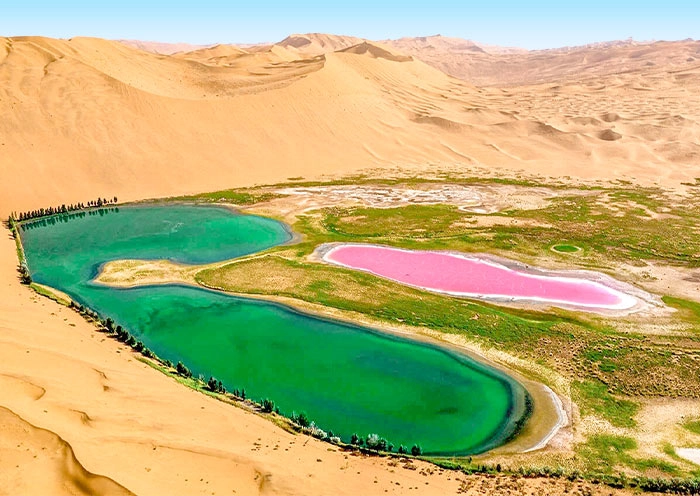
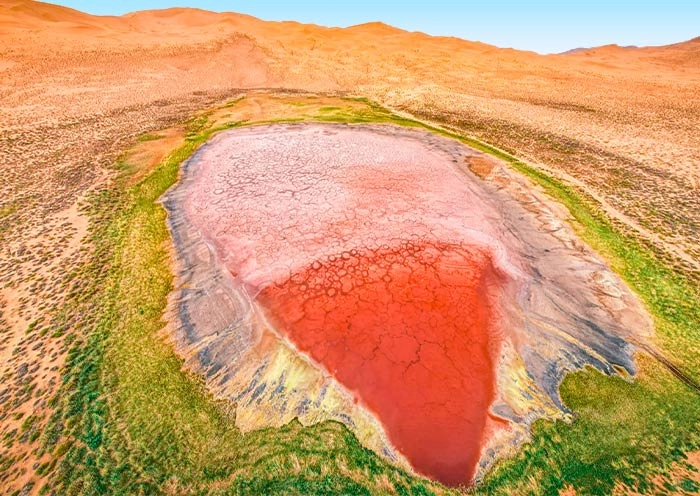
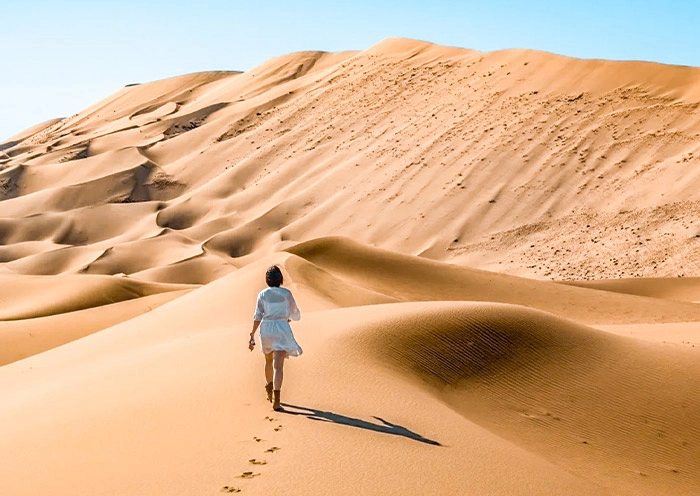
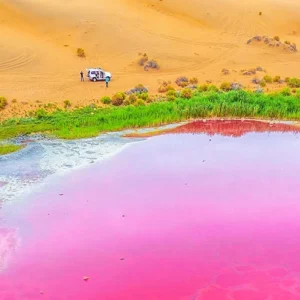
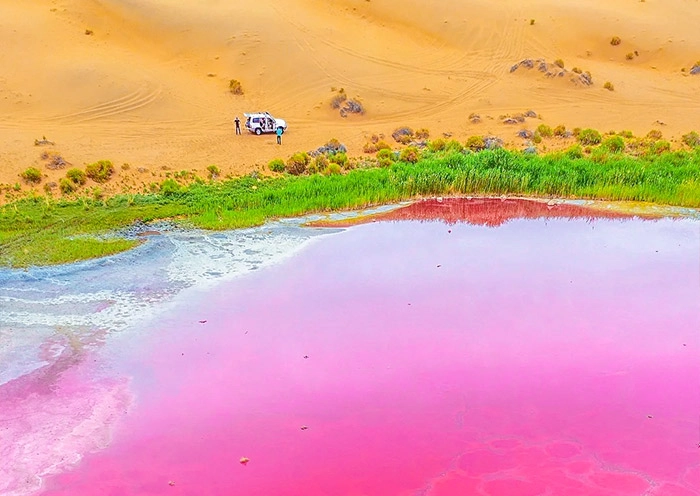
Highlight 2: Marvel at the stunning array of lakes scattered across the Badain Jaran Desert, where each lake reflects its own unique colors – ranging from deep blues to vibrant redscreating a surreal, picturesque landscape unlike anywhere else on Earth. Twin Lakes of Badain Jaran Desert
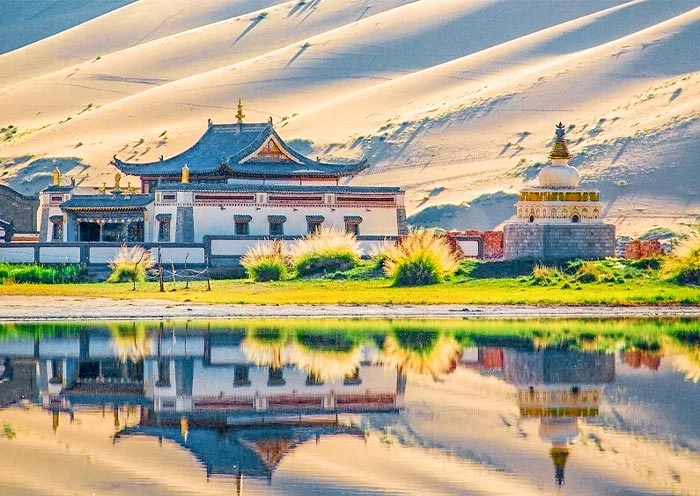
Highlight 3: Have an exhilarating Jeep safari through the Badain Jaran Desert, the third largest desert in China, and immerse yourself in its “five wonders”- towering dunes, singing sands, vibrant lakes, sacred springs, and ancient temples.
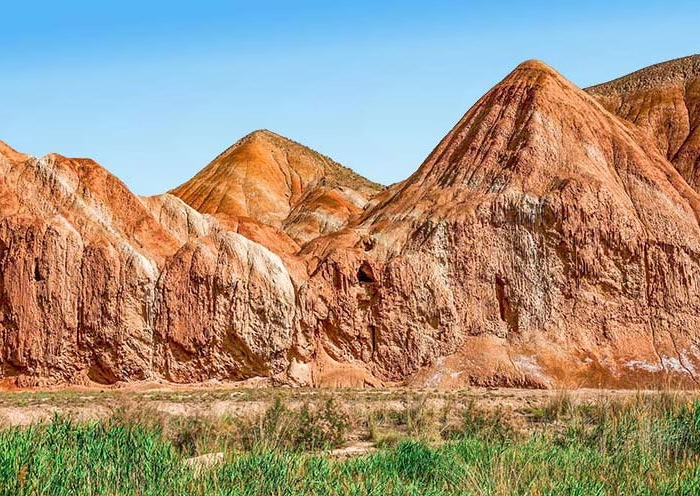
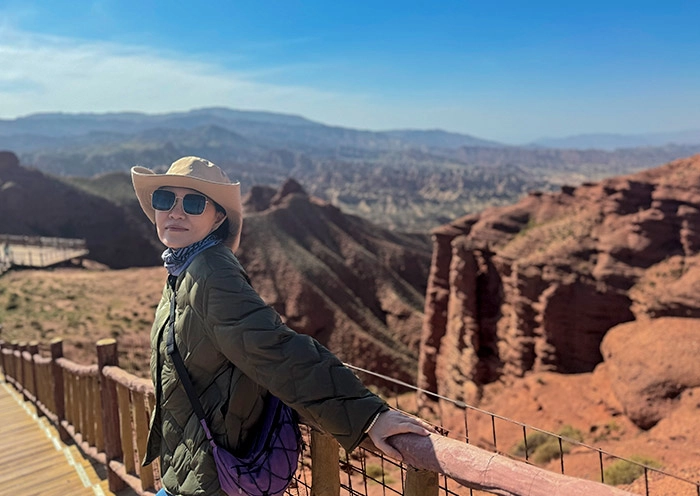
Highlight 4: Visit Zhangye National Geopark (Rainbow Mountains), one of the most beautiful filming locations recognized by the 74th Venice Film Festival. It is also the filming site for the movie The Great Wall which features Matt Damon, and Disney’s blockbuster – Mulan.

Highlight 5: Pingshan Lake Grand Canyon is a stunning red bed landform that has earned praise from China National Geographic. It is a Silk Road gem that offers immersive canyon exploration, revealing billions of years of wind and water erosion.
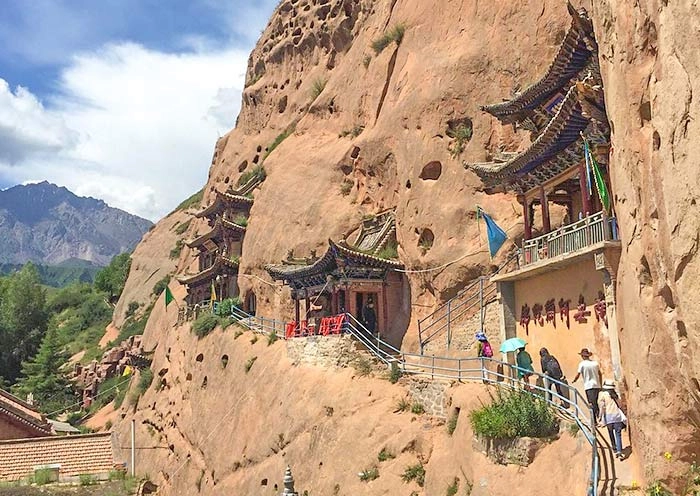
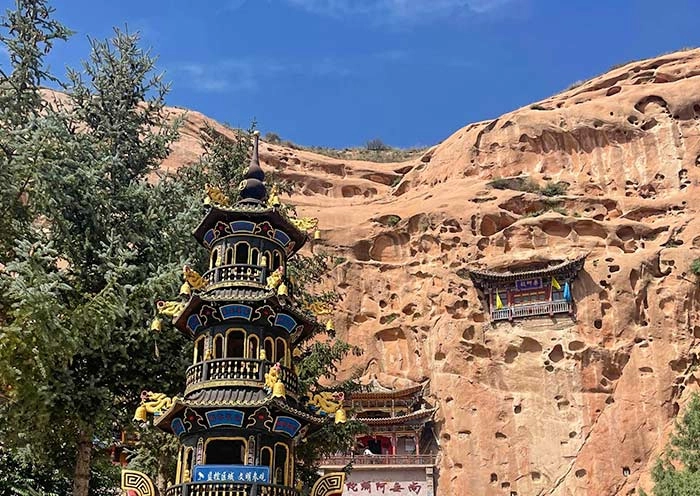
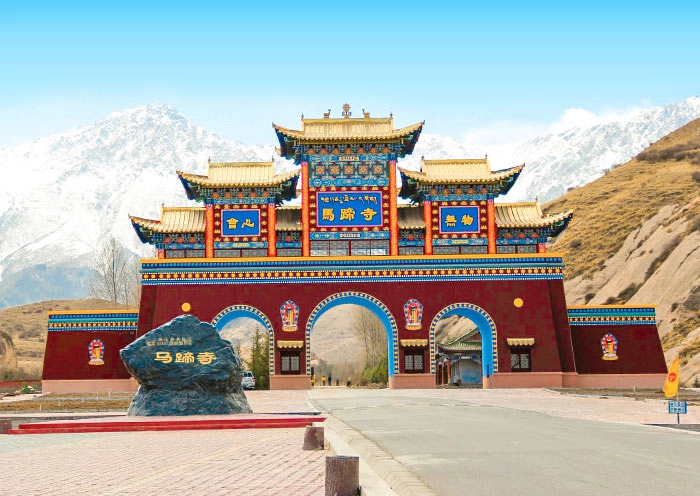
Highlight 6: Embark on a journey to Mati Temple Grottoes, known as “Little Switzerland”, where ancient Buddhist art dating back 1,600 years merges with the beauty of cave art, snow-capped Qilian Mountains, lush forests, flowing streams, expansive grasslands, and serene temples.
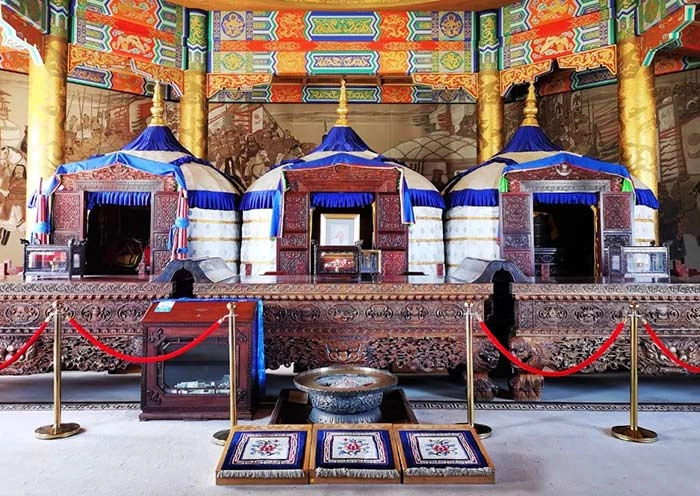
Highlight 7: A trip to Ordos without exploring the Mausoleum of Genghis Khan is imperfect. It is a symbolic shrine housing his relics, rituals, and eternal flame. Soak in tales of a legendary conqueror. Visit Kangbashi District, once the China’s Largest Ghost City.
Itinerary Quick Look:
Welcome to Zhangye, Gansu Province! Upon arrival (Before Noon), your guide will meet you at the airport/train station and escort you to Zhangye National Geopark (Zhangye Danxia Geological Park) for sunset.
Zhangye is situated in the narrowest section of Hexi Corridor (ancient trading route), spanning just 50 km, yet it boasts fertile soil and pleasant scenery. This is why there is a poetic praise saying, “Not seeing snow on the Qilian Mountains, mistaking Zhangye for Jiangnan 不望祁连山顶雪,错把张掖当江南,” and it is also renowned as the “Jiangnan Watertown of Abundance in the Frontier Region 塞上江南” and the “Golden Zhangye金张掖.” Formerly known as Ganzhou (甘州, Ganzhou is the place of origin of the “Gan” character in Gansu Province甘肃的“甘”), Zhangye was renamed due to Emperor Wu (汉武帝) of the Han Dynasty’s decision to “extend the reach of Zhangye to facilitate connections with the Western Regions 张国臂掖,以通西域,” making it a crucial node along the Silk Road and a mandatory stop for the propagation of Buddhist teachings from the East. And you see the airport in Zhangye is called Zhangye Ganzhou Airport (张掖甘州机场).
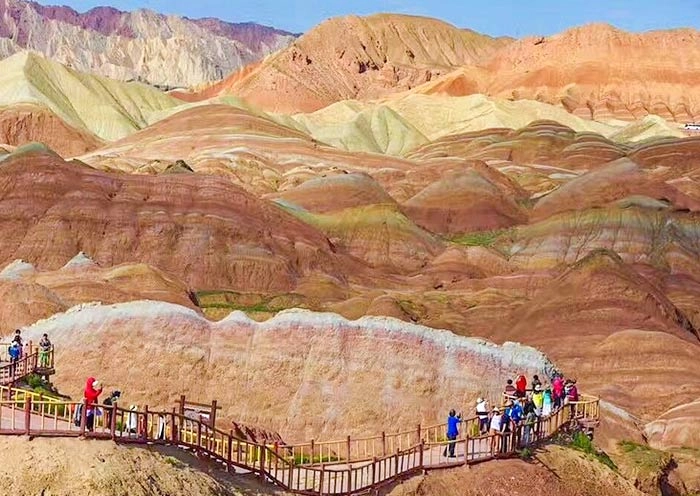
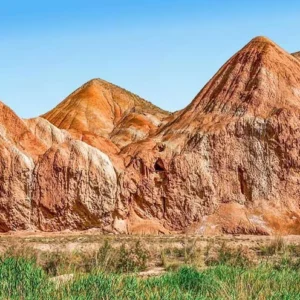
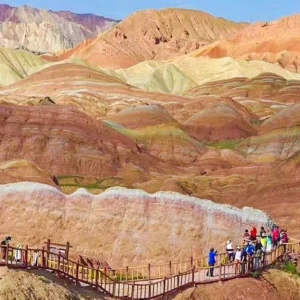
In the afternoon, head to visit Zhangye National Geopark (Zhangye Colorful Danxia Scenic Spot七彩丹霞景区) which is renowned for its strikingly colorful rock formations, often referred to as Rainbow Mountains. Zhangye is famous worldwide for its colorful Danxia landforms, a must-visit attraction for people traveling to Zhangye. This is a paradise for geologist & photography enthusiasts, and a great place to experience the marvelous work of nature. The Zhangye Colorful Danxia Scenic Spot (七彩丹霞景区), part of the Zhangye National Geopark, is China’s only highly composite area that combines Danxia landforms with colorful hilly landscapes. Zhangye Danxia has been honored as one of the world’s top ten geographical wonders, one of the 22 most unforgettable landscapes worldwide, and the most beautiful exterior filming location at the 74th Venice Film Festival. This location served as a filming site for the movie The Great Wall《长城》 directed by Zhang Yimou and Disney’s Mulan《花木兰》. The Rainbow Mountains featured on the cover of high school English textbooks are not only geological relics of special scientific significance, rarity, and aesthetic value but also hold archaeological, ecological, historical, and cultural significance.
During the Cretaceous period, approximately 135 to 65 million years ago, the Zhangye region underwent the Himalayan orogeny, multiple erosions by water and wind, and long-term weathering processes, leading to the formation of the current Danxia landforms. The strata are mainly composed of sandstone and mudstone, formed in a dry and hot environment, where divalent iron in minerals oxidized to trivalent iron, giving the strata a red hue. As the environment gradually became wetter, the high-priced iron was reduced, causing a change in strata color to shades of brown, yellow-green, and bluish-gray, creating a palette resembling that of an overturned divine paintbox. The term “Danxia (丹霞)” originates from Cao Pi’s poem (曹丕) “Danxia surrounded by the bright moon, with splendid stars emerging amidst the clouds (丹霞夹明月,华星出云间).” “Danxia,” literally means the sacred or auspicious celestial sight – the rosy clouds illuminated by light. When geologists first discovered the cinnabar-colored landform, the romantic scientists named it the “Danxia landscape,” leading to the coinage of the geographical term “Danxia landform (丹霞地貌).”
The scenic area comprises five Observation Decks (No. 3 and No. 2 have been merged). Shuttle buses connect each Observation Deck (entering and exiting at the north gate, with shuttle stops at four points in the order of Observation Deck #2-1-5-4). Observation Deck #1 and Observation Deck #4 are the most recommended. Yunhai Platform (云海台 No. 1) is where the image was taken on the ticket and the largest viewing platform, offering a panoramic view of the entire Danxia landscape, including the winding S-shaped road. Hongxia Platform (虹霞台 No. 4), highly popular and considered the most beautiful spot with the most vibrant colors, is the best place to watch the sunset. In the eyes of the Chinese people, the Rainbow Mountains here resemble delicious Pork Belly or Strawberry Cake layers.
At the Zhangye Rainbow Mountains, you can admire unique features like the Rainbow Screen, Sleeping Beauty, Giant Scallop, Monks Worshiping Buddha, Monkey Gazing at the Sea, Turtle Asking the Heavens, and the Red Cliff Great Wall (七彩屏、睡美人,大扇贝、众僧拜佛、灵猴观海、神龟问天、赤壁长城). Standing at the mountaintop, one can witness the colorful watercolor-like mountain ranges, feeling as if stepping into a painting.
Optional Visiting Place: (If Time Permits)
Zhangye UNESCO Global Geopark Museum (张掖地质公园博物馆 Closed on Mondays): You can enter from the North Gate (北门) as it is where the Zhangye UNESCO Global Geopark Museum (Closed on Monday) located. With a visit to the museum that serving as a popular science base for understanding the professional knowledge of Zhangye Danxia Landform, you may gain deeper understanding of this Zhangye Danxia National Geological Park (Zhangye Danxia Geopark张掖国家地质公园).
Notes:
1. The best time for photography is at sunrise when the light is soft, colors are vivid, and there is a strong contrast, ideal for capturing both the panoramic view and detailed textures of the Rainbow Mountains. Sunset, with the setting sun casting its warm glow on the hills, creating golden silhouettes, is also an excellent time to capture the beauty of the Rainbow Mountains. If you want to capture the sunrise, do double check with your travel consultant to overnight at the hotel near the Rainbow Mountains.
2. Another optimal time to appreciate the Danxia landforms is after rainfall when the colors become even more vibrant and captivating due to the moisture.
3. Comfortable shoes are essential as climbing uphill sections may occur.
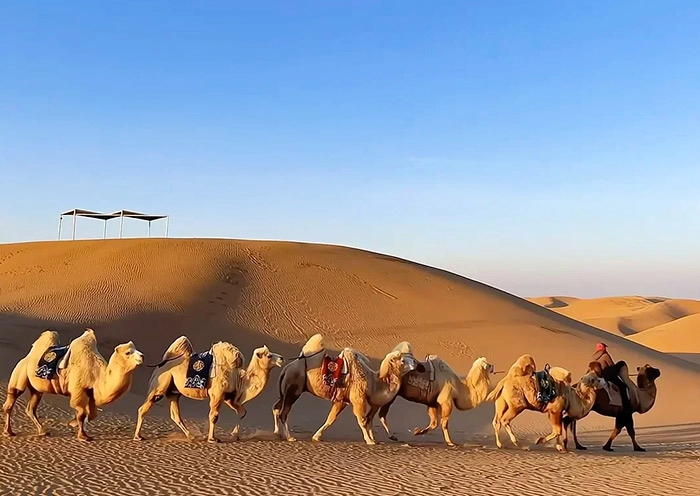
4. The scenic area also offers entertainment options such as camel rides, hot air balloons, gliders, helicopters, and other activities (at an additional cost).
Arrival Ideas:
1. How to get to Zhangye By Air: Zhangye has a medium-sized airport – Zhangye Ganzhou Airport (24 km from the city center). There are flights to Zhangye, like Beijing (3 hours), Xi’an (2 hours), Shanghai (3½ hours), and Lanzhou (1 hour). Contact us to double-check the flights for your trip.
2. How to get to Zhangye By High-speed Train: Zhangye has two railway stations: Zhangye Railway Station and Zhangye West Railway Station. You can take trains from Lanzhou, Xi’an, Dunhuang, Jiayuguan, and Xining to Zhangye. Contact us to double-check the high-speed train tickets for your trip.
This early morning, you can wait for the sunrise at Danxia Landform (Optional). Then, after breakfast, you will head to explore Zhangye City through Dafo Temple (1-2 hours) before heading to Badan Jaran Desert (250 km, 4.5hrs). It is a long day trip, when reach Badan Jaran Town, you can have a good rest.
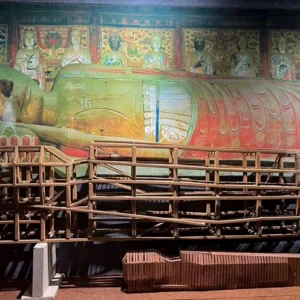
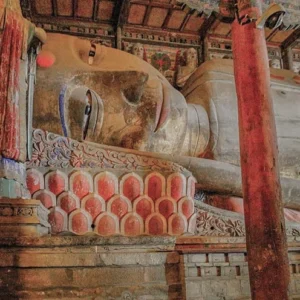
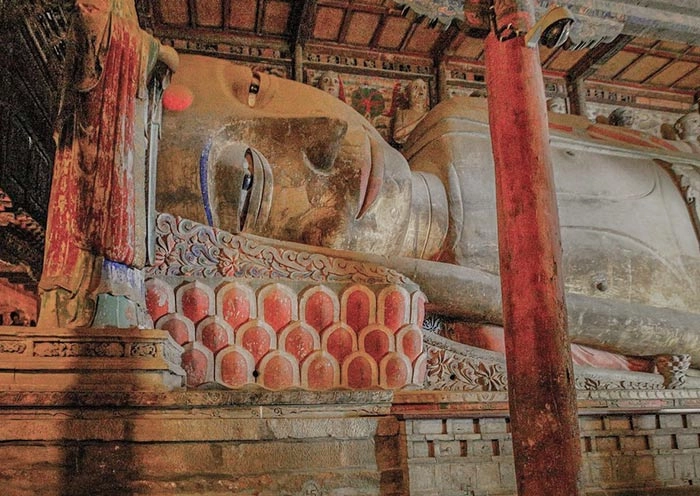
Dafo Temple (大佛寺; Big Buddha Temple) is a must-visit place in Zhangye if you are particularly interested in Buddhist culture and ancient architecture. The Big Buddha Temple is the iconic building of Zhangye, known for housing a 34.5-meter-long statue of the reclining Buddha, commonly called the “Reclining Buddha Temple 卧佛寺” by locals. Built in the year 1098, the Giant Buddha Temple was a royal temple built by the Western Xia Dynasty (西夏;1038-1227), making it one of the Four Remaining Royal Temples in China (the other three being the Lama Temple in Beijing, the Famen Temple in Baoji Of Shaanxi, and the Chongsheng Temple in Dali Of Yunnan). Legend has it that Kublai Khan (忽必烈), the founder of the Yuan Dynasty (1271-1368), was born in the Big Buddha Temple in Zhangye. The Italian traveler Marco Polo was captivated by the magnificent architecture of the Giant Buddha Temple and the prosperity of Zhangye, leading him to stay there for a year. Covering an area of over 60,000 m², the temple could accommodate 5,000 worshipers simultaneously in the 16th century.
Visit Big Buddha Temple in Zhangye to explore the only surviving Western Xia temple in China, the largest indoor reclining Buddha in Asia, and the complete Yongle Canon and Prajna Paramita Sutra (《永乐北藏》). It is a Buddhist art museum that integrates architecture, sculpture, murals, carvings, scriptures, calligraphy, and cultural relics. When you step into the temple, you’ll see the Grand Buddha Hall which has maintained its original appearance from over 900 years ago. Besides the reclining Buddha, the walls on the east and west sides of the hall feature murals inspired by “Journey to the West西游记,” “Investiture of the Gods封神演义,” and the “Classic of Mountains and Seas山海经.” Among these, the “Journey to the West” mural is said to predate the novel by approximately 200 years, depicting the story of Tang Dynasty Monk Xuanzang (唐僧) and his disciples embarking on their journey to the West in a comic strip format, showcasing episodes like “Fetching Water from the Motherhood River,” “A Battle with Red Boy,” “Obstacle at Flaming Mountain,” “The Monkey King: Uproar in Heaven,” and “Expulsion of the Monkey King/Wukong” (取水子母河、大战红孩儿、路阻火焰山、大圣闹天宫、恨逐美猴王). Interestingly, the character Zhu Bajie (猪八戒) in the mural is portrayed as simple, honest, and hardworking, in stark contrast to the Zhu Bajie character in the novel Journey to the West. Even today, within the Zhangye region, one can find many place names from the novel Journey to the West, such as Gaolaozhuang (高老庄Bajie’s hometown), Liusha River (流沙河), Liangjintai (晾金台), Bull Demon King’s Cave (牛魔王洞), and the Eight Thousand Ruoshui River(八千里弱水).
A pair of Chinese characters written on a couplet outside the Grand Buddha Hall reads, “The Sleeping Buddha slumbers a thousand years without awakening, those who inquire will forever question, the answer remains elusive睡佛长睡睡千年长眠不醒,问者永问问百世永问难明,” provoking deep contemplation and worth a look. Remember to ask the guide to show you another pair of couplets written in the Western Xia script with the same content. Additionally, the scripture hall of the reclining Buddha temple houses a Buddhist art exhibition hall and a Buddhist scripture exhibition hall, showcasing Buddhist artifacts extracted from the Buddha’s abdomen. Among them, the “Mahaprajnaparamita Sutra《大般若波罗蜜多经》” written in gold and silver ink is a treasured artifact. Rare and exquisite Persian silver coins have been discovered in this temple, serving as compelling evidence of the bustling foreign trade along the Silk Road.
Note:
Currently, the reclining Buddha statue in Zhangye Giant Buddha Temple is undergoing digital restoration, covered by scaffolding. The project is expected to be completed by June 2025.
Then, head to Badan Jaran Desert. Overnight stay in Badan Jaran Town.
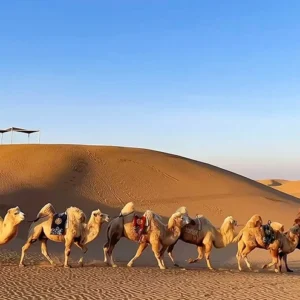
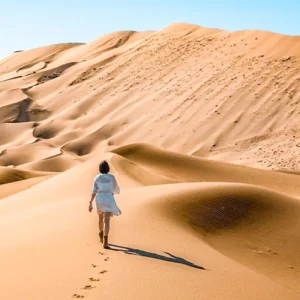
After breakfast, you’ll head to the Badain Jaran Desert, just a 1-hour drive from town. Spanning 4.7 million square kilometers, the Badain Jaran Desert is the third largest in China and the fourth largest in the world. Recognized by National Geographic as China’s most beautiful desert, it’s famous for its “five wonders”: towering dunes, singing sands, vibrant lakes, divine springs, and ancient temples. In 2024, the “Badain Jaran Desert – Sand Mountain Lake Group” was added to the UNESCO World Heritage List.
Your travel route will be adapted to current conditions, with options for hiking or a thrilling Jeep safari, weaving between dunes at elevations of 1,200 to 1,700 meters. Highlights include:
- Colorful Lakes: Among the 113 lakes, 12 freshwater ones, like the stunning ‘Red Lake’ Dagetu, surrounded by reeds and wildlife, offer serene beauty.
- Giant Peaks: Dunes reaching 200 to 500 meters dominate the landscape, creating a dramatic, wave-like expanse.
- Singing Sands: The desert’s ‘Singing Sands’ create haunting echoes as they shift.
- Oasis Springs: Yinde Ritu’s miraculous 108 springs are a vibrant contrast in the arid desert.
- Desert Palace: The 200-year-old Badain Jaran Temple, nestled between sand and lake, is a spiritual gem with captivating murals.
The reference route on this day can be the eastern route: visiting the Sand Geopark Museum and various stunning desert lakes, such as Dagetu (Red Lake), Yinde Ritu (Divine Spring), and Bilutu (Pearl Peak). The day concludes with an overnight stay near Suming Jilin (Temple Lake).
After your desert adventure, rest overnight in a tent at the desert.
This early morning, you can wait for the Badain Jaran Desert Sunrise (Optional), then head back to Zhangye (225 km, 3.5h) via a visit of Pingshan Lake Grand Canyon..
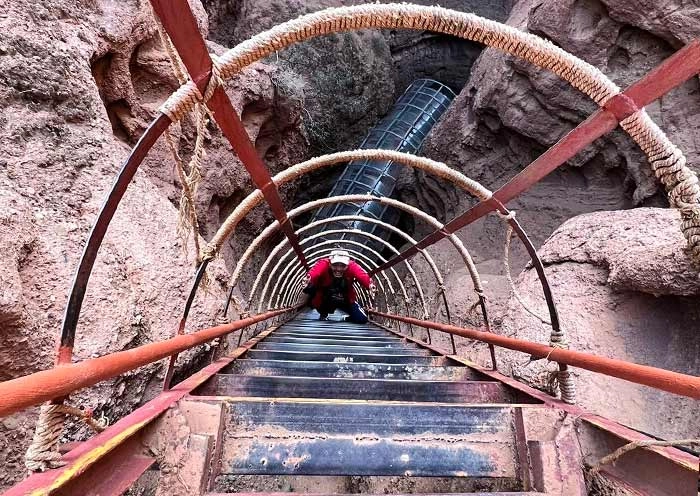
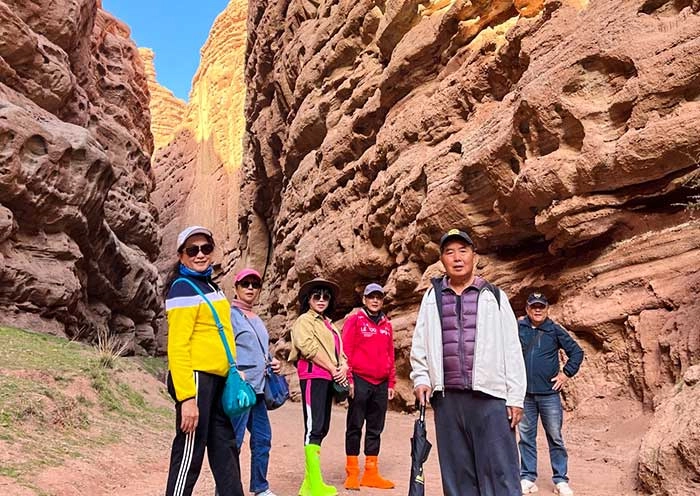
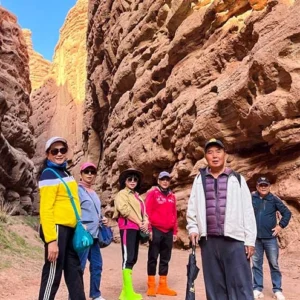
After breakfast, you’ll be escorted to Pingshan Lake Grand Canyon (about 57 km, 1 hour). Located northeast of Zhangye, this canyon is a prime example of the red bed landform. Praised by China National Geography magazine, it is often compared to Zhangjiajie National Forest Park and the Grand Canyon in Colorado, and is regarded as a hidden gem along the Silk Road! Its unique geological landscape and immersive canyon exploration make it one of the most captivating attractions in the Qinghai-Gansu travel circuit. As you hike deeper into the canyon, you’ll feel the awe of nature shaped over billions of years, with wind and water erosion forming breathtaking natural art that is both vast and inspiring!
After the tour, you will head for Zhangye (60 km, 1.5 hours). Stay overnight at Zhangye.
Free Time Ideas: (If Time Permits)
1. Shanxi Guild Hall (山西会馆) : Located next to the Big Buddha Temple, the Shanxi Guild Hall was constructed by Shanxi merchants (晋商) in 1724 with a history of over 300 years for their commercial activities in Zhangye. It is said that “where there is prosperous trade, there are Shanxi merchants; where there are Shanxi merchants, there are guild halls凡商贸繁华处必有晋商,有晋商居处,必有会馆.” During the Ming and Qing dynasties, Shanxi merchants built around 400 Shanxi Guild Halls across the country, all characterized by the presence of a Guan Gong Temple (关帝庙; dedicated to Guan Yu拜关羽) and an Opera Stage (西楼).
2. Zhangye City Museum (张掖博物馆Closed on Mondays): Located opposite the Zhangye Big Buddha Temple, the Zhangye City Museum houses over 10,000 cultural relics spanning various historical periods from the Neolithic Age to the Ming and Qing Dynasties. These relics are diverse and include bronze ware, pottery, jade artifacts, as well as cultural remnants from the Silk Road. You can admire a 1:1 replica of the Golden Tower Temple grottoes (金塔寺1:1复制石窟) in this museum.
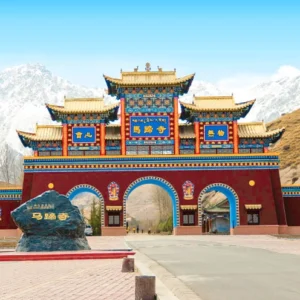
This morning, you will visit Mati Temple Grottoes (60 km, 1.5h) for the Cave art, snow-capped mountains, forests, streams, grasslands, temples, and Tibetan culture. Then, time to depart Zhangye.
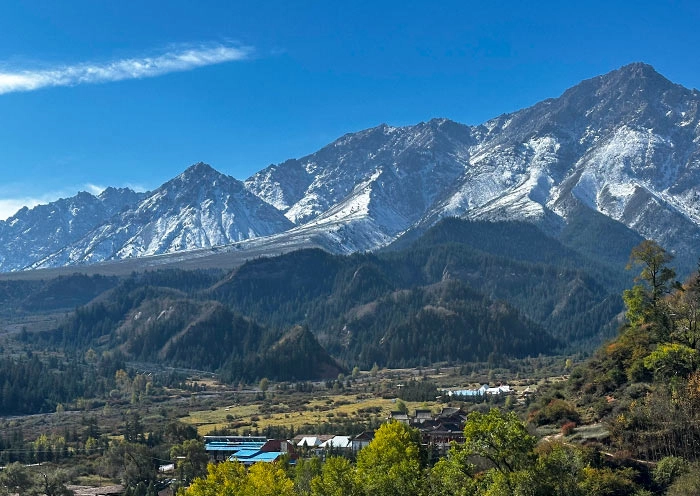
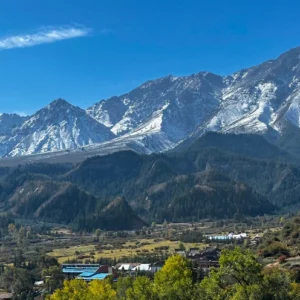
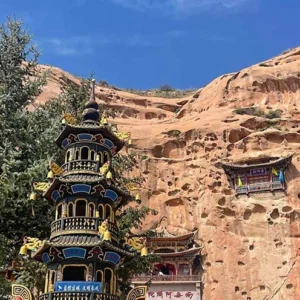
Mati Temple Grottoes, located under the snow-capped Qilian Mountains (祁连山), offers a cultural experience combined with Ancient Buddhist art dating back to 1,600 years ago and the brilliant natural beauty that is famed as “Little Switzerland”. The Mati Temple Grottoes is situated amidst pine forests and valleys (松林薤谷). The initial grottoes were carved by Guo Yu (郭瑀), a disciple of Confucian master Guo He (儒家大师郭荷), as classrooms for teaching, playing a significant role in the establishment and development of the Hexi culture. Today, the Mati Temple has become one of the important temples of the Gelug sect of Tibetan Buddhism, preserving 37 grottoes rich in relics and over 100 Buddha statues and stupas. You will marvel at the grottoes that are distributed along cliffs or rock walls near water for about 20 km.
The grottoes house more than 500 precious statues from various dynasties like Northern Liang, Northern Wei, Western Wei, Sui, Tang, Yuan, Ming, and Qing, along with over 2,500 square meters of murals. Stepping into Mati Temple, one is struck by the awe-inspiring sight. The ancient grottoes are intricately built into the mountainside, each seeming to narrate millenniums of vicissitudes. The colorful murals, executed with exquisite craftsmanship, are truly breathtaking. Beyond the allure of the grotto art, Mati Temple also boasts rich natural scenery. On clear days, you can climb to the mountaintop, overlooking the magnificent views of the entire Qilian Mountains, experiencing nature’s stunning and awe-inspiring craftsmanship.
Notes:
1. The altitude of Mati Temple is approximately around 2,580 meters. Remember to bring warm clothing!
2. Climbing the grottoes requires some physical strength. It is recommended to wear comfortable shoes.
3. The weather in the hinterland of the Qilian Mountains is changeable. It is advisable to carry an umbrella for any unexpected needs.
At last, it is time to end your 5 Days Badain Jaran Desert Tour from Zhangye.
Thank you for choosing HelloChinaTrip for your China Tour, and we are always here working for you and hope to see you again for your next trip to Asia. Safe journey!
Extension Ideas:
1.You can extend your Hohhot Tour to other cities in Inner Mongolia, such as Baotou, Ordos, Ejin Banner, Badain Jaran Desert, and Hulunbuir. Please feel free to let us know, we can help you with the arrangements.
2.You can extend your Inner Mongolia Tour to other cities in China, such as Beijing, Shanxi (Datong/Pingyao/Wutaishan/Taiyuan), Gansu (Zhangye/Lanzhou/Dunhuang/Jiayuguan), Ningxia, Xian, Luoyang, Chengdu (Sichuan), and Shanghai, etc. We can customize your itinerary.
What’s Included
- Experienced drivers & air-conditioned vehicles
- Professional licensed English-speaking local guide
- Hotel accommodation with breakfasts
- Accident insurance
- Domestic flights (economy class) or high-speed trains (second class) listed in the itinerary
- Admission tickets, activities, meals listed in the itinerary
- Our service from tour planning, handling, operational and finishing your trip
What’s Excluded
- International airfares
- Entry visa fees
- Personal expenses
- Single room supplement
- Recommended optional activities
- Arrival/departure flights or train on the first and last day
- Tips or gratuities for guides and drivers
Important Trip Notes for Booking a Inner Mongolia Tour
How do I book a Inner Mongolia group tour?
It is very simple to book a private China tour. Select the tour you are interested, and click “Make an Enquiry for Free”. Tell us your demands and likes while submitting the form. During this process, you don’t need to pay immediately. After sending us your requirements, one of our professional travel experts will get back to you within 0.5 to 24 hours. When all the information have confirmed, then you make the deposit. Please feel free to contact the travel expert directly if you have any questions prior to booking.
Extend Your Inner Mongolia Tour
The above itinerary is the sample one that most travelers would go like that. The tour can be customized based on your likes, interests and budget. At the same time, if you want to extend this tour, just tell us your favored destinations and things to do. Our professional travel experts will redesign the trip totally for you and your group at the best price. Tell us your ideas now >>
Transportation
In a private tour, it means you will transfer to the tourist attractions in one city by private vehicle. The private car we selected is spacious, comfortable and air-conditioned. And the driver we use are very experienced. As for traveling between two destinations, we use domestic flights (economy seat) or high speed trains (second class seat, usually less than 6 hours). The local guides and drivers will pick you up at the airport/train stations, and escort you to the hotel.
Meals
Similar Experiences
Related products
-
5 Days Inner Mongolia Tour from Beijing – Escape to Huitengxile Grassland
Family Travel in China$1,000.00 – $5,000.00Rated 4.83 out of 5 -
6 Days Best Hulunbuir Tour: Grassland, Wetland, Lake & Border Culture
Inner Mongolia Tours$1,200.00 – $6,000.00Rated 5.00 out of 5 -
5 Days Hulunbuir Grassland Tour: Inner Mongolia Summer Vacation
Inner Mongolia Tours$1,000.00 – $5,000.00Rated 5.00 out of 5 -
5 Days Classic Inner Mongolia Tour – Green Grassland & Golden Desert
Inner Mongolia Tours$1,000.00 – $5,000.00Rated 4.75 out of 5
Thomas Müller –
This 5-day tour combined stunning natural wonders with cultural insights. The private guide’s flexibility meant we could explore lesser-known spots and spend more time at the sand dunes. The luxury of a customized itinerary made this a truly unique and memorable experience.
Maria Garcia –
The private nature of this tour allowed us to fully immerse ourselves in the stunning landscapes of Badain Jaran Desert without feeling rushed. We especially loved the camel rides and the peaceful nights under the stars at the desert camps. The itinerary was well balanced between adventure and comfort.
김민수 –
이 프라이빗 투어 덕분에 바다인자란 사막의 장관을 제대로 즐길 수 있었습니다. 전용 가이드가 저희 일정에 맞게 조율해주어 편안하게 여행할 수 있었고, 별이 가득한 밤하늘에서의 캠프 경험은 정말 잊을 수 없습니다.
Linda Nguyen –
Traveling privately through the Badain Jaran Desert was magical. Our guide adapted the schedule to fit our interests and energy levels, and the small group size made all the difference. From the towering dunes to the mysterious desert lakes, every moment felt like an adventure tailored just for us.
Elena Petrova –
The highlight of our trip was the peacefulness and beauty of the desert landscapes. Thanks to the private tour setup, we avoided crowds and enjoyed exclusive access to the best spots. The camel ride and sunset views were unforgettable. Highly recommend this for anyone seeking a personalized desert adventure.
佐藤健一 –
この5日間のプライベートツアーは最高でした。バダインジャラン砂漠の壮大な景色をゆっくり楽しめて、地元の文化にも触れることができました。自分たちだけのペースで行動できるのは本当にありがたかったです。