






4 Day Huangshan Heritage Tour: Yellow Mountain, Hongcun & Xidi Ancient Villages
Must-see & Must-do:
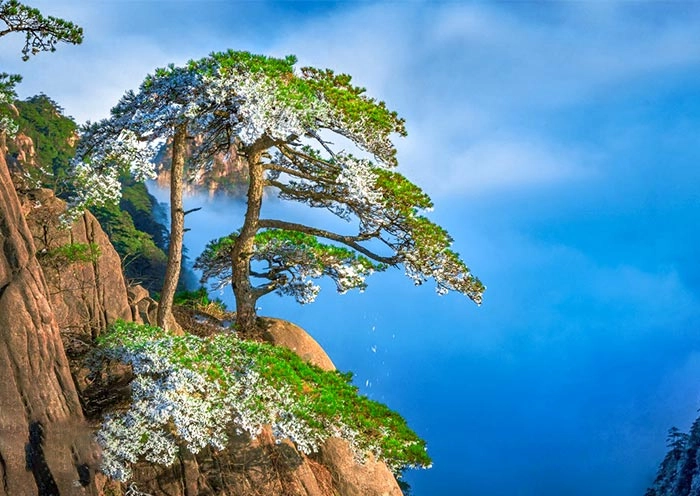
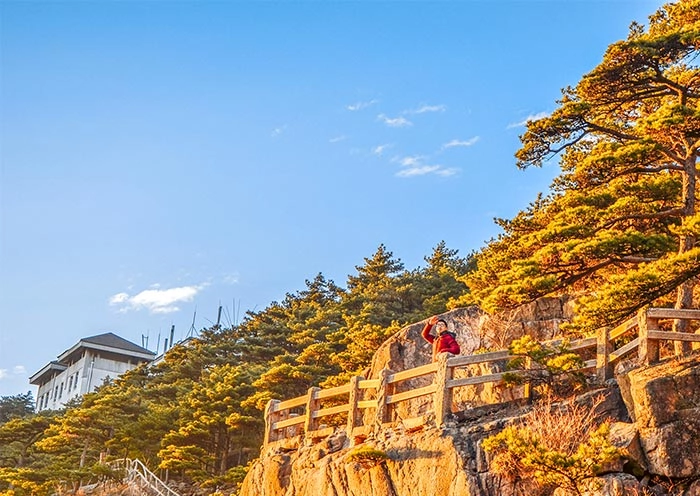
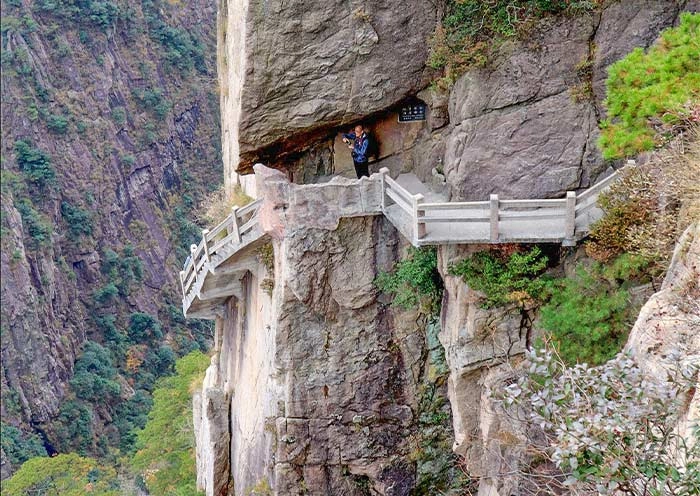
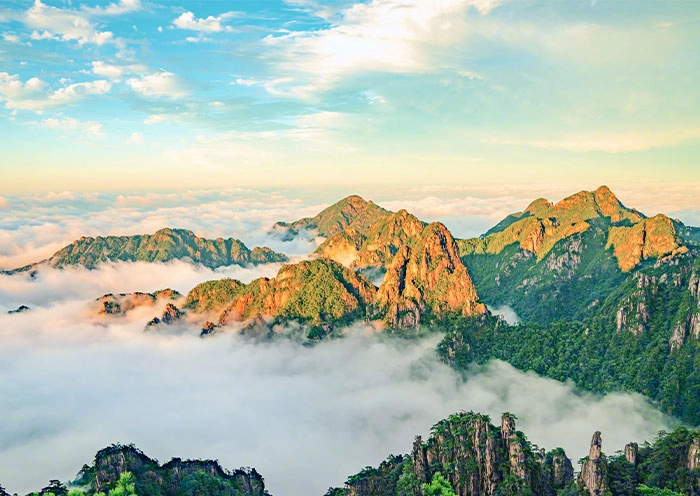
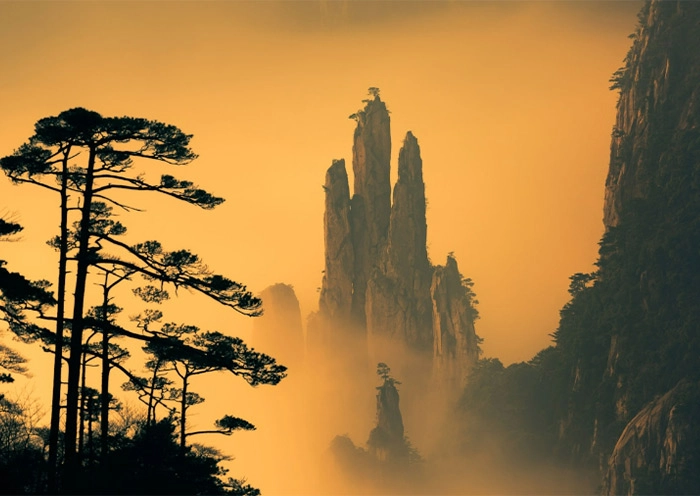
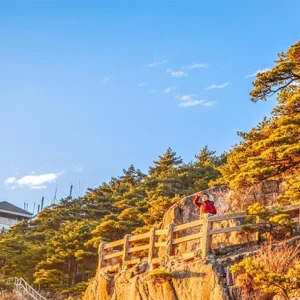
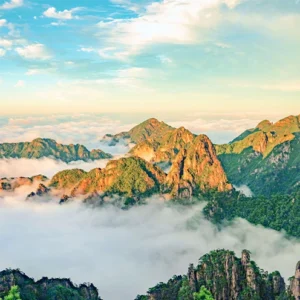
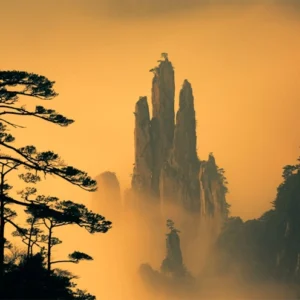
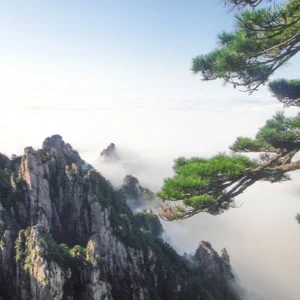
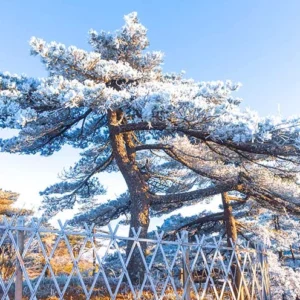
Highlight 1: Hike the Yellow Mountain, one of China’s Five Sacred Mountains, and prepare to be awestruck by its natural wonders. Its granite peaks and twisted pines are often enveloped in mystical mist, creating ethereal and mystical views.
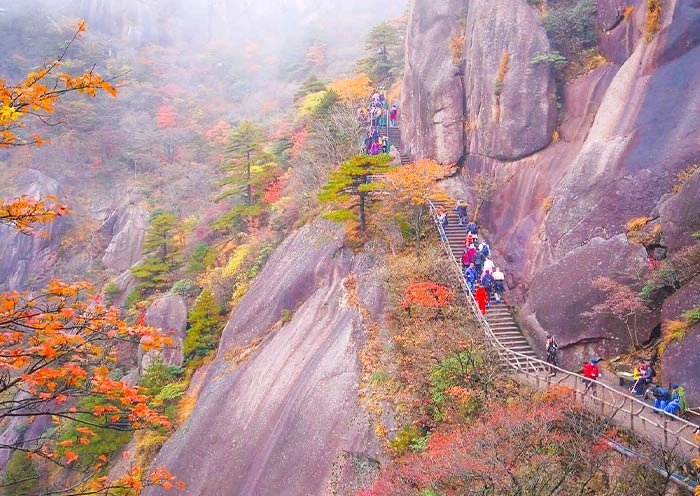
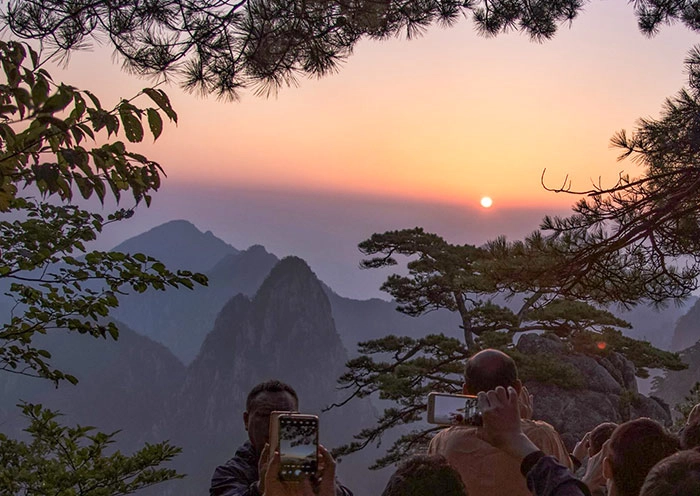
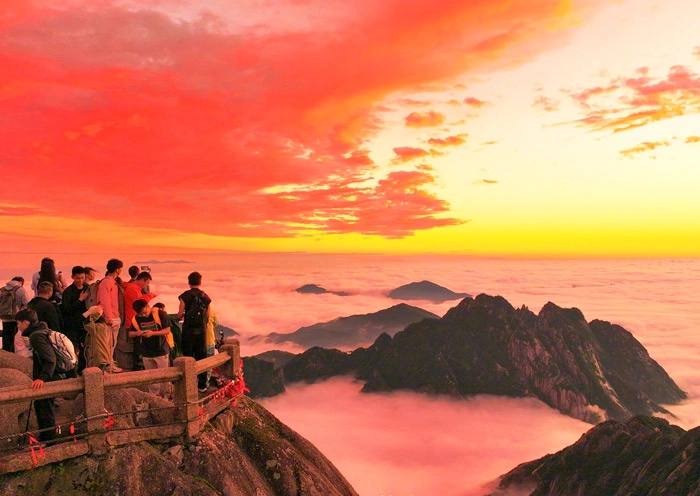
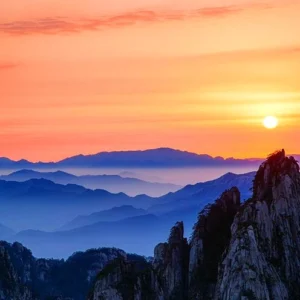
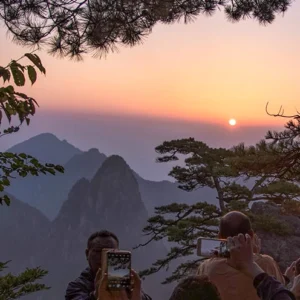
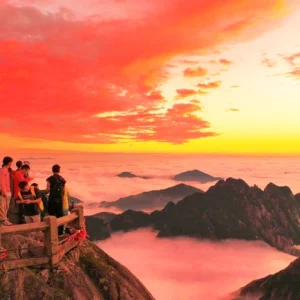
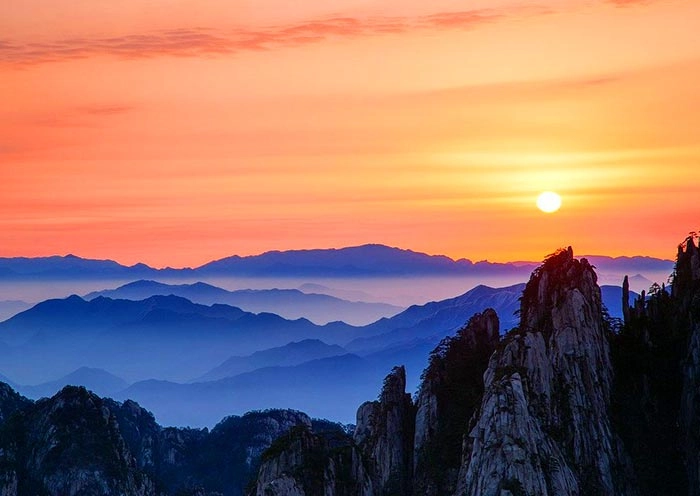
Highlight 2: Witness the mesmerizing sunset and sunrise over the Huangshan peaks. The heavens themselves seem to paint the sky with hues of tangerine, lavender, and gold, casting a divine glow upon the rugged landscape.
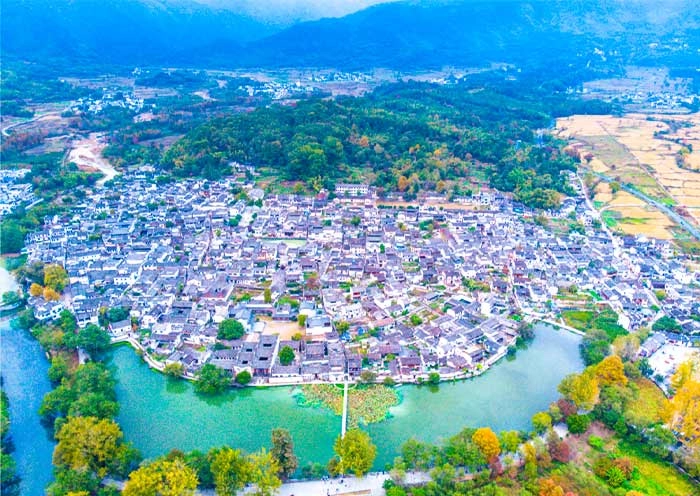
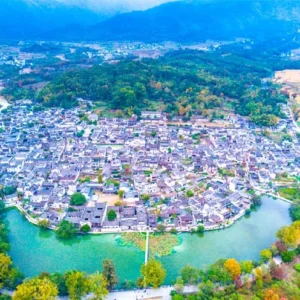
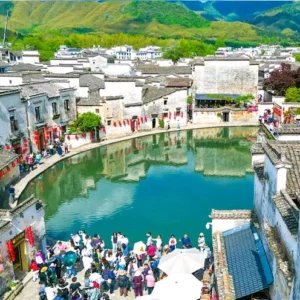
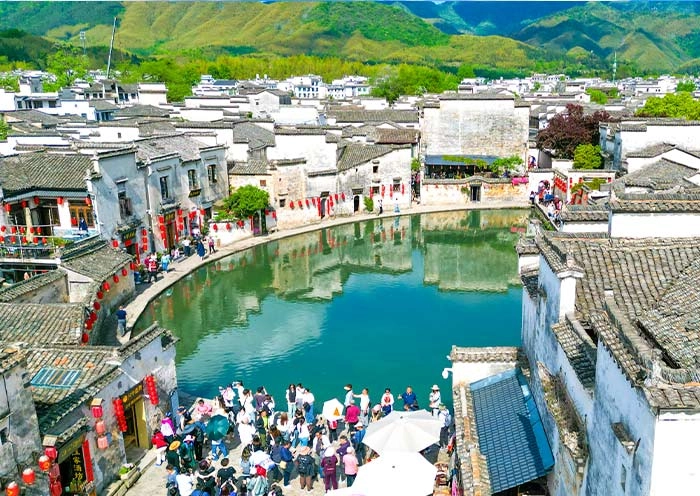
Highlight 3: Stroll through the picturesque Hongcun Village, one of the typical ancient Huizhou-style villages. The South Lake becomes a mirror-like surface, perfectly reflecting the surrounding ancient architecture and green hills, resembling a living ink painting in motion.
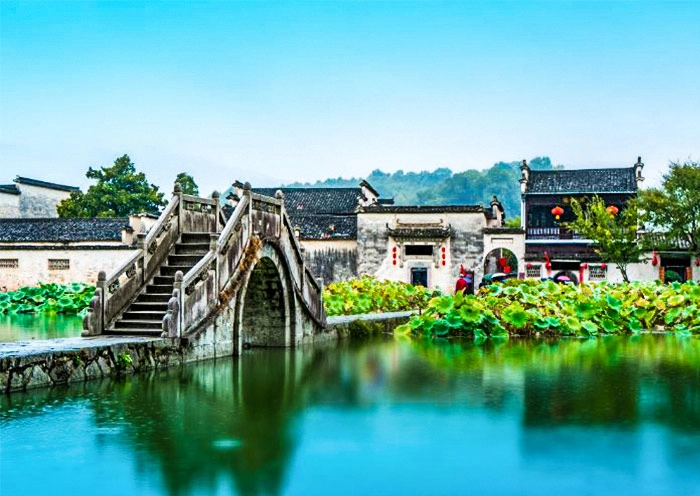
Highlight 4: Explore Xidi Village, an ancient gem that epitomizes the grandeur of China’s bygone eras. As you walk its historic pathways, be transported back in time, witnessing architectural marvels and immersing yourself in tales of the illustrious Hu clan, merchants, and scholars that once thrived here.
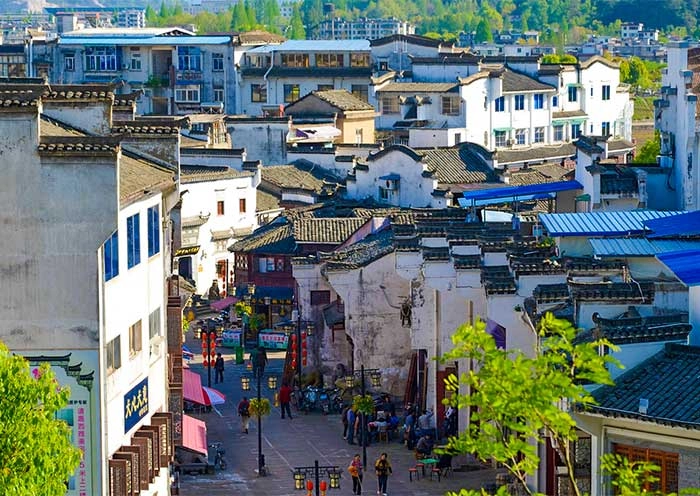
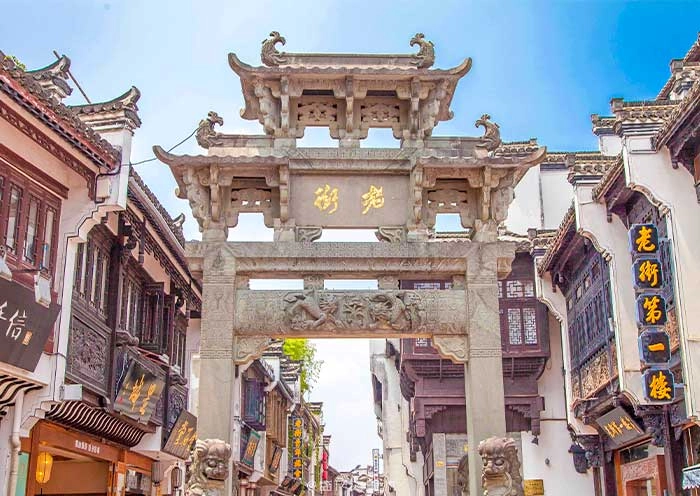
Highlight 5: Wander through the centuries-old Tunxi Ancient Street, where you’ll be immersed in the rich history of Huizhou architecture. Visit the Hu Kaiwen Ink-stick Factory to witness the traditional art of crafting Huizhou Inksticks.
Itinerary Quick Look:
Welcome to Huangshan, a city well known for the Yellow Mountain! Upon your arrival in Huangshan, the local guide and driver will greet you at the exit of the train station, and then escort you to your hotel in Huangshan city. Enjoy some free time on your own after the hotel check-in.
Arrival Ideas:
By Air: Huangshan Tunxi International Airport has domestic flights from major cities such as Beijing, Guanzhou, Shanghai, Shenzhen, Guilin, Chongqing, Chengdu and Xi’an, etc.
By Train: High speed trains are available from Shanghai (2.5~3.5hrs), Hangzhou (1.5~2hrs), Suzhou (2~3.5hrs),Beijing (5.5~7hrs), and Guangzhou (7hrs), etc.
Route: Yungu Cable Way – Begin-to-believe Peak – Dispelling Cloud Pavilion -West Sea Grand Canyon – Bright Summit – Flying-over Rock
Walking Distance: about 7~9km/5~6 hrs
After breakfast, your guide and driver will pick you up from your hotel lobby and drive about 80 kilometers (approximately 1.5 hours) to the foot of Mount Huangshan (Yellow Mountain), a UNESCO World Heritage Site and one of the Five Sacred Mountains. Yellow Mountain is famous for its stunning natural scenery, which includes ancient pine trees, oddly-shaped granite peaks, winter snow, hot springs, and a sea of clouds that often envelops the mountain range, also known as the “Five Natural Wonders“. Huangshan has been a subject of inspiration in Chinese art, literature, and traditional landscape paintings for centuries. More than 400 years ago, during the Ming Dynasty, Xu Xiake, a renowned geographer and traveler, visited Huangshan Mountain twice and uttered the famous phrase, “After visiting the Five Sacred Mountains, one does not need to see any other mountains; after visiting Huangshan, one does not need to see the Five Sacred Mountains.” This illustrates the status and importance of Huangshan Mountain among the famous mountains in China.
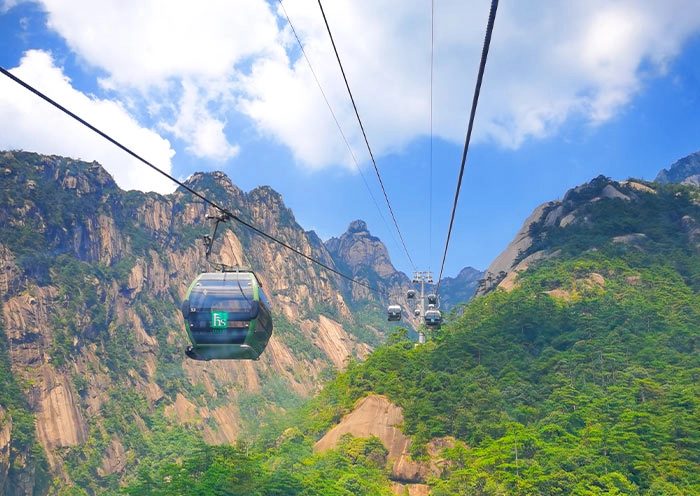
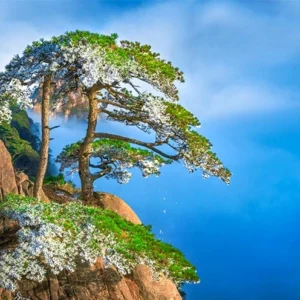
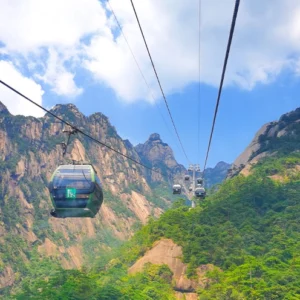
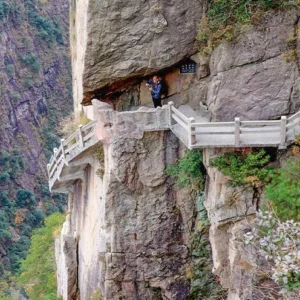
To maximize your time and energy and experience the mountain’s most mesmerizing sceneries on the top, a sightseeing bus will transfer you directly from the foot of the back mountain to Yungu Temple. From here, you’ll board the cableway to White Goose Ridge Station (8 mins). As you ascend, give you breathtaking aerial views of the forests below—a canvas of endless green, , with granite peaks and twisted pines veiled in mist. Upon arrival, you’ll notice the air is cooler and crisper. Now begins your trek to the poetic Begin-to-Believe Peak. Huangshan is famous for its ancient and oddly shaped pine trees. En route, you’ll admire several like Black Tiger Pine, and Harp Pine, each with its unique shape and character. When you reach Begin-to-Believe Peak, you’ll understand how it got its name. The stunning vistas, which include a mixture of cliffs, valleys, and uniquely shaped rocks, will make you begin to believe in the mystical aura that Huangshan is famous for. After soaking in the views at Begin-to-Believe Peak, you will trek for about 40 minutes to your mountaintop hotel for a break.
After lunch, it’s time for the grandeur of the West Sea Grand Canyon. Walking into the Xihai Grand Canyon is like stepping into a Chinese ink painting, with numerous peculiar rocks and towering stones standing before your eyes. The scenery is magnificent, and the Huangshan pine growing on the rocks takes on myriad poses and postures. The hike can be tailored to your energy level and time constraints; a 2-hour round-trip will get you to the 1st ring, while a 2.5-hour expedition will take you to the 2nd ring. (Please note: The thrilling and rugged trails make this activity challenging and physically demanding. Also, the West Sea Grand Canyon is usually closed during cold weather and heavy snow.)
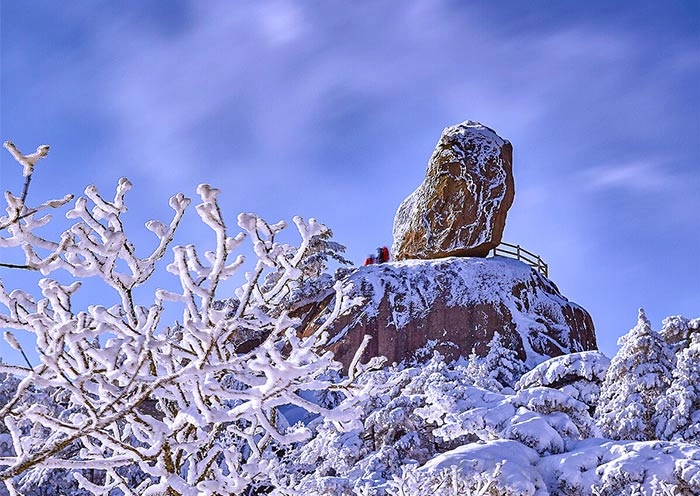
After, you have a couple of choices for watching the sunset: Cloud-Dispelling Pavilion or the higher-altitude Bright Summit. From Cloud-Dispelling Pavilion, it takes about 30 minutes to get back to the hotel. The Cloud-dispersing Pavilion is called so because the cloud will disperse upon reaching here. It is a good place to admire the sunset, cloud sea, strange peaks and deep valley. If time and energy allow, consider extending a hour trek to the Sky Sea Scenic Area to see Flying-over Rock. This massive rock, estimated to weigh around 360 tons and standing approximately 12 meters high, appears to balance precariously on a narrow base atop another boulder. Enjoy the sunset from the second highest peak – Bright Summit (1840m). After the sunset, it’s a 40-minute trek back to your hotel.
Good to know:
1.Travel light! There is a lot of walking involved on the mountain, so it’s recommended to carry only essential items and pack light. Alternatively, you can store your luggage at the mountain’s base.
2. For environmental protection, some hotels on the mountain do not provide disposable toiletries, so it’s advisable to bring your own.
3. Staying on the mountain allows you more time to appreciate additional scenic views of Huangshan, especially sunrise and sea of clouds. However, due to the high transportation costs on the mountain, hotel facilities may be limited. The star-rated hotels might not be up to the standard of those in big cities like Shanghai. Due to the moist weather on the mountains, the rooms could be a little humid. Despite the lack of choice, we will select a relatively comfortable hotel for you.
Route: Sunrise – Dawn Pavilion – Refreshing Terrace – Monkey Gazing at the Sea – Lion Peak – Yungu Cable Way
Walking Distance: about 3km/2 hrs
Today begins in the dark, pre-dawn hours (usually around 5 am to 6 am), as you’ll want to catch the awe-inspiring sunrise that Mount Huangshan is celebrated for. Make sure you’re dressed warmly and adequately – mountain temperatures can be surprisingly chilly in the morning. As the sky gradually lightens, you’ll witness one of nature’s most glorious spectacles: the sun rising over the fabled peaks and valleys of Mount Huangshan. With hues of orange, pink, and gold illuminating the sky, it’s a moment so sublime that it has been the muse of countless poets and painters for centuries. After the sunrise, get back to your hotel for breakfast.
Then proceed to Lion Peak (1690m) to see the Dawn Pavilion, Refreshing Terrace, Stone Monkey Watching the Sea, and various shapes of pines and rocks along the route. Lion Peak, as its name implies, really looks like a crouching lion. “Monkey Gazing at the Sea” is an evocative rock formation that resembles a monkey contemplating the ocean of clouds below. It’s a visual treat that also offers the perfect photo opportunity. Afterward, walk to the White Goose Ridge Cable Station to take the Yungu cableway down the mountain. Your driver is ready at the mountain foot to transfer you back to Huangshan City for lunch.
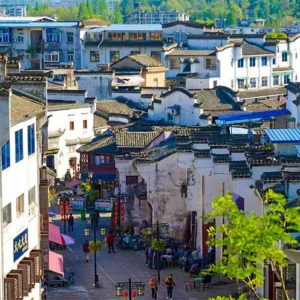
After lunch, take a relaxing stroll on the 900-year-old Tunxi Ancient Street. Tunxi Old Street is paved with maroon flagstones, over 1,000 meters long, consisting of a main street, three cross streets and 18 alleys. The buildings along the street have a distinctive local style known as Huizhou style, featuring white walls and black tiles, elaborate carvings. As you wander, you’ll discover that many shops have been family-owned for over a century, offering a curious array of wares from inkstones and brushes to local teas and Mao badges. Don’t miss the chance to savor local gastronomic delights like Mao Tofu (毛豆腐), Shaobing (烧饼), and the pungent Smelly Mandarin Fish (臭鳜鱼).
Located on the old street, the Tunxi Museum is a treasure trove that offers profound insights into the rich tapestry of Anhui’s history. Here, you can marvel at a collection that spans Ming and Qing Dynasty furniture, delicate porcelain, and intricate Huizhou carvings. Special emphasis is given to the “Four Treasures of the Study” – the brush, ink, paper, and inkstone that are cornerstones of Chinese calligraphy and painting. Due to the long history and exceptional quality of these “Four Treasures” in Anhui, many scholars and artists prefer using them. These high-quality tools enjoy a great reputation not only in China but also internationally.
Your cultural exploration doesn’t end here. Within a short distance, the Hu Kaiwen Ink-stick Factory is one of the oldest and most prestigious inkstick producers in China, renowned for producing high-quality inksticks. Huizhou Inksticks (徽墨) have long been considered the highest grade among all kinds of inksticks. In fact, the ingredients of inksticks remain a mystery, known only to a few remaining manufacturers of this traditional craft. Here, you can witness the process of making inksticks, which still preserves the essence of traditional craftsmanship with a hand-operated soot collection (点烟). Moreover, the factory boasts an extraordinary collection of 7,800 precious inkstick molds created by famous artists from various dynasties since the Ming and Qing dynasties. If you’re interested in Chinese art, culture, or the tools used in traditional Chinese calligraphy and painting, it can be a unique and enlightening experience. Stay overnight at a hotel in Huangshan city.
After breakfast, you be picked you up at your hotel at your hotel by guide and prepare to embark on a journey through time. Today, accompanied by your knowledgeable guide, you’ll meander through two of China’s most iconic ancient villages: Hongcun and Xidi, capturing the very essence of ancient Huizhou culture. These villages are the best examples of ancient Hui-style architecture and were inscribed as UNESCO World Heritage Sites in 2000 as part of the “Ancient Villages in Southern Anhui” World Heritage Site.
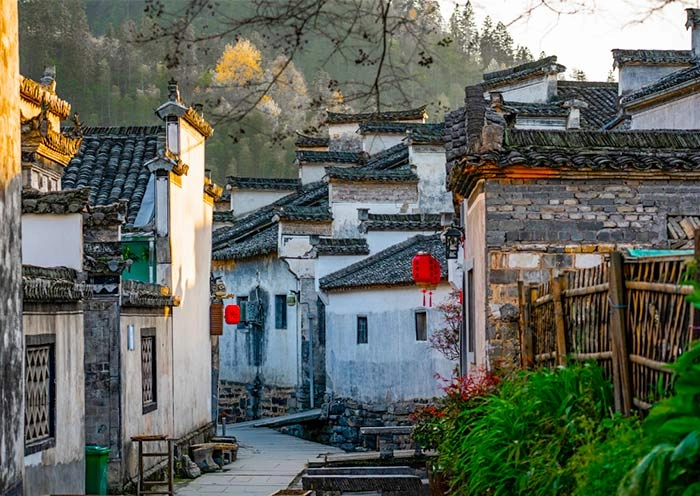
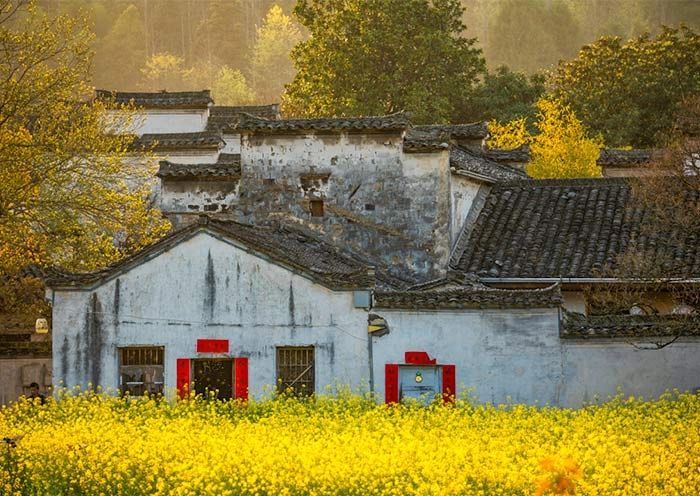
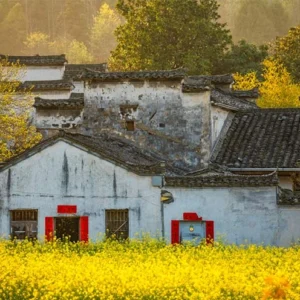
There are many ancient villages in China, while the ancient villages in southern Anhui have their own unique tradition. The ancient villages in southern Anhui are predominantly designed in the Huizhou architectural style, a school of design that showcases intricate wood carvings, walls of pristine white, and roofs of contrasting black tiles. The “Horsehead” walls, named for their shape, are another characteristic feature. These architectural elements come together to create scenes that seem plucked right from a traditional Chinese ink painting- serene, timeless, and profoundly beautiful. Huizhou villages often have a rich history tied to the Huizhou merchants, one of the three major commercial groups in ancient China, especially successful during the Ming and Qing Dynasties. Upon amassing wealth, they often returned to their hometowns to build luxurious mansions, ancestral halls, and archways, contributing to the family-residing village‘s architectural and cultural richness.
Hongcun Village – A Village in a Chinese Painting
Today, you will first visit Hongcun Village. It is renowned for its well-preserved ancient architecture and layout from the Ming and Qing Dynasties. Often described as a “village in a Chinese painting,” Hongcun has become a magnet for photographers and artists, eager to capture its idyllic scenery and architectural grace.
Established in the Song Dynasty, Hongcun Village is over 900 years old. The lay of the Hongcun was remodeled according to geomantic (feng shui) ideas. It is common to see Hui-style villages often situated near mountains and water sources, aligning with the people Huizhou’s belief that harmony with the natural environment promotes the well-being and prosperity of the villagers. In the embrace of southern Anhui’s rolling hills, Hongcun unfolds like a living ox-shaped tapestry. Leigang Hill forms its majestic “head,” crowned by two ancient trees as “horns.” The Moon Pond forms its “heart”, and South Lake is the “belly.” Four timeworn bridges stand as the ox’s “feet,” t, straddling the tranquil Jiyin stream, while a meandering canal – the village’s “intestines” – adds a flowing cadence to daily life. All these elements converge at the serene South Lake, a natural mirror that not only reflects the village’s ethereal beauty but also anchors its feng shui harmony.
Step inside and you are led through labyrinthine cobblestone streets, meandering like poetic verses. These lanes, narrow yet inviting, seem to whisper the stories of generations past as they guide you through the village’s “body,” a collection of white-walled, black-tiled Hui-style buildings. Here, 103 ancient buildings from the Ming and Qing dynasties, and 34 buildings from the Republican era are preserved. The villagers uphold time-honored traditions and customs, living a pastoral life that feels as if suspended in another era. The most beautiful sites are the expansive South Lake and the crescent-shaped Moon Pond. These tranquil bodies of water act as natural mirrors, capturing the timeless beauty of ancient bridges and classic Huizhou architecture as if they were scenes on a painted scroll. It is especially beautiful during the season when lotus flowers are in full bloom.
The ancient inhabitants of this village have left a rich legacy of material and spiritual wealth. On the north bank of Southern Lake, you will find South Lake Academy, a private ancient school that served the village, and was a good architectural representative of the family academies of Huizhou. Scattered throughout the village are several mansions, courtyards, and ancestral halls, such as Chengzhi Hall, Wang Ancestral Hall, Jingxiu Hall, Jingde Hall, and Lexu Hall. Among these, the Wang Ancestral Hall stands as the largest and most well-preserved family shrine in the village. A portrait of the Wang family’s grand matriarch hangs on the left wall inside the hall – Hu Zhong who designed and led the construction of Hongcun’s water management system, shaping the village into what it is today. Chengzhi Hall, founded by a salt merchant, is the largest private residence in Hongcun and is often referred to as the “Folk Forbidden City.” The mansion is renowned for its intricate Huizhou “Three Carvings,” which include brick carvings, wood carvings, and stone carvings. Among these, the wood carvings are particularly exceptional. Some are even gilded, exuding magnificence and opulence that testify to the wealth and prestige of its original owners.
Xidi Village – A Tapestry of History and Ancient Architecture
Next, your journey will take you to Xidi Village, which is located near Hongcun. However, Xidi offers a less crowded, more tranquil, and decidedly authentic experience compared to Hongcun. With its rich 970-year history, Xidi is an even older village. Boasting over 300 ancient residences, three ancestral halls, and a strikingly ornate archway, the village is rightly celebrated as a “Living Museum of Ming and Qing Residential Houses.” For enthusiasts of Chinese architecture and history, particularly that of the Huizhou region, Xidi is an unmissable stop on your itinerary.
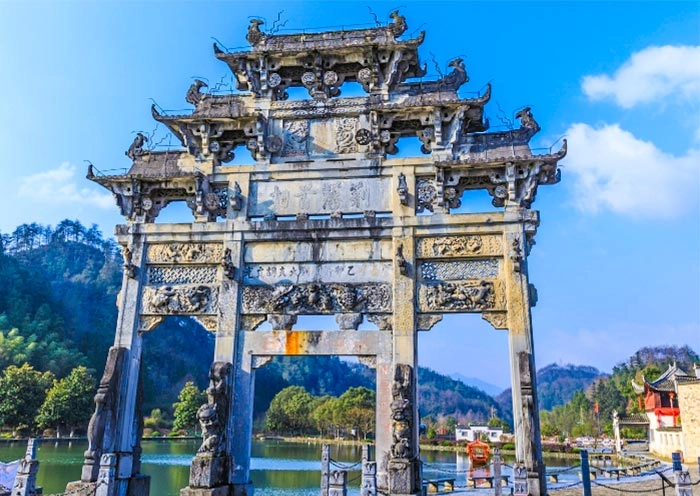
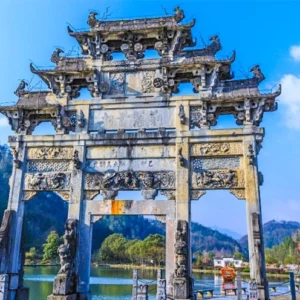
The ascent of the village was closely intertwined with the fortunes of the Hu family. Founded in AD 1047, Xidi has served as a stronghold for the Hu clan for several centuries. This family traces its lineage back to the eldest son of the last Tang Emperor, who sought refuge here during the waning years of the Tang Dynasty. A grandiose three-tiered Ming Dynasty decorative arch, known as the Hu Wenguang Memorial Archway (胡文光牌楼), stands at the entrance of the village as an ostentatious testament to Xidi’s historical significance. The Da Fu Grand House (大夫第), located on the main street of Xidi Village, is an old residence of the Hu family.
For nearly a millennium, Xidi has been the birthplace of numerous influential merchants, scholars, and politicians. In Xidi, you have the opportunity to explore a rich tapestry of architectural and cultural sites. These aren’t just limited to the grand mansions erected by wealthy merchants. The village is also replete with private academies, modest residences, gardens, and ancestral halls, built by officials and scholars of yesteryears. For example, Ling Yun Pavilion (凌云阁) was the study room of Hu Shihui, a scholar during the Qing Dynasty. Xu Guo Stone Archway (许国石坊) honors Xu Guo, a minister during the Ming Dynasty. Each building has its own unique characteristics and historical narratives, for instance, carved lions often appear in the homes of officials, symbolizing authority, while peonies, representing wealth, are more commonly found in the homes of merchants.
The layout of Xidi village is also built according to the ancient Chinese practice of Feng Shui. The village takes the shape of a boat, with mountains surrounding it on all four sides. Two streams run through the northern and eastern parts of the village, converging at Huiyuan Bridge in the south. The primary backbone of the village consists of one longitudinal street and two streams, forming a road system that mainly extends to the east and stretches out to the north and south.
As you wander through the cobblestone lanes, numerous architectural gems beckon for closer inspection. Diji Hall (迪吉堂) and Zhuimu Hall (追慕堂) on Dalu Street (大路街) are both masterpieces that showcase the intricate craftsmanship of the region. Jing’ai Hall (敬爱堂) stands as the largest edifice in town, a multipurpose hall steeped in history; it was a venue for weddings, clan meetings, and even dispensing community justice, though it’s worth noting that historically, women were not permitted entry. For those interested in more delicate artistry, Xiyuan (西园) is a small residence that boasts dual-sided, exquisite stone carvings on its windows. Notably, many of these ancient buildings still serve as homes, offering visitors a living glimpse into this enduring culture. Strolling through Xidi feels like stepping back in time, where every architectural element and every carving has a tale to tell. The village stands as a living testament to the mastery and sophistication of ancient Chinese architecture and culture. You can not help but marvel at the ingenuity and artistry of the craftsmen and builders of yesteryears.
As the day comes to an end and we accompany you to the train station or airport, we hope that the memories of these ancient villages and Yellow Mountain will stay with you, like the soft melodies of an old song, resonating in your mind on the journey back.
Thank you for choosing HelloChinaTrip for your China tour, and we are always here working for you and hope to see you again for your next trip to China/Asia. Safe journey!
What’s Included
- Experienced drivers & air-conditioned vehicles
- Professional licensed English-speaking local guide
- Hotel accommodation with breakfasts
- Domestic flights (economy class) or high-speed trains (second class) listed in the itinerary
- Admission tickets, activities, meals listed in the itinerary
- Accident insurance
- Our service from tour planning, handling, operational and finishing your trip
What’s Excluded
- International airfares
- Entry visa fees
- Personal expenses
- Single room supplement
- Recommended optional activities
- Arrival/departure flights or train on the first and last day
- Tips or gratuities for guides and drivers
Important Trip Notes for Booking a China Group Tour
How do I book a China group tour?
It is very simple to book a private China tour. Select the tour you are interested, and click “Make an Enquiry for Free”. Tell us your demands and likes while submitting the form. During this process, you don’t need to pay immediately. After sending us your requirements, one of our professional travel experts will get back to you within 0.5 to 24 hours. When all the information have confirmed, then you make the deposit. Please feel free to contact the travel expert directly if you have any questions prior to booking.
Extend Your China Tour
The above itinerary is the sample one that most travelers would go like that. The tour can be customized based on your likes, interests and budget. At the same time, if you want to extend this tour, just tell us your favored destinations and things to do. Our professional travel experts will redesign the trip totally for you and your group at the best price. Tell us your ideas now >>
Transportation
In a private tour, it means you will transfer to the tourist attractions in one city by private vehicle. The private car we selected is spacious, comfortable and air-conditioned. And the driver we use are very experienced. As for traveling between two destinations, we use domestic flights (economy seat) or high speed trains (second class seat, usually less than 6 hours). The local guides and drivers will pick you up at the airport/train stations, and escort you to the hotel.
Meals
Similar Experiences
Related products
-
Tiananmen Square, Lama Temple, Confucius Temple & Beijing Zoo
Beijing Tours$115.00 – $761.00Rated 5.00 out of 5 -
Badaling Great Wall & Underground Palace (Dingling – Ming Tombs) Day Tour
Beijing Day Tour$115.00 – $761.00Rated 4.88 out of 5
Lily Hill –
I’ve been on group tours before, but this was on another level. The private driver made traveling between Huangshan and the villages effortless, and our guide knew hidden photography spots in Hongcun that weren’t busy at all. We even stopped at a small tea farm on the way back—completely unplanned, just because we showed interest.
Nora –
This private tour was everything we hoped for. Our guide timed the Huangshan hike perfectly so we could catch the sunset without the usual crowds, and the next morning we watched the sunrise from a quiet viewpoint. Visiting Hongcun and Xidi at a relaxed pace let us truly soak in the history. Every detail felt customized for us.
Joseph Cook –
This trip was perfectly balanced between nature and culture. Hiking the Yellow Mountain with our own guide meant we could take our time on the trails and avoid the busiest areas. In Xidi, we had a personal introduction to a local craftsman, which wouldn’t happen in a standard tour. It truly felt like a journey designed just for us.