
8 Days Chengdu Guizhou Tour: UNESCO Mountains with Ethnic Villages
Must-see & Must-do:
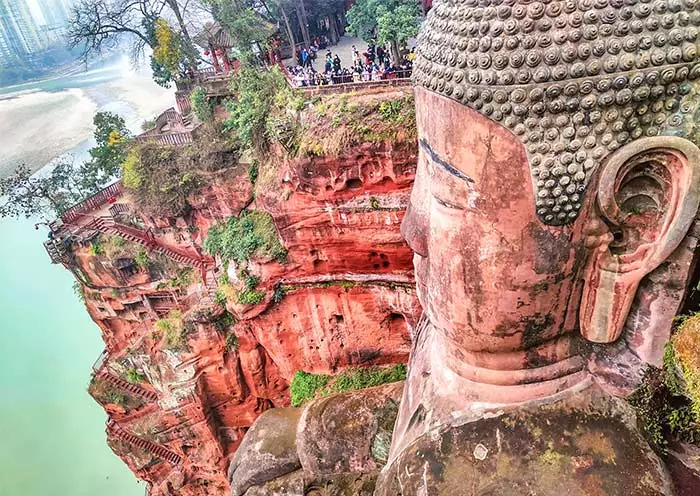
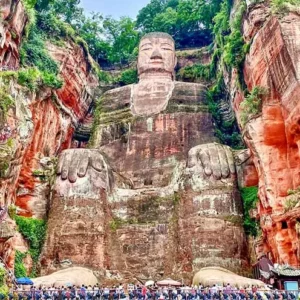
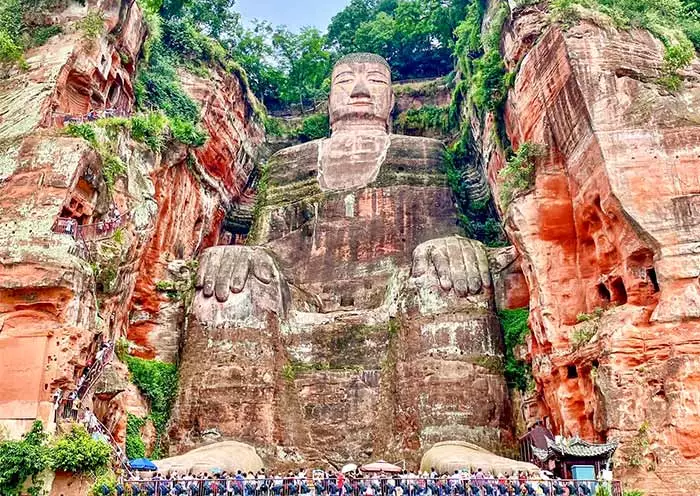
Highlight 1: Visit the world’s largest Buddha statue in Leshan, standing at an impressive 71 meters tall. Be awe-inspired by this monumental masterpiece, carved into a cliff face and overlooking the surrounding rivers.
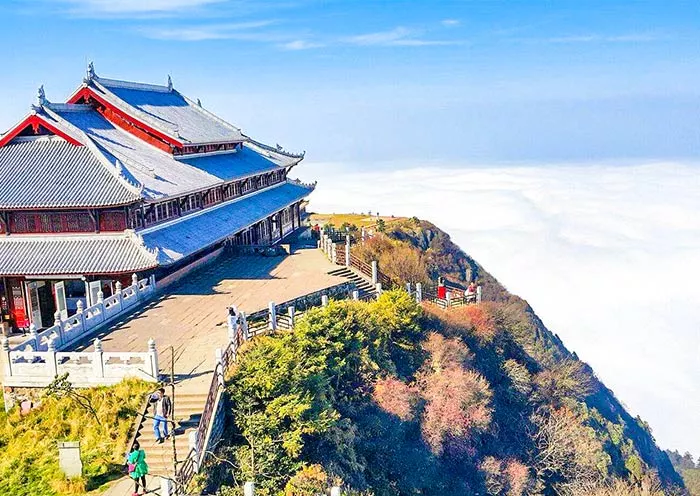
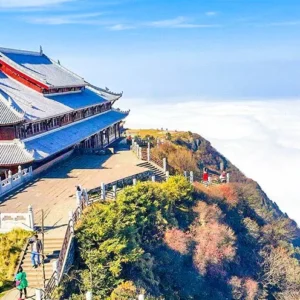
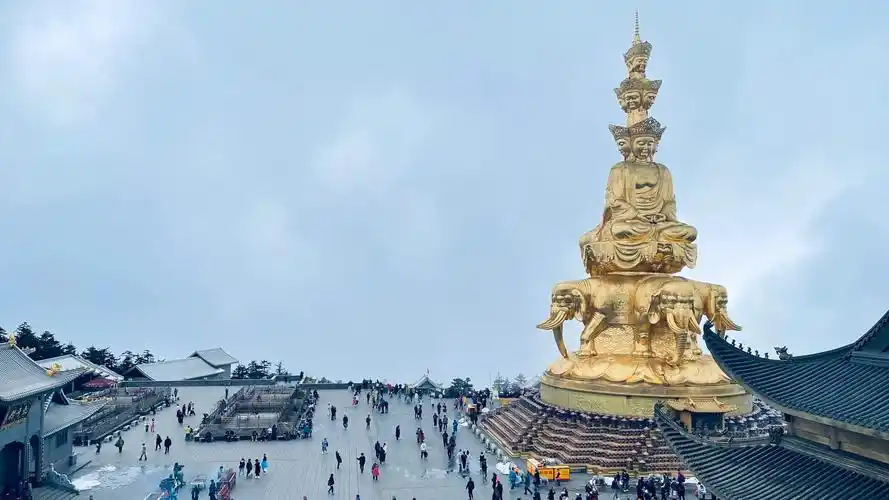
Highlight 2: Take a relaxing walk up to Golden Summit to enjoy the breathtaking landscapes of Mt. Emei – golden Buddha statue, bronze temples, cloud sea.
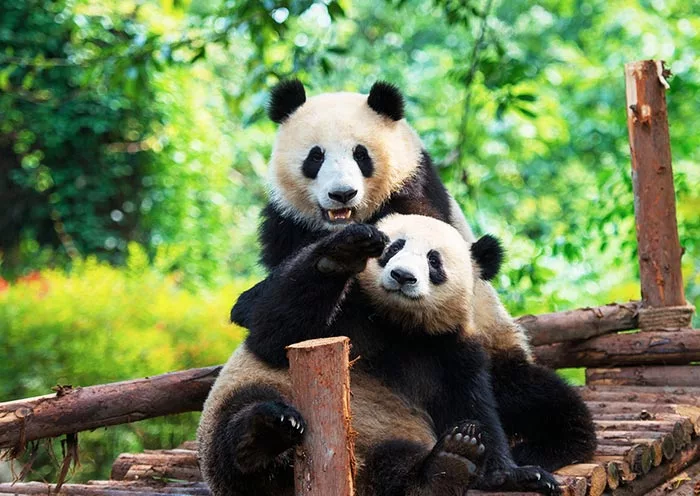
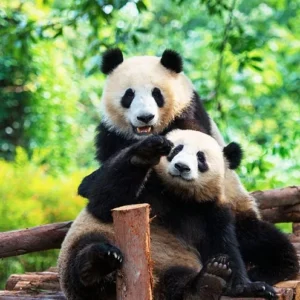
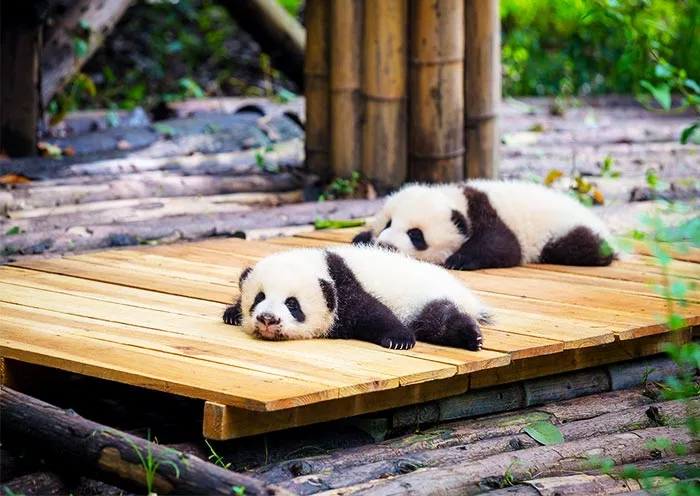
Highlight 3: Get up close and personal with the cute and chubby pandas at Chengdu Research Base of Giant Panda Breeding. Witness their playful antics and adorable behaviors as you immerse yourself in their world.
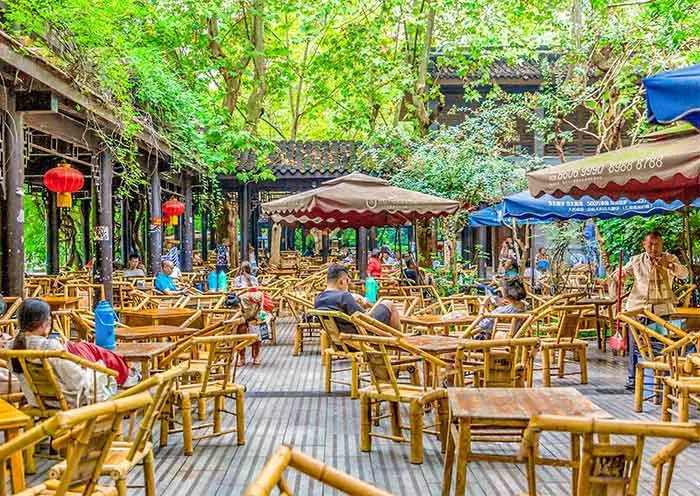
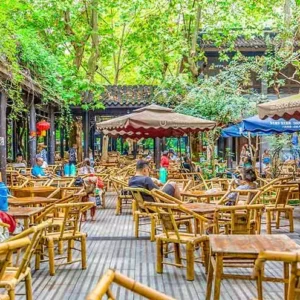
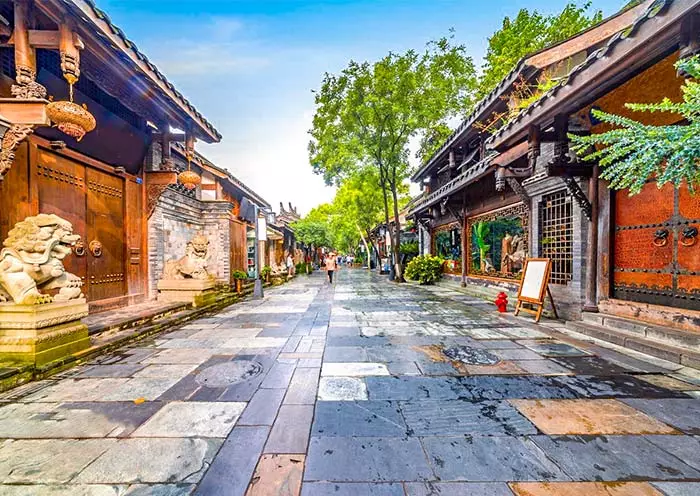
Highlight 4: Be like a Chengduese, experience the “slow life” and “new life” of Chengdu in People’s Park and Kuanzhai Alley.
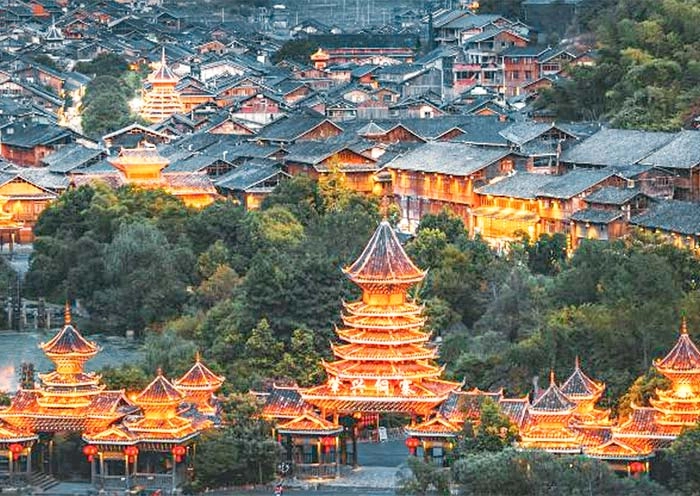
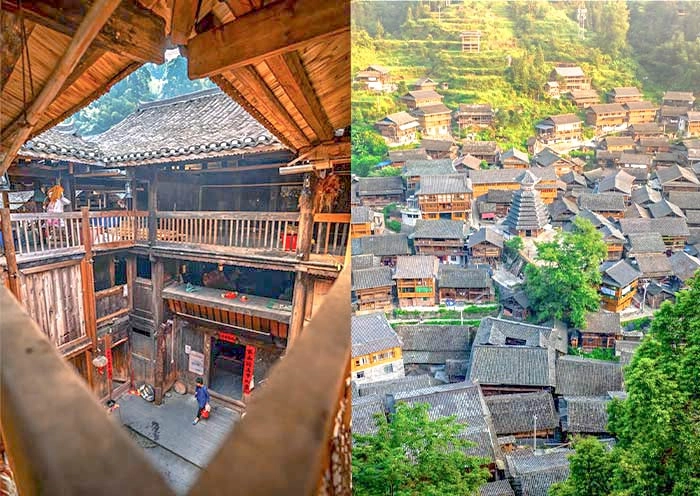
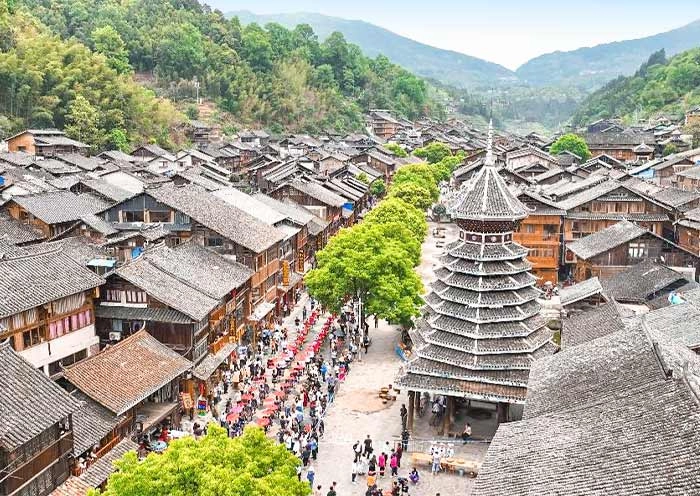
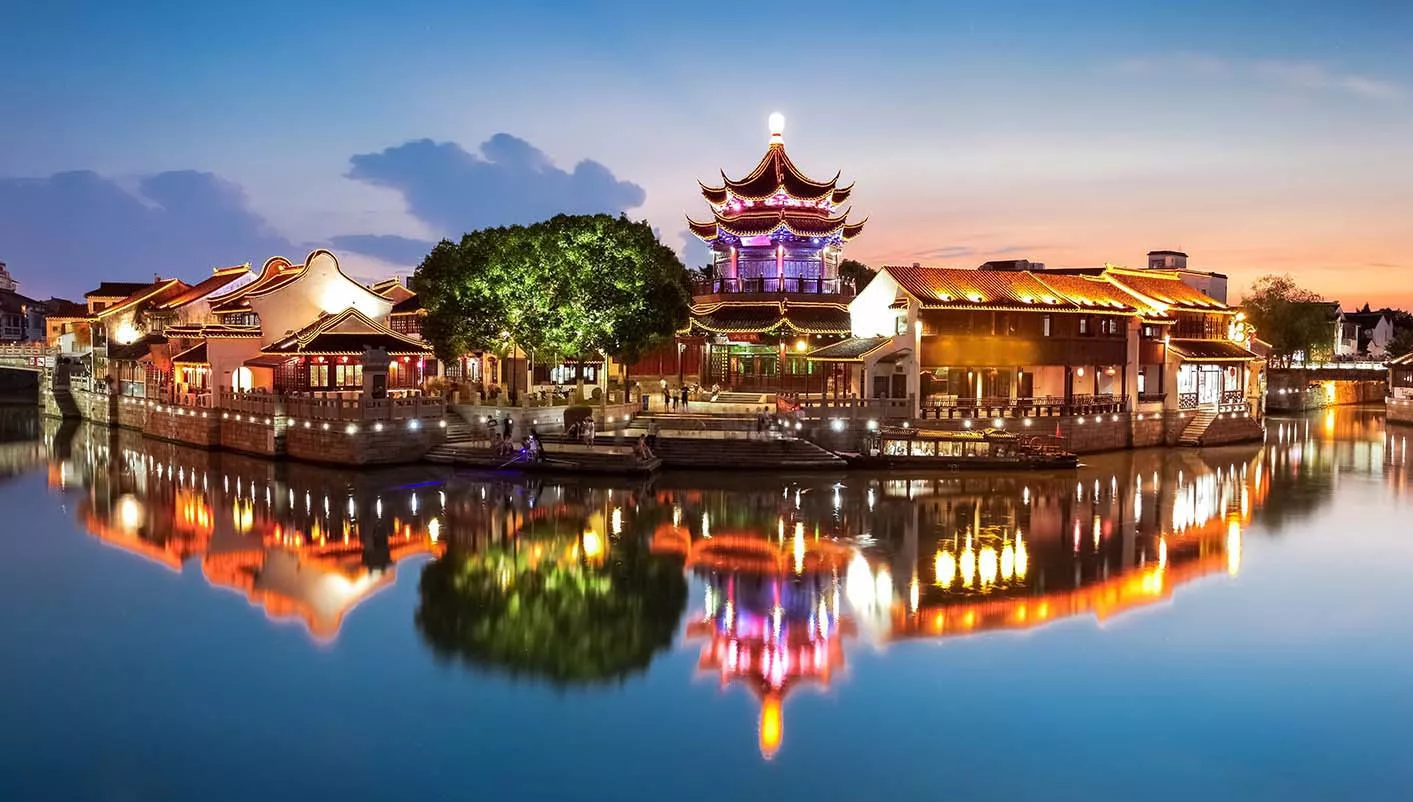
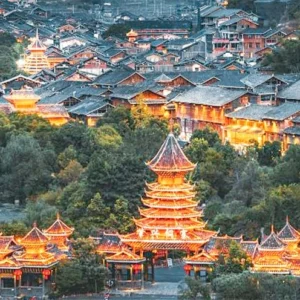
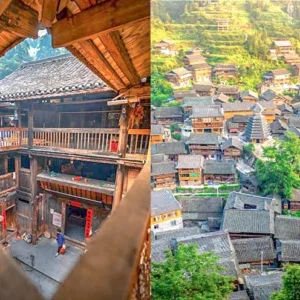
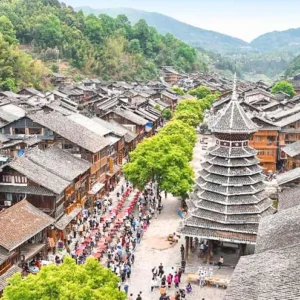
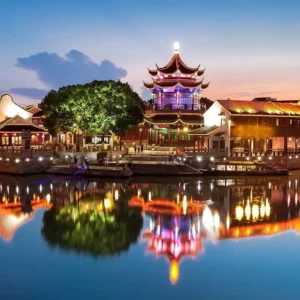
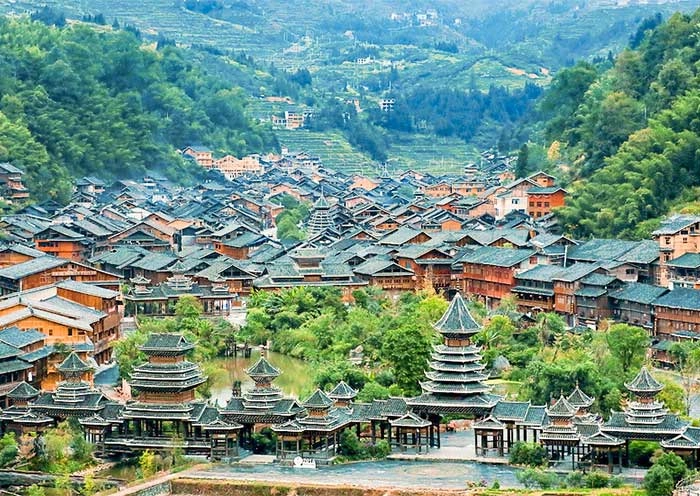
Highlight 5: In-depth exploration of Zhaoxing Dong Village, China’s largest Dong village. During the day, carefully admire the magnificent drum tower complex, and at night, immerse yourself in the enchanting illuminated nightscape.
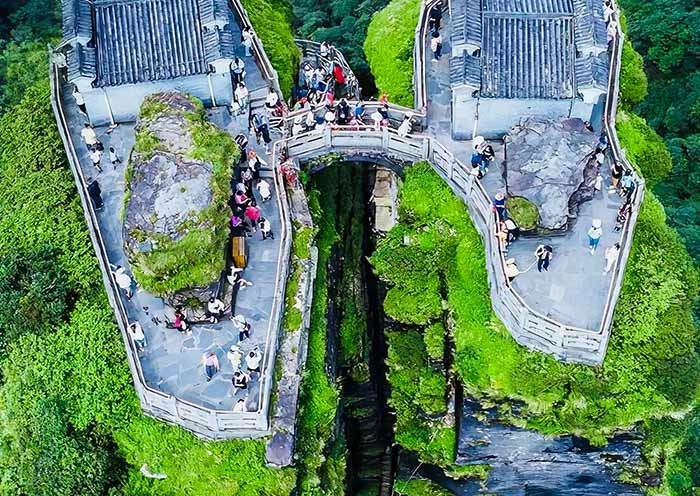
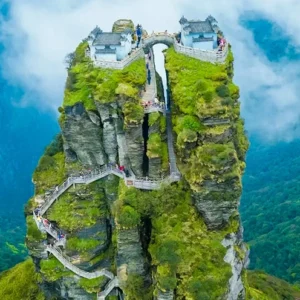
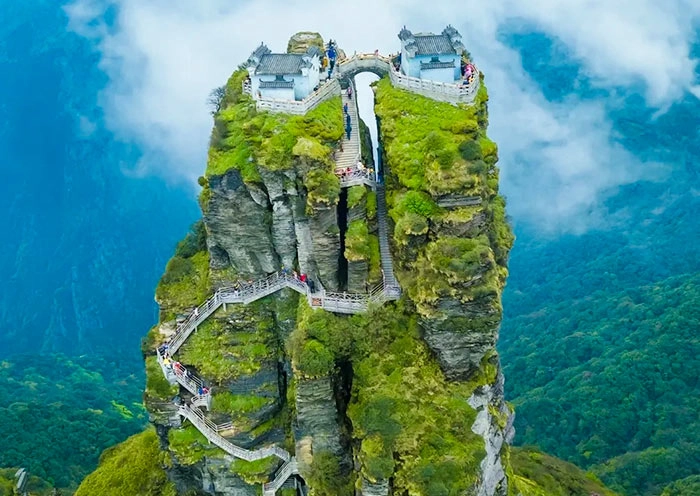
Highlight 6: Discover Fanjingshan, a UNESCO World Natural Heritage and China’s No. 5 Buddhist Mountain. Enjoy must-see highlights like Mushroom Stone, thrilling mountain hikes, and breathtaking views at Red Clouds Golden Summit.
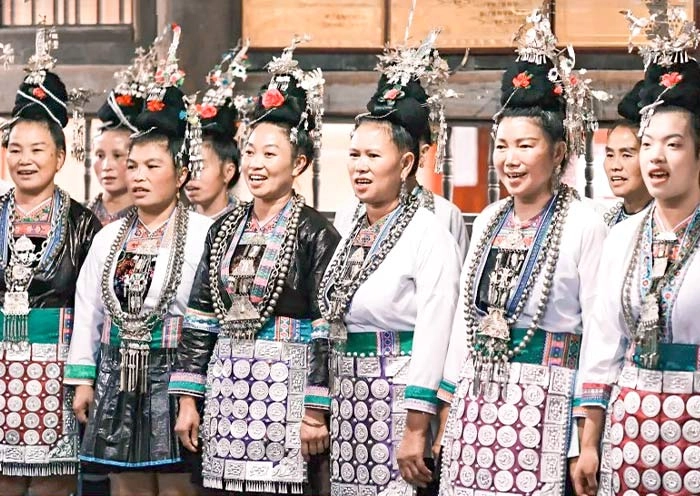
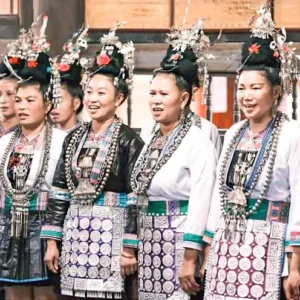
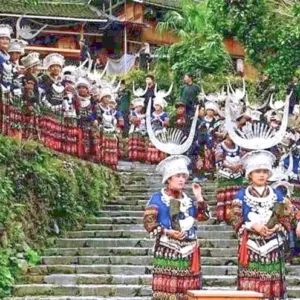
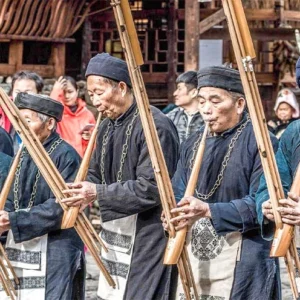
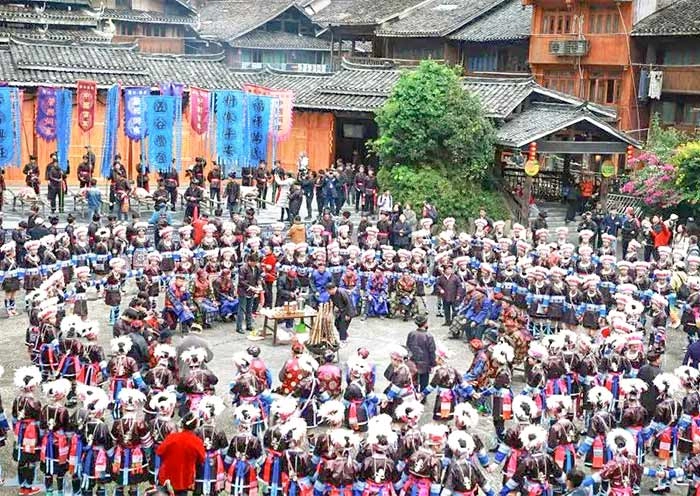
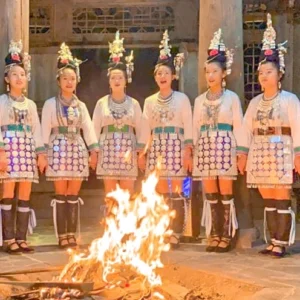
Highlight 7: Escape crowds at Langde Miao Village, the “Hometown of Chinese Folk Song and Dance.” Immerse in authentic Miao culture with the “Twelve Cups of Block-Way Rice Wine” ceremony, vibrant Lusheng dances, and traditional long-skirt costumes amid historic stilted houses.
Itinerary Quick Look:
Nihao! Welcome to Chengdu, the Hometown of Giant Pandas! Your private driver and guide will be ready for you when you arrive in Chengdu. Enjoy a trouble-free transfer to your hotel. The rest of today is yours to relax in panda city on your own.
Arrival Ideas:
Chengdu is well connected by air and high-speed rail. There are two airports – Chengdu Shuangliu International Airport and Chengdu Tianfu International Airport operating many international and domestic airlines. Travelers can go to Chengdu by air from most cities in China, like Hong Kong, Beijing, Shanghai, Guangzhou, Xian, Guilin, Hangzhou, Kunming, Lhasa, Lanzhou, Wuhan, Xiamen, Guiyang, Chongqing… In addition, travelers can take high speed train to Chengdu from Xian (3-4 hours), Chongqing (1.5-2 hours), Guiyang (3.5-4.5 hours), Kunming (6-6.5 hours), etc.
Free Time Ideas:
You are welcome to ask your tour guide for some useful tips to spend your free time based on your time and interest.
After breakfast, you are going to fulfill your panda dream with a 17-kilometer drive to Chengdu Research Base of Giant Panda Breeding. Also called Chengdu Panda Base, accommodated over 100 pandas, it is the base with the largest population of captive giant pandas in the world. You will see giant pandas of different ages there. It’s great fun to watch them playing, eating, climbing, sleeping… If you come in autumn, you will have the chance to see the pink newborn giant panda cubs in the Sunshine Nursery House and the Moonlight Nursery House. Discover the charming panda stars at this base, such as Hua Hua, the most adored and celebrated panda who has captured the hearts of the nation, and Zhi Ma, the real-life inspiration behind the panda mascot of the World University Games. Besides giant pandas, you can also meet the cute red pandas walking by your side in the Red Panda Playgrounds. Then follow your guide to discover more about pandas’ secrets through the Panda Museum. (Note: Pandas like cool weather, so we advise you to arrive there early as pandas are more active in the morning.)
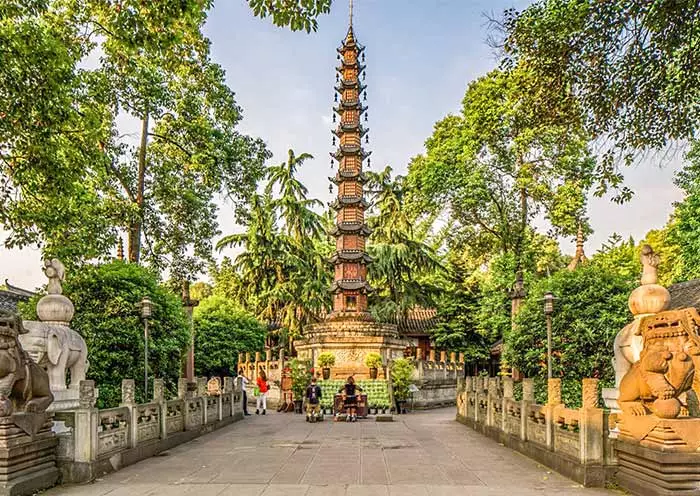
Later, pay a visit to Chengdu’ s Renmin Park to witness the city’s slow lifestyle and how the local people are doing. Order a cup of fragrant green tea while sitting in the time-honored tea-house, chat with your friends and see locals playing mahjong and having fun. After that, take a relaxed stroll at one of the city’s “new old” walking streets – Kuanzhai Alley and feel the “new life” of Chengdu. An ancient block gathers buildings from the late Qing Dynasty, early Republic of China and the early western-style buildings. There are all kinds of Chengdu snacks, folk arts and crafts nightclubs, and coffee shops which makes it one of the most active places in Chengdu. (Optional Activity: Try some local spicy dishes such as chuanchuan, dandan noodles, or even get out of your comfort zone and try some rabbit’s head!)
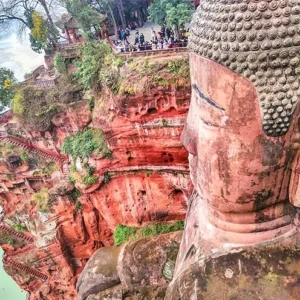
In the morning, you will be picked up at your hotel, then be driven about 2 hours from Chengdu to visit the UNESCO World Heritage Site – Leshan Giant Buddha which is the largest and tallest stone-carved statue of Buddha in the world. Standing at the confluence of two rivers, the extraordinary, monumental 1200-year-old Buddha image at Le Shan is carved directly into the rock face. The monument stands 71m (233ft) tall and 28m (92ft) wide making it the largest ancient Buddha in the world. His shoulders span 28m, and each of his big toes is 8.5m long. His ears are 7m. He is indeed grand. There is a local saying: “The mountain is a Buddha and the Buddha is a mountain”.
You will walk down and up and watch the Buddha from a very close distance. It allows you to see each part of Leshan Giant Buddha closely and presents you with a surprising experience with many ancient Buddhist temples, sculptures, caves and religious relics on the way up to mountain top near the head of the Buddha. (Recommended Optional Activity: The plank pathways are steep and narrow. If it is not convenient for you to walk, you can take a cruise to get a panoramic view and fully appreciate this Buddha’s magnitude on the river.)
Later you will be driven about 45 kilometers to Baoguo Temple, which is the biggest temple of Mount Emei at the mountain foot. After tour, drive to check in at your hotel and have a good rest.
You will spend a full day visiting Mount Emei, which is one of the World Heritage Sites for both cultural and natural heritages. Mount Emei is one of the four famous sacred Buddhist mountains in China, with numerous Buddhist temples and monasteries. Beyond its rich cultural heritage, the mountain also stands on the edge of the eastern Himalayan highlands and hosts a diverse range of plants and animals and amazing natural scenery.
You will take a relaxing way to visit Mount Emei by sightseeing bus+hiking+cable car. Tourist Center – Sightseeing Bus to Leidongping( about 1.5~2 hours) – Walk 30mins to Jieyin Hall – Go up to Golden Summit by cable car(5mins) – Sightseeing in Golden Summit – Ascend the Mountain in the Same Way.
It will help you save energy and focus on the highlights of Mount Emei. The Golden Summit is an extravagance of natural wonders and Buddhism spiritualism, which comprises of four marvelous spectacles of Sunrise, Cloud Sea, Buddhist Light and sacred lamp. You can stroll around the Golden Summit to explore Buddhist architecture and tradition, and enjoy a panoramic view of Mount Emei and surrounding. If weather permits, you will have luck to enjoy its magnificent wonder of Cloud Sea.
After the tour, your guide and driver will escort you back to the hotel in Chengdu.
After breakfast, you’ll be transferred to the high-speed train station for your Guizhou tour. A 5-hour train ride will take you to Tongren, a transit city for Mount Fanjingshan.
Welcome to Tongren, Guizhou’s “Eastern Gateway”! Your guide and driver will wait for your arrival at the train station. Afterwards, they will take you on a direct one-hour drive to your well-selected hotel in Jiangkou County, at the foot of Mount Fanjingshan, for check-in. You can spend the rest of your time freely exploring Jiangkou County town, sleeping well for the Mount Fanjingshan Tour tomorrow!
Climbing Time: 4-5 Hours (Sightseeing Bus, Cable Car Included)
Route: Fanjingshan Sightseeing Bus – Cable Car – Mushroom Stone – Red Clouds Golden Summit – Chengen Temple – Cable Car – Sightseeing Bus – Return to Hotel
After breakfast, your guide and driver will escort you from your hotel to the entrance of Fanjingshan. Today, you’ll spend entire day on this mountain. Breathe in that super fresh air, and head into the misty heights!
Fanjingshan (梵净山), a UNESCO World Natural Heritage site listed in 2018, is the No. 5 Buddhist Mountain in China and the sacred site of Maitreya Bodhisattva, its name meaning “Pure Land.” As a global green oasis, it preserves living fossils from the dinosaur era, such as the Dove tree (珙桐). This peculiar non-karst mountain rising from a karst sea has chilled for ages. You could even say hi to it if you traveled back 800-1000 million years.
First, you’ll take a 30-minute sightseeing bus up the mountain, followed by a 20-minute cable car ride. From above, glance up at the distant skyline, with ever-changing clouds occasionally engulfing the cable car.
After getting off cable car, you’ll begin hiking along winding Forest Hiking Road, reaching the landmark, Mushroom Stone (蘑菇石), in about 40 minutes. This is a natural wonder of Fanjingshan, a huge mushroom-shaped rock, rectangular on top and conical at the bottom, about ten meters high. It lists drunkenly but has stood on mountain for a billion years. Be sure to take a photo with this iconic symbol of Fanjingshan! (Optional: enjoy 10-minute to Old Summit Peak.)
Next, descend along stone steps, passing Pudu Square (普渡广场), and continue for about 1.5 hours towards the closely adjacent baguette-shaped Red Clouds Golden Summit (红云金顶). You’ll see a decisive crack firmly separating the middle of the Summit. This is Fanjingshan’s highlight and an important pilgrimage site for the Maitreya Bodhisattva’s sacred ground.
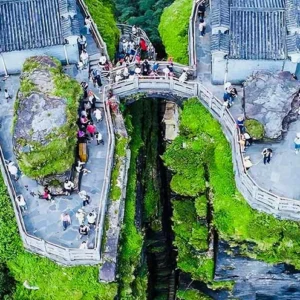
At an altitude of 2336 meters, two Buddhist temples (Sakyamuni Hall and Maitreya Hall) are built on the peaks on either side of the Red Clouds Golden Summit, connected by a stone bridge, symbolizing the transition from “reality” to the “future.”
While climbing, you’ll need to hold onto iron chains and carefully ascend narrow 85-degree steps. The initial section is very narrow, opening up to a stone path wide enough for one person before suddenly emerging from the clouds – congratulations, you’ve reached the summit! After reaching top, first pay homage to Sakyamuni Buddha to pray for present life, then cross stone bridge to Maitreya Buddha to pray for future. Standing by stone fence, look down at clouds zooming by mountainside, and soak up sun feeling good on your tired body.
Tip: Around sunrise, you can witness beautiful red clouds as sunlight pierces through the layers of mist.
After visiting the must-see spots, descend and return to Pudu Square to visit Chengen Temple (承恩寺). This Ming Dynasty Buddhist temple is a must-visit for Buddhist pilgrims, backing against the Red Clouds Golden Summit and facing endless mountains. After hiking challenge, chill out here.
After Fanjingshan hike tour, take cable car and sightseeing bus back down the same route. Your guide and driver will escort you to your hotel in Jiangkou County. Have a good sleep!
Tips:
1. Due to crowds, avoid Fanjingshan on weekends and major Chinese holidays (Spring Festival, National Day, May Day).
2. Be careful on the narrow, single-foot trails to the Golden Summit.
3. Bring snacks like biscuits and bread for energy when hiking.
After breakfast, your guide and driver will pick you up from your hotel and drive towards Kaili (approximately 3 hours).
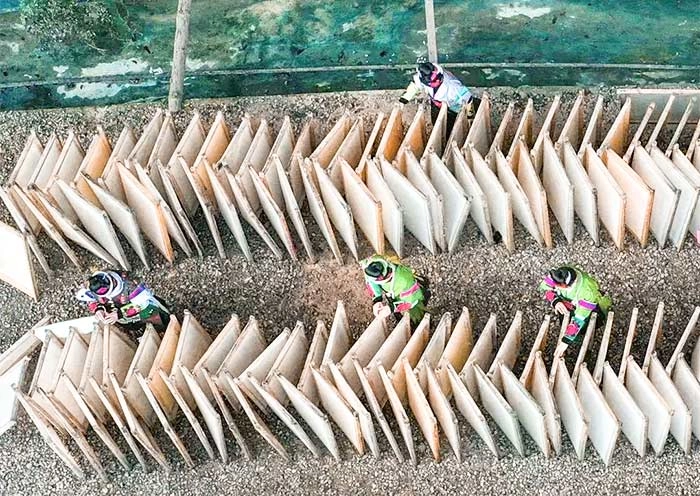
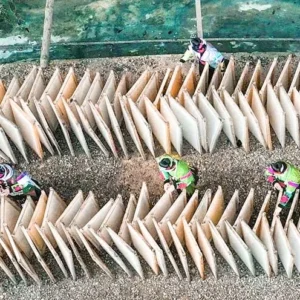
Your first stop is Shiqao Miao Village (石桥村), renowned as the “Hometown of Ancient Papermaking” in China. Here, the ancient papermaking methods are still preserved. The area surrounding the Miao village is rich in paper mulberry trees, and for generations, the villagers have used the bark to make paper. You will have the opportunity to witness the entire papermaking process, from soaking and pulping the bark to drying and crafting the durable, exquisite paper products.
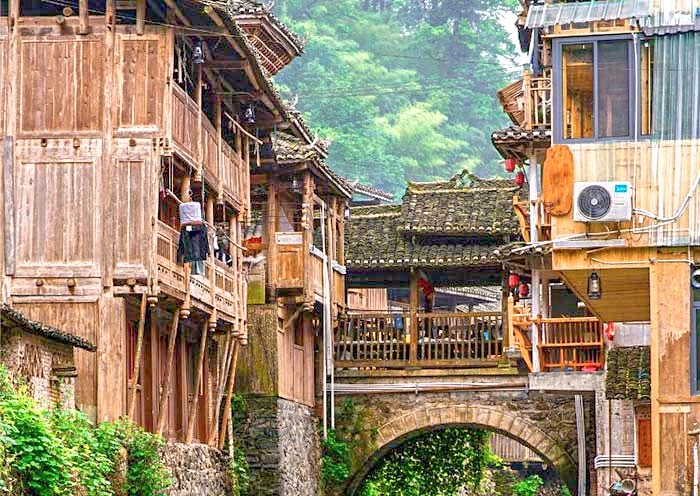
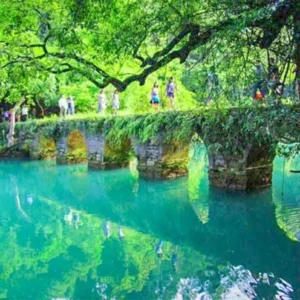
Cultural Experience: You’ll create your own special decorative paper by embedding real flower petals and leaves directly into the pulp, crafting a personal keepsake that you can take home. Beyond the workshops, take time to explore the tranquil village nestled alongside the water, embraced by scenic mountains. It is called “Shiqiao” (Stone Bridge) village because of a natural stone arch bridge that spans the riverbanks.
In the afternoon, you will visit Matang Gejia Village (麻塘革家寨). The villagers of Matang believe themselves to be descendants of Hou Yi, the legendary archer. Their clothing is mainly decorated with batik and red embroidery. They fashion their headdresses into the shapes of bows and arrows, and their necklace pendants resemble various weapons, reminiscent of ancient generals. Legend has it that in ancient times, a general’s wife went to the battlefield in her husband’s armor and won a victory. To commemorate her, women wear general’s attire during festivals.
Beyond their attire, the Gejia people’s batik artistry is also very famous. The patterns are quite unique, often depicting powerful creatures like tigers and other animals, as well as flowers, birds, and insects, reflecting the Gejia people’s deep love for nature. In the village, you can observe the villagers making batik by hand using beeswax. Cultural Experience: Try your hand at creating your own batik masterpiece, participating in every step – wax drawing, dyeing, and wax removal, and take your finished work home as a unique souvenir.
After the tour, transfer to your hotel in Kaili for check-in.
Note: If you’re interested in staying overnight in Xijiang Qianhu Miao Village to enjoy the stunning night views, please consult your travel advisor in advance.
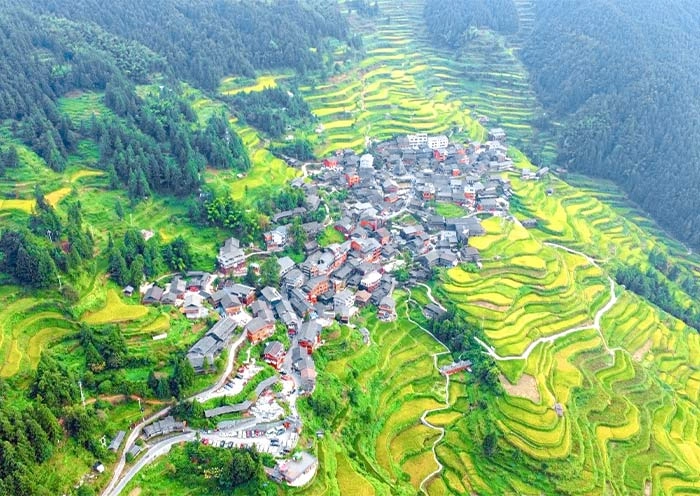
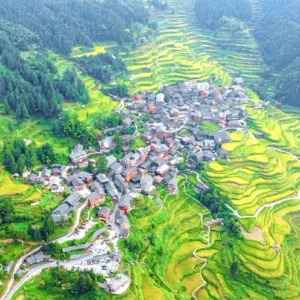
In the morning, depart from Kaili and drive to Langde Miao Village(朗德苗上寨), known as the “Hometown of Chinese Folk Song and Dance.” It is nestled amidst lush mountains and terraced fields. Unlike more commercialized villages, Langde retains its untouched, authentic charm, where ancient customs and the rhythm of songs and dances unfold slowly.
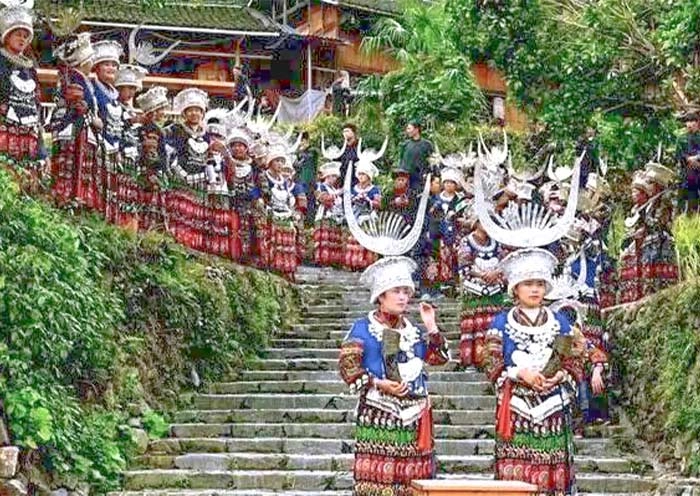
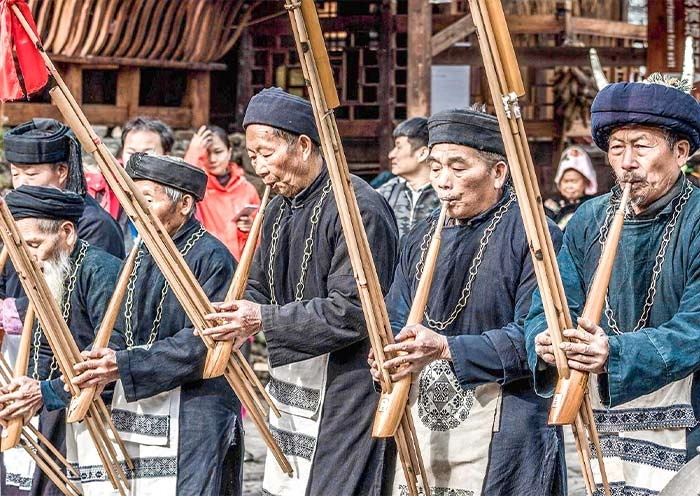
Upon arrival, you will be greeted with the “Twelve Cups of Block-Way Rice Wine” ceremony. Villagers dressed in magnificent silver headdresses and embroidered clothing will welcome guests and offer rice wine in ox horn cups. This is the highest etiquette of the Miao people for receiving distinguished guests, with each cup of wine representing blessings for a month. Afterward, you will walk along the stone-paved path to the Lusheng ground in the center of the village. Here, a wonderful Miao song and dance performance will take place, featuring toasting songs, Miao flying songs, and Lusheng dances in succession, leaving you mesmerized.
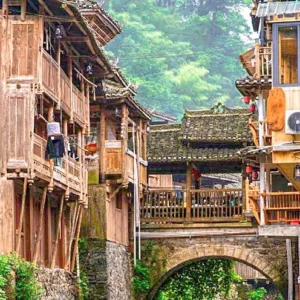
As an open-air museum of the Miao culture, the village exudes a rich ethnic flavor everywhere. Stroll among the stilted wooden houses (diaojiaolou) with a hundred years of history, traditionally built on stilts and scattered on the hillside in a well-arranged manner. The clothing here is also unique; the Miao residents are characterized by wearing long skirts, hence the name “Long Skirt Miao,” representing the most gorgeous branch of Miao costumes.
Next, you will drive from Langde to Guiyang for departure.
Thank you for choosing HelloChinaTrip for your Guizhou Tour. We are always here working for you and hope to see you again for your next trip to China/Asia. Safe journey!
What’s Included
- Guide Service: English-speaking guides provided throughout the trip.
- Attraction Tickets: Entrance tickets for all listed attractions are included, guaranteeing full visits. In case of unexpected circumstances, alternative arrangements will be discussed with the tourists.
- Transportation Arrangement: air-conditioned vehicles.
- Accommodation: Throughout the trip, stay in hotels/cities as listed in the itinerary.
- Meals: Breakfast is included at the hotel. For detailed meal information, please refer to the itinerary.
- Handling Fee:Our service from tour planning, handling, operational and finishing your trip.
What’s Excluded
- Visa;
- Optional activities and experiences recommended in the itinerary.
- Check-In and Check-Out Times: Check-in time for the hotels is generally after 14:00 (2:00 PM), allowing you to settle in and freshen up before starting your Harbin Tour. On the day of departure, please check out before 12:00 noon to ensure a smooth transition and allow time for the hotel staff to prepare for incoming guests.
- Personal Expenses: Other personal expenses such as laundry, telephone, internet, fax, etc., within the hotel.
- Tipping: Tips for drivers and guides (Tipping practices may vary depending on the region and nature of service; it is recommended to consult the guide's opinion in advance).
- Unexpected Circumstances: In case of uncontrollable and non-agency-related factors (such as natural disasters, war, strikes), flight delays or cancellations, delayed visa processing at embassies, insufficient number of participants, the travel agency reserves the right to cancel or modify the itinerary. Additional charges may apply for expenses beyond the agency's control (e.g., visa fees, accommodation, meals, transportation, adjustments in airfares).
Guizhou Trip Prep: 3-Minute Q&A
Getting There & Around
Guiyang, Guizhou’s provincial city, is your main hub for flights and trains. Attractions are spread out, so driving is often the best way to explore Guizhou’s remote natural sites and ethnic villages.
Best Time to Visit Guizhou
Spring (March-May) and Autumn (September-October) are ideal. Avoid Chinese New Year, May Day (May 1-5), and National Day Holiday (October 1-7) due to crowds.
Respect Ethnic Culture
They are welcoming, but it’s better to ask about village traditions before entering homes (e.g., don’t step on doorsteps, enter inner rooms only if invited). If offered “Lanmen Wine (拦门酒),” a small sip shows thanks if you can’t finish it; accepting the cup by hand usually means you’ll drink it all.
Other Packing Tips:
1. Weather & Sun: Guizhou’s weather is changeable, so carry a dual-purpose umbrella and more types of clothes. Always apply sunscreen due to strong UV radiation from the plateau terrain.
2. Guizhou cuisine is known for its spicy and sour flavors and strong aromas, like Sour Soup Fish. Your guide can help you find suitable restaurants if you’re not used to the local cuisine.
Similar Experiences
Related products
-
7 Days Guizhou Lusheng Festival Tour 2025 (in Nov.): Miao-Dong Villages & Huangguoshu
Guizhou Tours$1,400.00 – $7,000.00Rated 4.75 out of 5 -
6 Days Chongqing Guizhou Tour: 3D Mountain City & Miao Dong Villages
Guizhou Tours$1,200.00 – $6,000.00Rated 4.67 out of 5 -
6 Days Guizhou Classic Tour: Huangguoshu Waterfall, Xiaoqikong & Miao Villages
Guizhou Tours$1,200.00 – $6,000.00Rated 4.75 out of 5 -
3 Days Guizhou Huangguoshu Waterfall Tour with Karst Cave: Asia’s Largest Waterfall
Guizhou Tours$600.00 – $3,000.00Rated 4.75 out of 5
Lily Parker –
This 8-day tour was perfectly customized to our interests. We started in Chengdu with the adorable pandas and then traveled to Guizhou to explore incredible UNESCO mountain landscapes. The private guide made everything smooth and personal—far better than a standard group trip.
Chloe Thompson –
I loved the balance of nature and culture. Seeing the giant pandas in Chengdu was unforgettable, and hiking in the UNESCO-listed mountains of Guizhou was breathtaking. Everything was arranged just for us, so the pace felt comfortable and personal.
Grace –
This tour gave me the best of both worlds: modern Chengdu with its food and pandas, and the traditional villages of Guizhou full of culture. The private, customized service made the whole trip stress-free and very special. Highly recommend!
Lucy Evans –
The highlight for me was visiting the ethnic Miao and Dong villages in Guizhou. Our guide arranged private interactions with locals, and it felt very authentic. The itinerary was flexible—we could spend more time where we wanted. Truly a tailor-made journey!