What Makes This Special with a Private Guide
More than sightseeing — your guide reveals the stories, timing, and hidden corners that transform each place.
The Sunrise Platform — Your Private Viewpoint
The main viewing platforms at Tianzi Mountain fill with hundreds of visitors by 8am. Your guide knows a smaller, less accessible platform on the western ridge — a 10-minute walk from the main path down a side trail marked only in Chinese. Here, a wooden deck accommodates perhaps 10 people. At sunrise, you stand here with only your group, watching the sky change from grey to pink to gold, the pillars emerging from darkness one by one. Your guide brings hot tea in a thermos.
The Sea of Clouds — Nature's Most Dramatic Show
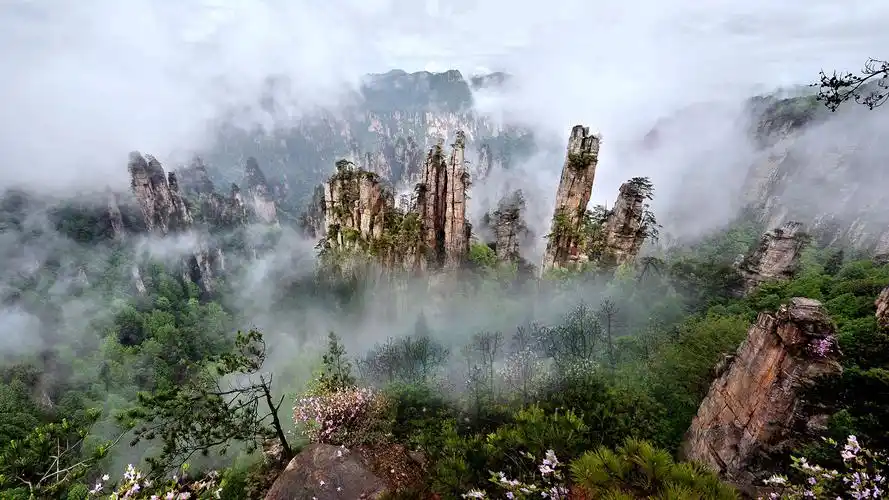
After rain, especially in spring and autumn, a sea of clouds forms below Tianzi Mountain's summit — a white ocean filling the valleys, with only the tallest pillars breaking through like islands. The phenomenon typically occurs in the 2-3 hours after sunrise, as moisture evaporates from the forest floor and condenses in the cooler air above. Your guide monitors weather patterns and recommends the mornings most likely to produce this spectacle.
The Imperial Brush Peaks — Tianzi's Signature View
The Imperial Brush Peaks (Yubi Feng) are Tianzi Mountain's most famous formation — a cluster of thin, vertical pillars resembling traditional Chinese calligraphy brushes standing upright. Local legend says they are the brushes left by the Son of Heaven after writing a poem to the mountain. Your guide positions you for the classic photograph: the brushes in the foreground, layered ridges fading into the distance, morning mist in the middle valleys.
The Tujia Story — a Mountain of Rebellion
Your guide tells the story as you walk: Xiang Dakun, a Tujia farmer, led 10,000 peasants against the Ming Dynasty in 1353. He declared himself Tianzi — Son of Heaven — and held this mountain as his stronghold for 32 years before falling in battle. The Tujia people believe his spirit still guards these peaks. The mountain's name, its sacred status, and the Tujia villages at its base all trace back to this rebellion.