Your guide picks you up at 7pm and walks you through the lantern-lit paths of Chengdu Culture Park to Shufeng Yayun Teahouse — a Qing Dynasty-era theater designated a National Intangible Cultural Heritage site. You settle into your front-row bamboo chair. Tea arrives in a covered gaiwan cup. The gong sounds. For the next 90 minutes, you witness an art form that has been refined for over 300 years: the lightning-fast face changes, the comedy skits in Sichuan dialect, the fire-spitter who makes the air explode, and the finale where a master switches faces so fast you'll question your own eyes — all while your guide whispers the context that turns spectacle into understanding.
Most tourists see a show. With a private guide, you go behind the curtain — meeting the mask master, touching the silk layers, and learning what 300 years of secret tradition looks like up close.
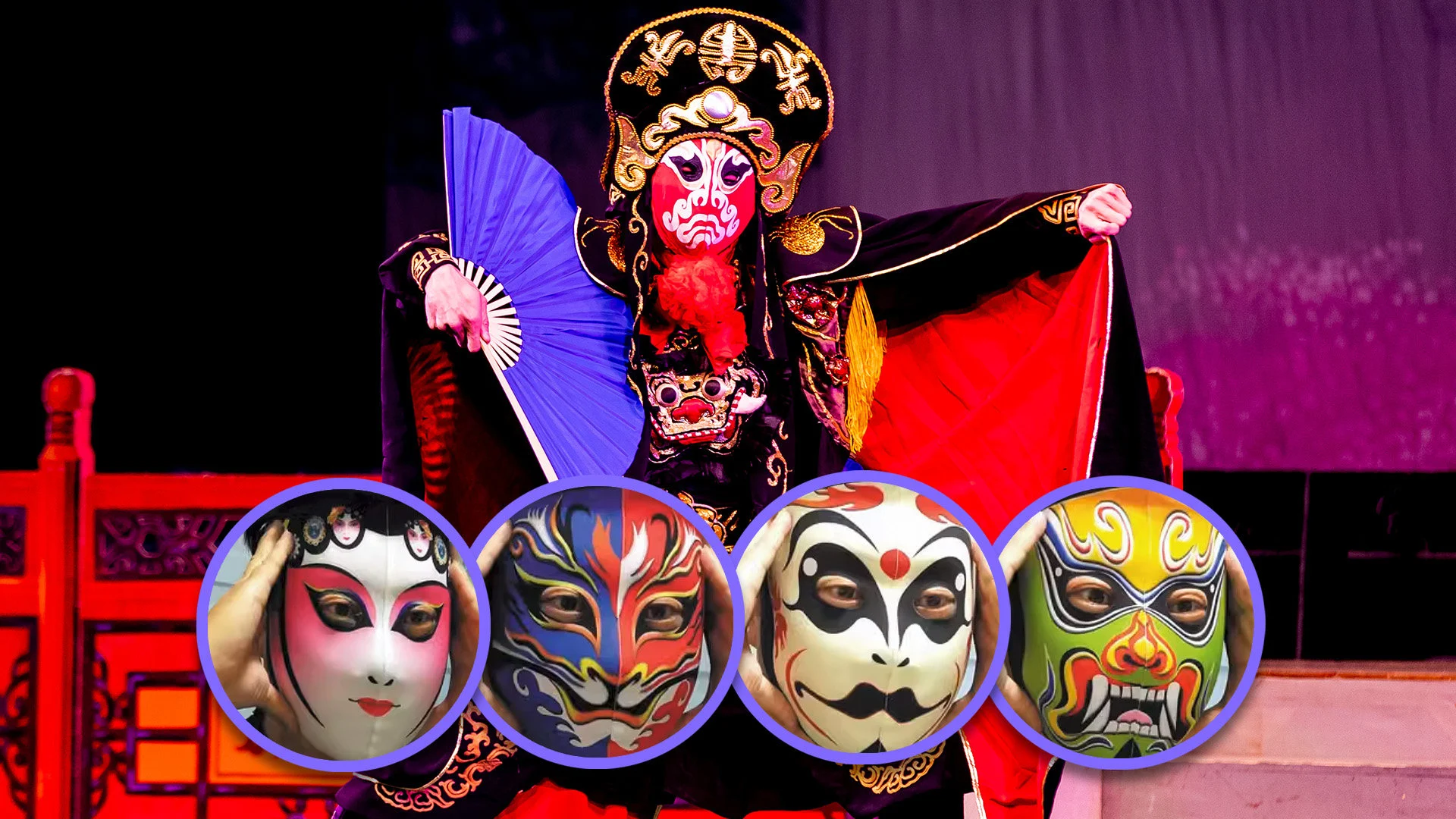
"I've been guiding foreign guests to the opera for twelve years, and I still gasp when the face-changing begins. The master wears layers of hand-painted silk masks — each one thinner than a butterfly wing — sewn with nearly invisible threads. A flick, a turn, a sweep of the embroidered fan, and a red warrior's face becomes a blue demon, then a gold deity, then a white ghost. The secret of exactly how is guarded so fiercely that masters will not tell their own children. I'll share what is publicly known — and what makes each mask color significant." — Your guide
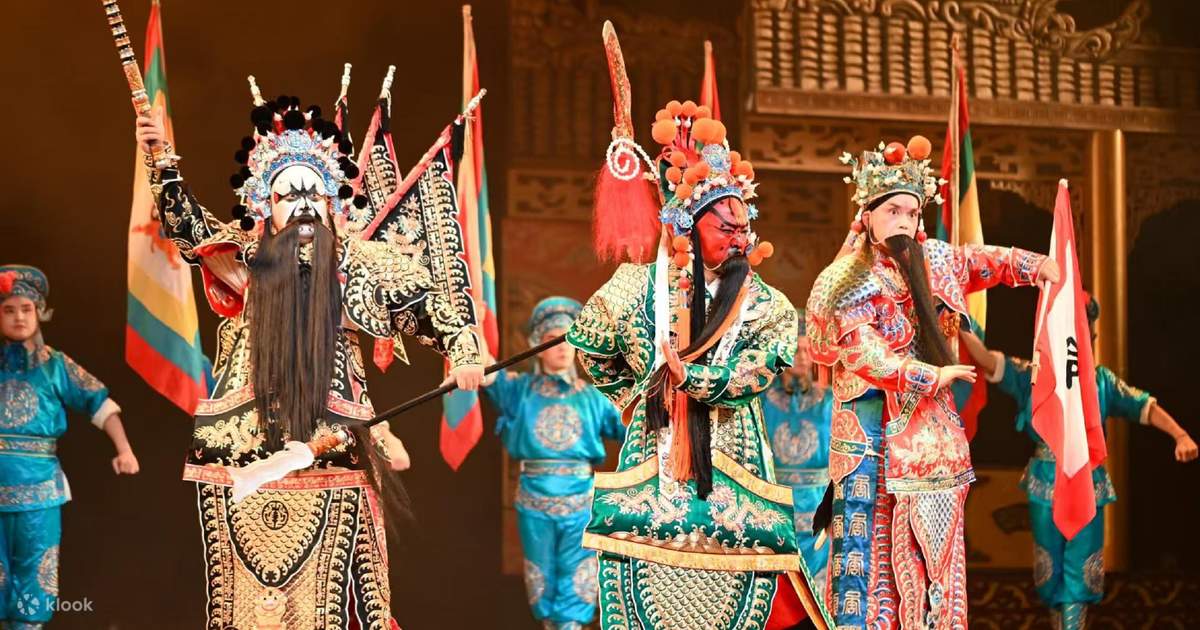
Before the show begins, your guide escorts you backstage. The dressing room is a controlled chaos of embroidered silk robes, towering headdresses, and rows of hand-painted masks drying on wooden racks. The lead face-changing artist — a master who began training at age seven — sits before a mirror applying the base layer of theatrical makeup. He nods a greeting. Your guide explains the symbolism painted onto each mask: the red General Guan Yu (loyalty), the black Judge Bao (justice), the white Cao Cao (cunning villainy). You'll never watch the show the same way again.
The face-changing is the headline act, but the rest of the program is equally mesmerizing — and only a guide can make it comprehensible. The fire-spitter fills his mouth with kerosene and releases an explosive plume across the stage. The hand-shadow master creates galloping horses and fighting warriors from nothing but his fingers and a candle. The 'Rolling Lamp' comedian — a henpecked husband balancing a lit oil lamp on his head while crawling under a bench — gets roars from the Chinese audience. Your guide translates the punchlines in real time.
The performance is not in a silent, formal theater. It's in a teahouse — bamboo chairs, small tables, the clink of gaiwan lids, and the smell of jasmine tea. Your guide orders the house specialty: Emei Mountain snow buds served in the traditional covered cup. Between acts, a long-spout tea master refills your cup from a meter away without a single spilled drop. This is not a show you watch — it's an evening you inhabit. Sip tea, crack sunflower seeds, laugh at the comedian, and gasp at the masks.
From the dressing room to the final bow — the 300-year-old art of Sichuan Opera, captured in its most intimate form.

"Back-row tickets are half the price but you'll see half the detail. From the front row — which your guide reserves — you can see the performer's eyes, hear the snap of the silk masks changing, and catch the flourishes of hand technique that reveal the art behind the illusion."
"Shufeng Yayun serves traditional Sichuan tea snacks with the show — candied fruits, spiced peanuts, mooncakes in season. Ordering a proper Sichuan hotpot dinner after the show at a late-night restaurant is better than eating beforehand. I know a place near the Culture Park that's open until 2am and serves the best mapo tofu in the city."
"Children as young as five are captivated by the face-changing. The show moves fast — no act lasts more than 10 minutes — and the comedy, fire-spitting, and puppet theater keep young attention spans locked. The hand-shadow puppet sequence where birds transform into rabbits is a particular crowd-pleaser with children. Bring them."
"The venue allows photography without flash. The key moments: the fire-spitter's explosive plume, the face-changer mid-transformation, the comedian's lamp-balancing climax. I'll nudge you during each. But during the acrobatic mask-changing finale — put the phone down. It happens so fast that if you're looking at a screen, you'll miss it entirely."
Travelers who witnessed the magic of face-changing — up close, with a guide.
I'm a theater director back home and I was absolutely floored. The precision, the showmanship, the centuries of technique hidden in plain sight — I spent the whole evening on the edge of my bamboo chair. Our guide got us into the dressing room beforehand and I watched the master apply his makeup. Then during the show, she explained the cultural meaning behind each mask color. Without her, I would have enjoyed the spectacle but understood nothing. With her, it was a masterclass in an art form I'd never known existed.
My 8-year-old son hasn't stopped talking about the 'magic mask man' since we returned home. The fire-spitter nearly made him jump out of his seat — in the best way. Our guide arranged snacks that kids actually eat, sat us at the perfect angle for the puppet show, and after the curtain call, took us backstage where the face-changer let my son try on one of the elaborate headdresses. The photo of that moment is now our family Christmas card.
I've been to the opera in Milan, Vienna, and Sydney. Shufeng Yayun is something else entirely. The intimacy of the teahouse setting — bamboo chairs, jasmine tea, performers close enough to see the sweat on their foreheads — creates an immediacy that grand opera houses can't match. Our guide's real-time narration during the comedy sketches was essential; the Chinese audience was in stitches while we would have been totally lost. The face-changing finale is genuinely one of the most extraordinary things I've ever seen on a stage.
As a Japanese visitor familiar with Noh and Kabuki, I was curious how Sichuan Opera compared. It's completely different — louder, more athletic, more immediate. The fire-spitting was shocking. The face-changing was hypnotic. But what I appreciated most was our guide's explanation of the Sichuan-specific cultural references: the satirical comedy sketches about local Chengdu life, the Sichuan dialect puns, the historical figures referenced in the mask colors. She transformed a tourist show into a genuine cultural education.
Tell us your travel dates. We'll reserve your front-row bamboo chair, arrange the backstage pass, and prepare your guide to translate every mask change, joke, and fire plume. Free itinerary draft within 24 hours.
