Your guide drives you into the hills west of Hangzhou, past West Lake, into a valley of terraced tea bushes that climb the slopes in neat green rows. This is Longjing Village — 'Dragon Well Village' — where China's most famous green tea has been cultivated since the Tang Dynasty. Your guide introduces you to a tea master who has been hand-roasting Longjing leaves in an iron wok since he was 14. "The wok must be exactly 200 degrees," he explains, pressing fresh leaves against the hot metal with his bare palm. "Too hot, the leaves burn. Too cold, the fragrance does not release." You watch as he performs the ten hand-movements of Longjing roasting — pressing, shaking, pushing, grinding — his hands immune to the heat after six decades of practice. Then the tasting: six grades of Longjing tea, from the affordable daily grade to the pre-Qingming harvest that sells for more than gold by weight. Your guide teaches you how to distinguish genuine Longjing from the mass-market versions — the flat, spear-like leaf shape, the chestnut aroma, the sweet, clean finish.
Longjing tea is not just a drink — it is a craft passed down through generations. A private guide connects you directly to the people who make it.
"Longjing tea grows on terraced hillsides at 200-300 meters elevation, where morning mist and well-drained soil create the perfect microclimate. Your guide walks you through the terraces, explaining how the best leaves are picked before Qingming Festival (early April), when they are still tender buds — two leaves and a bud per pick, each one hand-plucked by tea pickers who have done this for decades. You learn to identify the ideal leaf: flat, smooth, spear-shaped, with a slight yellowish-green color that indicates proper roasting." — Your Longjing guide
"Hand-roasting Longjing tea is an art form. The tea master works at a 200°C iron wok, performing ten distinct hand movements — pressing, shaking, pushing, grinding, tossing — to shape each leaf into its characteristic flat spear form. One batch takes 30 minutes of continuous movement. No machine can replicate the result: leaves that are perfectly flat, uniform in color, with a chestnut fragrance that fills the room. Your guide translates as the master explains each movement, his hands dancing across the hot metal." — Your Longjing guide
"The tasting is the heart of the experience. Your guide arranges a private tea ceremony where you taste six grades of Longjing: from everyday grade (bold, slightly astringent, good for daily drinking) to pre-Qingming Shi Feng Longjing (pale gold, delicate chestnut aroma, sweet finish that lingers for minutes). Your guide teaches you the three-step evaluation: observe the leaves in the glass (they should stand vertically), smell the aroma (chestnut, not grassy), taste the liquor (sweet, no bitterness). The difference between good and great Longjing is immediately obvious." — Your Longjing guide
"The tea master started roasting Longjing at age 14, learning from his father, who learned from his father. His hands are calloused from decades of pressing hot leaves against iron. He has roasted tea for Chinese presidents and foreign dignitaries. But when he pours you a cup, he does it with the same care whether you are a head of state or a curious traveler. Your guide translates his stories — the year the frost came late and ruined the pre-Qingming harvest, the day he roasted 20 kilos nonstop, the time a foreign visitor asked if Longjing tea had caffeine (it does)." — Your Longjing guide
Longjing tea is a landscape, a craft, and a family story — terraced hillsides, a hot iron wok, and a master who has been roasting tea since before most of us were born.
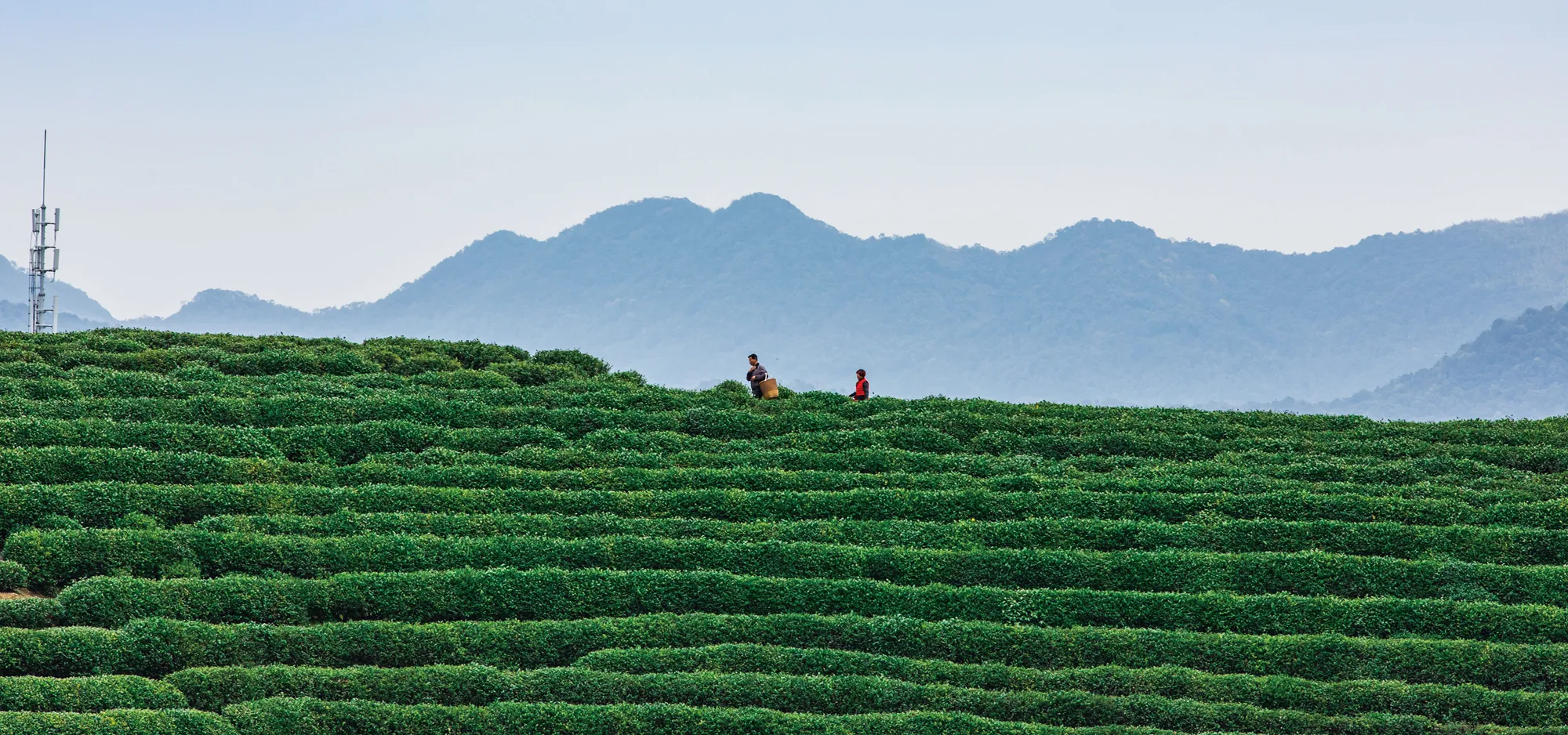

"The best time to visit Longjing Village is during the spring harvest (late March to mid-April). You can watch tea pickers working the terraces, smell fresh leaves being roasted in every workshop, and taste the pre-Qingming harvest at its absolute peak. Your guide arranges the visit when the roasting rooms are most active."
"Longjing tea prices range from $20/kg (everyday grade) to $1,000+/kg (authentic pre-Qingming Shi Feng). Counterfeit Longjing is widespread — tea from other provinces sold in Longjing-labeled packaging. Your guide helps you buy directly from the tea master at fair prices, with confidence that the tea in your bag is the tea you tasted."
"Just below Longjing Village, the China National Tea Museum is a free, beautifully designed museum covering tea history from the Tang Dynasty to today. Your guide walks you through the exhibits — ancient tea bricks from the Silk Road, Tang Dynasty tea ceremony implements, a full tea house from a Qing Dynasty garden. 45 minutes here before or after the plantation makes the experience deeper."
"Longjing tea and West Lake are inseparable — the tea is traditionally brewed with West Lake water. Your guide arranges the perfect sequence: morning at West Lake (sunrise boat), drive up to Longjing Village for the roasting and tasting, then lunch at a tea house overlooking the terraces. West Lake water, West Lake tea — the circle is complete."
"In Longjing Village, there is an actual ancient well called the Dragon Well. When rain falls into the well, the surface tension creates a visible line — said to look like a dragon swimming. Your guide walks you to the well, explains the legend, and shows you how to observe the 'dragon' effect. It is a small detour that connects the tea to its namesake."
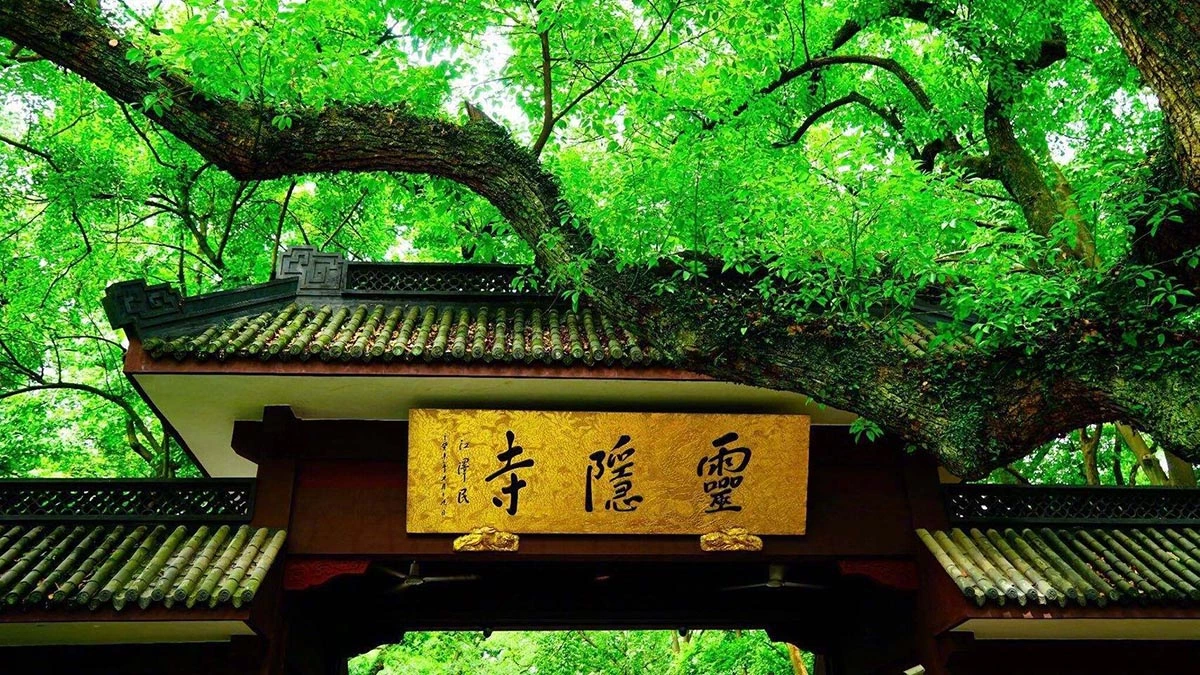
"Longjing Village is 10 minutes from Lingyin Temple. Many travelers combine them — morning chanting at Lingyin, a walk through the bamboo to Yongfu Temple, then drive to Longjing for the tea master experience in the afternoon. Tea and Buddhism have been linked for over a thousand years in China, and this pairing honors that tradition."
Travelers who experienced Longjing Tea Plantation with a private guide.
""I am a tea enthusiast and Longjing was on my bucket list. It exceeded every expectation. Watching the tea master roast leaves with his bare hands on a 200°C wok — 60 years of practice, every movement precise — was like watching a chef at a three-Michelin-star restaurant. The tasting was equally impressive: six grades, and the difference between the $30/kg and $800/kg tea was staggering. I bought 500g of mid-grade and have been savoring it every morning.""
""I do not even drink tea — I went because my wife insisted. I left with a deep appreciation for the craft and a bag of tea I actually enjoy. The tea master's story was the best part: learning at 14 from his father, roasting for 60 years, his hands immune to the heat. Our guide translated his jokes and his wisdom. 'Good tea,' he said, 'is like a good life — simple, honest, no bitterness.' I think about that more than I expected to.""
""The setting alone is worth the trip — terraced tea bushes climbing green hills with mist hovering above them. Walking through the terraces with our guide, learning to identify the ideal picking leaf (two leaves and a bud), watching the roasting, then tasting six grades while overlooking the very hills the tea came from — it was the most complete food/craft experience of our China trip.""
""I grew up drinking Longjing tea my grandfather brought back from China. Visiting the actual village, meeting the tea master, tasting the pre-Qingming grade my grandfather always talked about — it was deeply personal. Our guide sensed the emotional connection and gave us extra time with the tea master. I am now the one bringing Longjing tea back from China for my family.""
Tell us your travel dates. We will arrange your private tasting with the Longjing tea master, a walk through the terraces, and lunch at a tea house overlooking the hills. Free itinerary draft within 24 hours.
