Your guide arrives at 7:30am, before the crowds. You walk through the temple gates as the first incense of the day rises from bronze burners. Monks in gray robes begin morning chanting — deep, resonant tones echoing through halls built during the Eastern Jin Dynasty (328 AD). Your guide knows the head monk by name and has arranged access to the main hall when it is still quiet. You stand before the 24.8-meter camphor wood Buddha, seated on a lotus throne, its gold leaf still glowing from the latest restoration. "This statue was carved from 24 sections of a single camphor tree," your guide explains. "It took three years. When they finished, they covered it in 2.5 kilograms of gold." Moving deeper into the temple complex, you discover the Hall of 500 Arhats — 500 life-sized gilded statues, each with a unique expression. Your guide shows you how to find the arhat whose expression matches your own. Beyond the temple, Feilai Peak rises — a limestone cliff covered in 470 Buddhist carvings, the oldest dating to 951 AD. Your guide knows which carvings capture the best light at different times of day.
Lingyin Temple is 1,600 years of Buddhist history, art, and living practice. A private guide unlocks its deeper meaning — from the meaning of each mudra to the story behind each carving.
"At 7:30am, Lingyin Temple is a different place. Tour buses have not yet arrived. The temple courtyard is empty except for a few monks sweeping leaves. Incense smoke drifts through the Hall of the Great Hero. Then, from deep within the hall, the chanting begins — first one monk, then ten, then fifty, their voices merging into a resonant drone that seems to vibrate through the ancient wood. Your guide has arranged for you to witness this. Standing in near-silence, incense swirling, the monks' chanting filling the hall — this is Lingyin as it has been for 1,600 years." — Your Lingyin guide
"Feilai Peak — 'The Peak That Flew Here' — is a limestone cliff covered in 470 Buddhist carvings spanning five dynasties. The oldest dates to 951 AD. Your guide knows the three most extraordinary carvings: the laughing Budai (Maitreya) Buddha, whose joyful expression has worn smooth from centuries of pilgrims touching it; the 10-meter bas-relief of the Goddess of Mercy; and the Vajrapani guardian whose fierce expression is carved from a single rock face. Your guide explains the iconography — which hand positions mean teaching, which mean protection, which mean meditation." — Your Lingyin guide
"The Hall of 500 Arhats contains 500 life-sized gilded statues — no two alike. Each arhat represents an enlightened disciple of the Buddha, and each expression is unique. Your guide explains the tradition: count the arhats starting from any point, stop at the arhat whose number matches your age, and observe its expression. That expression is said to reflect your inner nature. Some smile, some frown, some meditate, some laugh. Finding your arhat is a moment of quiet self-discovery." — Your Lingyin guide
"Above Lingyin, connected by stone paths through bamboo groves, are three smaller temples that most visitors never reach. Yongfu Temple — a Zen meditation center with a vegetarian restaurant overlooking tea terraces. Taoguang Temple — accessible only by a steep staircase through bamboo, with a panoramic view of West Lake. And Fayun Ancient Village — a restored temple village now home to tea houses and meditation retreats. Your guide knows which monks teach meditation to visitors and when." — Your Lingyin guide
Lingyin Temple is layers of devotion carved into limestone, cast in gold, and rising in incense smoke — 1,600 years of Buddhist art and architecture.
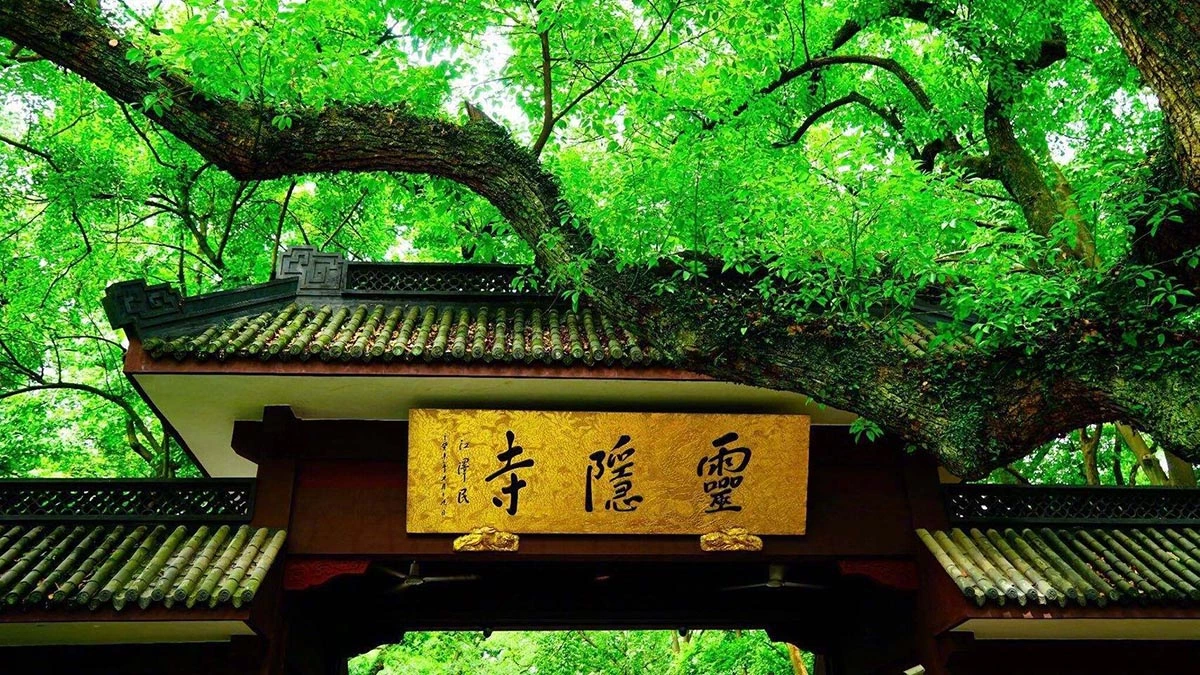
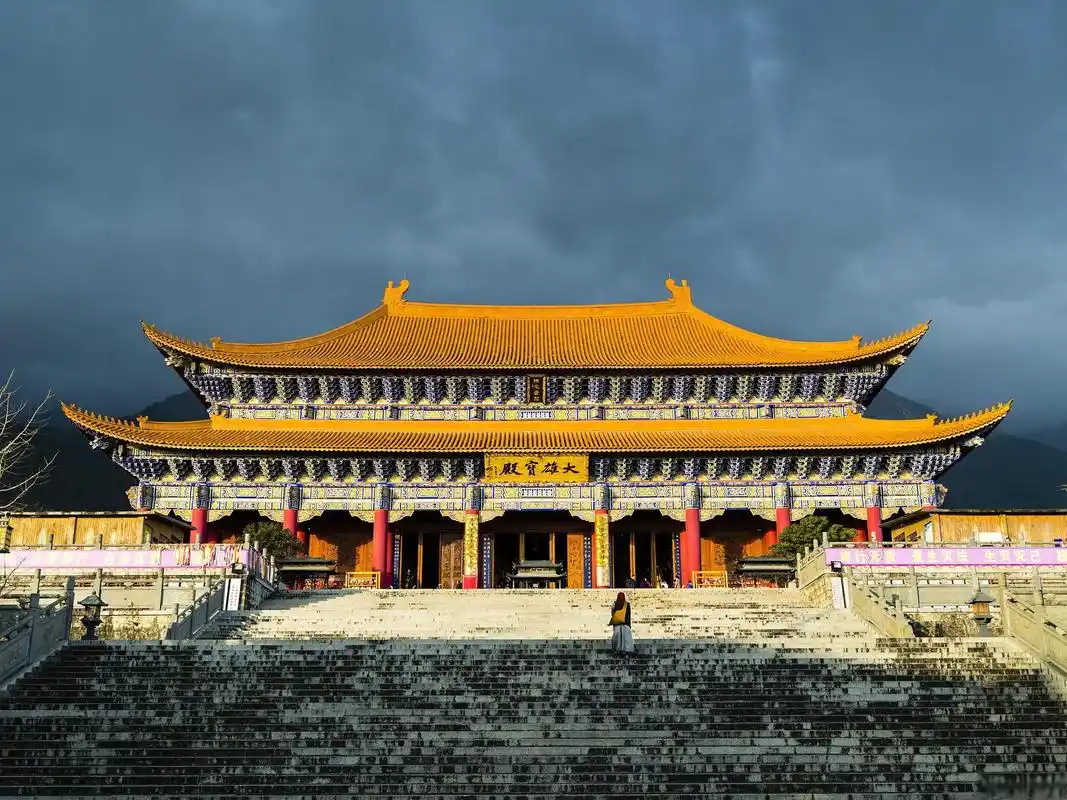
"Lingyin Temple opens at 7:00am. The morning chanting begins around 7:30-8:00am in the Hall of the Great Hero. By 9:00am, the first tour groups fill the courtyard. Your guide arranges the earliest entry, so you stand in near-silence as the monks chant — incense swirling, ancient wood creaking, a 1,600-year-old ritual continuing as it always has."
"The 470 Buddhist carvings on Feilai Peak face east. Morning light (before 10am) illuminates the most important reliefs directly. By afternoon, they are in shadow. Your guide times the visit so you see the carvings at their most dramatic — the gold traces still visible on stone Buddhas who have watched pilgrims pass for a thousand years."
"Lingyin has a vegetarian restaurant operated by the temple. The signature dish is luohan zhai — 'Arhat's Vegetarian Delight,' a Buddhist tradition of combining 18 ingredients (one for each arhat). Your guide knows which dishes are the temple's best and can explain the Buddhist philosophy behind temple cuisine."
"Lingyin Temple and West Lake are 15 minutes apart and complement each other perfectly. Morning chanting at Lingyin, vegetarian lunch, then a private boat on West Lake in the afternoon. Your guide coordinates the timing so you experience both without rushing — the quietest temple hours and the best lake light."
"Lingyin is not a museum — it is an active Buddhist monastery where monks live, pray, and study. Your guide advises: shoulders and knees covered, quiet voices inside the halls, no pointing at Buddha statues (gesture with an open palm instead), and ask before photographing monks. These courtesies are appreciated and open doors."
"Behind Lingyin, a stone path winds through towering bamboo to Yongfu Temple — a quieter Zen retreat with a vegetarian restaurant, tea terraces, and a meditation hall. Your guide knows which days the meditation hall is open to visitors. The bamboo forest alone is worth the 15-minute walk — sunlight filtering through green, absolute silence except for wind in the leaves."
Travelers who experienced Lingyin Temple with a private guide.
""I am not religious, but standing in the Hall of the Great Hero at 7:45am, hearing 50 monks chant in unison while incense smoke filled the air — it was the most spiritual moment of my life. Our guide explained the meaning of the chanting, the symbolism of the Buddha's hand positions, and the history of every statue. Without her, I would have walked through, taken a photo, and left. With her, I understood.""
""The Feilai Peak carvings alone are worth the trip — 470 Buddhist reliefs carved over 1,000 years, hidden in plain sight on a limestone cliff. Our guide knew exactly which carving was the oldest (951 AD), which showed the rarest iconography, and where the morning light hit each one best. We spent an hour there and could have spent three.""
""The hidden temples above Lingyin — Yongfu and Taoguang — were the unexpected highlight. Our guide led us up a stone path through towering bamboo to Yongfu Temple, where we had the best vegetarian meal of our trip on a terrace overlooking tea fields. No tourists, just monks, bamboo, and silence. Then we climbed to Taoguang for the panoramic view of West Lake.""
""I have visited Buddhist temples across Asia, and Lingyin with a private guide was the most meaningful temple visit I have ever experienced. The 500 Arhats Hall was fascinating — finding the arhat whose expression matches your own is a tradition I will remember. Our guide knew the history of the temple's destruction during the Cultural Revolution and its painstaking restoration. It is a story of resilience as much as faith.""
Tell us your travel dates. We will arrange your 7:30am entry to Lingyin Temple, a private guide who knows the monks, vegetarian lunch, and the bamboo path to the hidden upper temples. Free itinerary draft within 24 hours.
