Your guide meets you at the South Gate of Wuhou Shrine as the afternoon softens into evening. You walk past a row of Ming-style wooden shopfronts as lanterns begin to glow. The air is thick with the aroma of Sichuan peppercorns. Your guide steers you to a stall run by the same family for 90 years — their dan dan noodles are legendary. Later, tucked into a courtyard you'd never find alone, a 70-year-old master performs shadow puppetry with hands that have brought legends to life for six decades.
The street is free and public — but the Jinli your guide reveals is a different world entirely. Secret courtyards, family-run stalls, and stories woven into every beam.
"I've been eating on this street since I was a child. I know which stalls use fresh oil, which vendors are third-generation, and which dishes to eat in what order so the flavors build. We start mild — dragon's beard candy — then move to three-cannon rice cakes, dan dan noodles, spicy rabbit head if you're adventurous, and finish with sweet bean jelly. I tell you exactly what's in everything." — Your Jinli food guide
Tucked behind a nondescript doorframe halfway down the street is a courtyard theater where a master puppeteer performs the classic tale of "The Monkeys Capture the Demon." His carved leather figures dance behind a backlit screen while he sings the narration in Sichuan dialect. Your guide translates the story as it unfolds — without a guide, you'd walk right past and never know it was there.
Jinli is full of souvenir shops — some selling mass-produced trinkets, others housing genuine artisans. Your guide knows the difference. The sugar-painting artist who can whip up a galloping horse in 30 seconds from molten caramel. The Shu embroidery studio where a single piece takes six months to complete. The calligrapher who will paint your name in classical Chinese characters on a rice paper fan.
At the far end of Jinli, past the tourist crowds, sits a teahouse that has served Chengdu's scholars and merchants since the late Qing Dynasty. The tea master performs the long-spout teapot ceremony — pouring boiling water from a meter-long brass spout into your cup without spilling a drop. Your guide explains the tea's origin (Emei Mountain snow buds) while you sit on a bamboo chair and watch the lantern-lit street below.
Red lanterns, steaming food stalls, and wooden architecture that whispers stories from the Shu Kingdom.


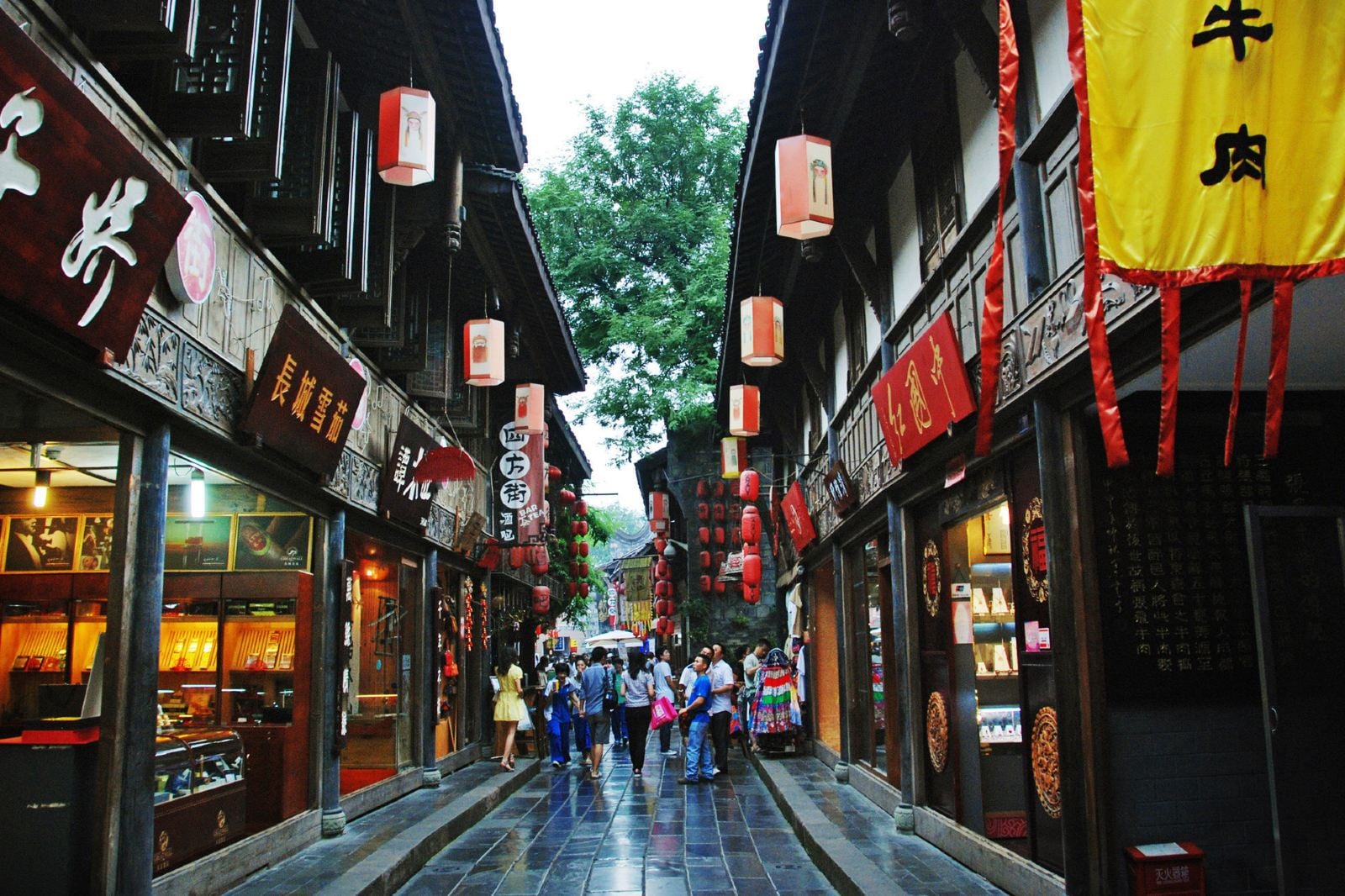
"Come too early and Jinli feels like any tourist street. Arrive at 5pm and the magic unfolds — lanterns flickering on, the evening food rush, and locals strolling after work. Stay until 8pm when the crowd thins and the real Chengdu emerges."
"Tourists crowd the entrance area. Walk straight to the middle section — that's where the best food stalls cluster, where the shadow puppet theater hides, and where the authentic teahouses begin. Your guide will pull you past the entrance without stopping."
"The Wuhou Shrine shares a wall with Jinli — its side gate opens directly onto the street. Do the shrine in the afternoon (1–3 hours of Three Kingdoms history), then step into Jinli as evening begins. It's the most natural pairing in Chengdu."
"For families: bring children straight to the sugar-painting stall at the midpoint. Watch an artist turn hot caramel into a dragon or butterfly in seconds. Then hit the three-cannon rice cake stand — sweet rice balls pounded with theatrical flair that kids adore. Your guide knows which dishes skip the Sichuan peppercorn."
Travelers who experienced Jinli the private way.
Our Jinli evening with guide Xiao Li was hands down the best food experience I've had anywhere in Asia. We tried 8 different Sichuan dishes, and not a single one disappointed. The dan dan noodles were life-changing. Xiao Li told us which stalls his family has been eating at for generations. The shadow puppet show at the hidden courtyard was so beautiful I nearly cried. My husband is already planning our return trip around food.
I was skeptical about visiting an 'ancient street' — I've been to too many tourist traps dressed up as heritage. Jinli with a private guide was completely different. The guide steered us past the junk shops to a calligrapher's studio where the artist painted my daughter's name in ancient script. Then we sat in a teahouse that's served tea since the Qing Dynasty while he told us about Chengdu's tea culture. Genuine, not staged.
We did Wuhou Shrine in the afternoon and Jinli at dusk — perfect combination. Our guide was a history buff who connected the Three Kingdoms stories from the shrine to the atmosphere of Jinli. By the time we were eating sweet rice cakes under red lanterns, I felt like I'd traveled back in time 1,800 years. The private guide made all the difference — without him, Jinli would have just been another shopping street.
Traveling solo, I was nervous about street food in China — I don't speak Mandarin and have a mild nut allergy. Our guide was incredible. She communicated my allergen to every single vendor in advance, translated every menu, and even had a laminated card made with my allergy written in Chinese characters. I ate fearlessly for three hours and had the best meal of my entire China trip. The sugar painting artist made me a Chinese character meaning 'courage' — I still have it.
Tell us your travel dates and food preferences. We'll arrange your private guide, plan your evening food circuit, and include the shadow puppet show and teahouse ceremony. Free itinerary draft within 24 hours.
