The Mount Hengshan Scenic Area, located in the Nanyue District of Hengyang City, Hunan Province, covers an area of 181.5 square kilometers.
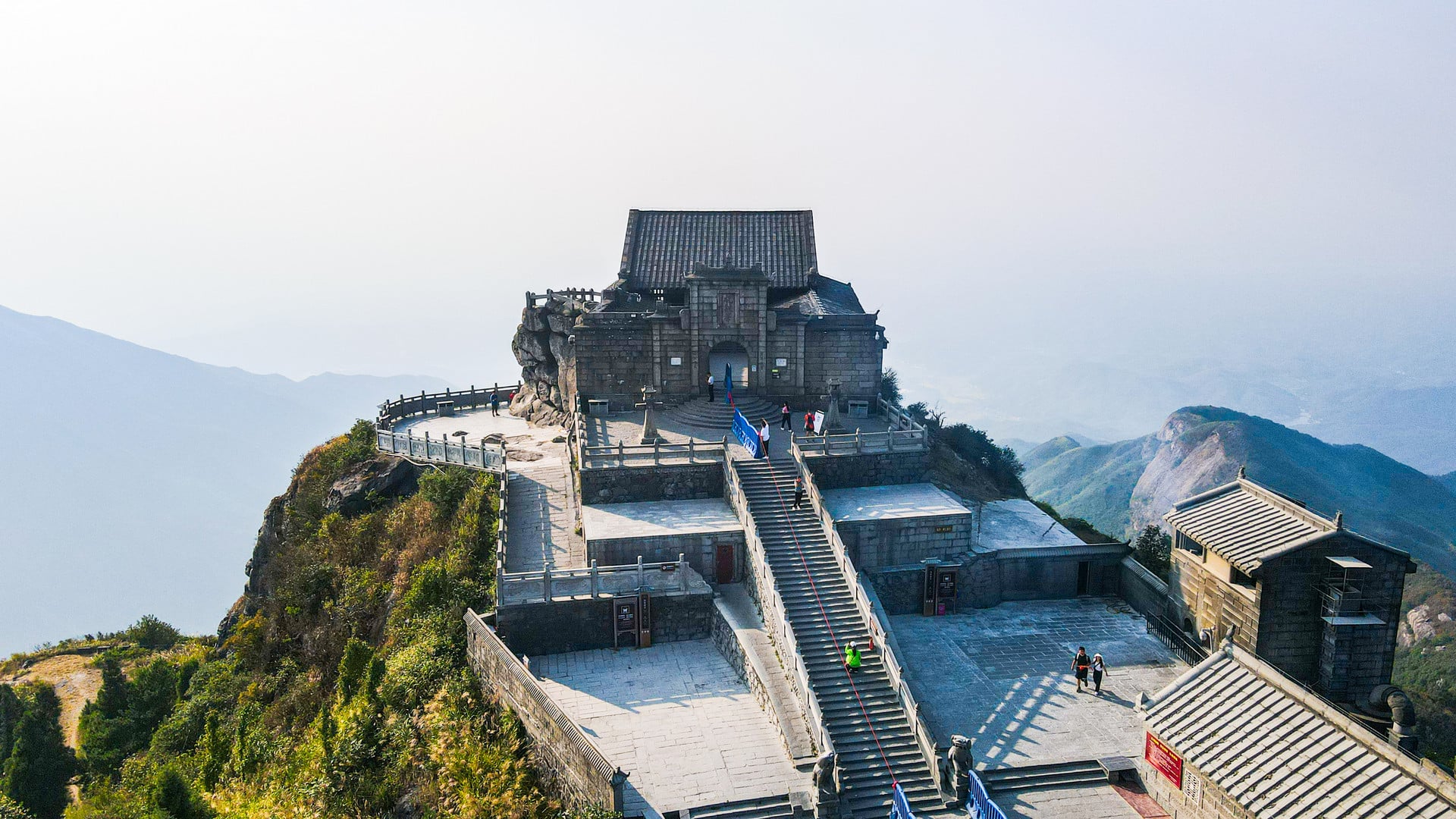
Mount Hengshan—also known as "Nanyue" (the Southern Sacred Mountain)—is one of China’s "Five Great Mountains." It is renowned for its magnificent natural scenery and a cultural landscape where both Buddhism and Taoism coexist; it is also celebrated as the "Sacred Mountain of Longevity" in China. The Mount Hengshan Scenic Area consists of two main parts: the central scenic area of Mount Hengshan and the Nanyue Grand Temple area. The central scenic area, which spans 100.7 square kilometers, comprises four primary sections—Zhurong Peak, Mojingtai, the Memorial Hall for Martyrs (Zhonglie Ci), and the Sutra Repository Hall (Cangjing Dian)—and serves as the core of the destination. The area is rich in cultural heritage, encompassing traditions related to ritual sacrifices, religion, history, the War of Resistance Against Japan, and local folklore, with a dense concentration of historic structures, including Buddhist temples, Taoist shrines, and ancient academies. The Nanyue Grand Temple, situated at the northern end of the ancient town of Nanyue at the foot of Chidi Peak, is a palace-style architectural complex that integrates state-sanctioned rituals, folk pilgrimages, Taoist shrines, and Buddhist temples. Currently designated as a Major Historical and Cultural Site Protected at the National Level, it stands as a key attraction within the Mount Hengshan Scenic Area and is the largest temple complex in Southern China—and among all of the Five Great Mountains. Spanning 120,000 square meters, the temple features a rigorous, symmetrical layout and an imposing, grand scale, organized into nine successive courtyards.
On May 8, 2007, the Mount Hengshan Scenic Area was officially designated as a National 5A-level Tourist Attraction by the National Tourism Administration of the People's Republic of China, becoming the first site in Hengyang City to receive this prestigious classification.